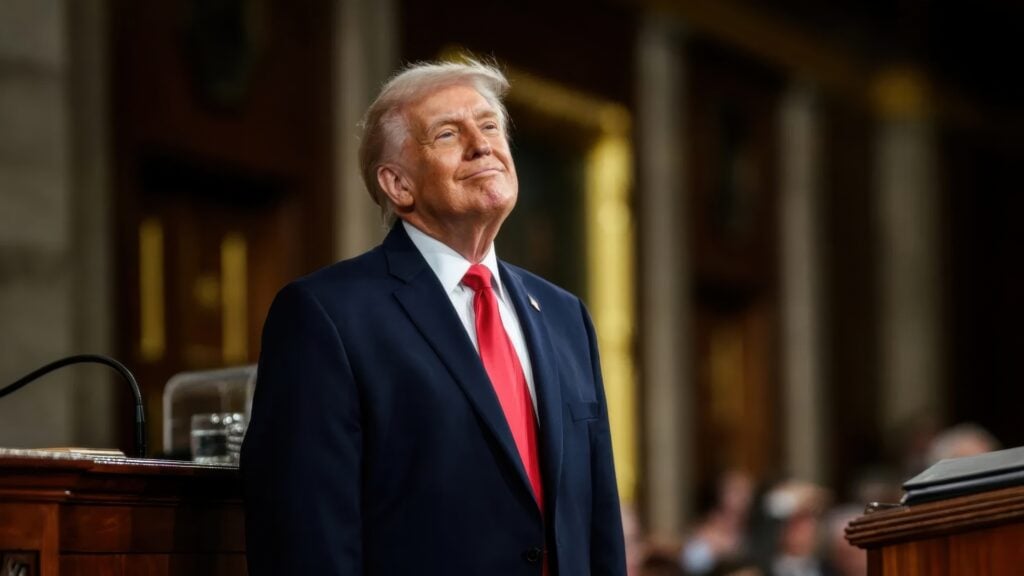

Economist Steve Hanke says the bond market is accurately pricing rising risks, leaving a bleak outlook for Treasuries, expressing concerns that President Donald Trump‘s policies are triggering a selloff.
‘Very Bearish’
Hanke attributed the bond selloff to a “deadly cocktail” of primarily monetary factors. He highlighted the awakening of bond vigilantes, investors who sell government debt in large quantities to protest reckless fiscal or monetary policies. Hanke anticipates a further 50-basis-point rise in the 10-year yield, making him “very bearish” on bonds for a significant period.
He pointed out that the Divisia M4, a measure of the money supply, is growing at 6.7% year-over-year, above his “Golden Growth Rate” of approximately 6%. Hanke argued that inflation expectations, not just realized inflation, drive bond yields. “The inflation genie’s out of the bottle, and it’s not going back in,” Hanke stated.
Hanke said the Treasury yield dynamic has already crossed the informal threshold that Treasury Secretary Scott Bessent has been watching. Bessent has previously indicated a preference for a 10-year yield below 4%. Hanke said the market has been watching roughly 4.5% on the 10-year and 5% on the 30-year as informal thresholds for Treasury concern. Hanke stressed that this is a broadly held market view, not his own unique assessment.
That being said, Hanke dismissed the notion of a “quiet default” by the United States as absurd. He remains confident in the dollar’s strength, despite narratives of reserve-currency erosion gaining traction elsewhere. Hanke concluded that the repricing happening in bonds will eventually spread, potentially deflating the “stock market bubble”.
Treasury Buybacks Offer Only a Band-Aid, Says Economist
The U.S. Treasury’s decision on Wednesday to double its liquidity-support buybacks for long-dated bonds from $2 billion to at least $4 billion per operation came amid soaring long-term yields and the federal government’s escalating debt and deficits. The move aims to improve liquidity amid strong investor demand to sell long-term bonds.
The 30-year Treasury yield briefly hit 5.327%, its highest level since 2007, while the 10-year reached 4.747%. At the same time, the U.S. government debt has more than doubled over the past decade to $40.05 trillion as of Tuesday.
However, economist Mohamed El-Erian considers this a short-term fix that fails to address the root causes of the issues. El-Erian compared the intervention with past efforts such as Operation Twist, arguing that it amounts to financial engineering that buys time without addressing the underlying fiscal problems.
Meanwhile, the Fed minutes showed several officials favored higher rates, with three voting for a hike, while many said a rate increase could be warranted if inflation remained elevated. Long-term Treasury yields nevertheless fell after the release, helped by the Treasury’s announcement that it would double long-term bond buybacks.
Disclaimer: This content was partially produced with the help of AI tools and was reviewed and published by Benzinga editors.
Photo courtesy: Funtap on Shutterstock.com