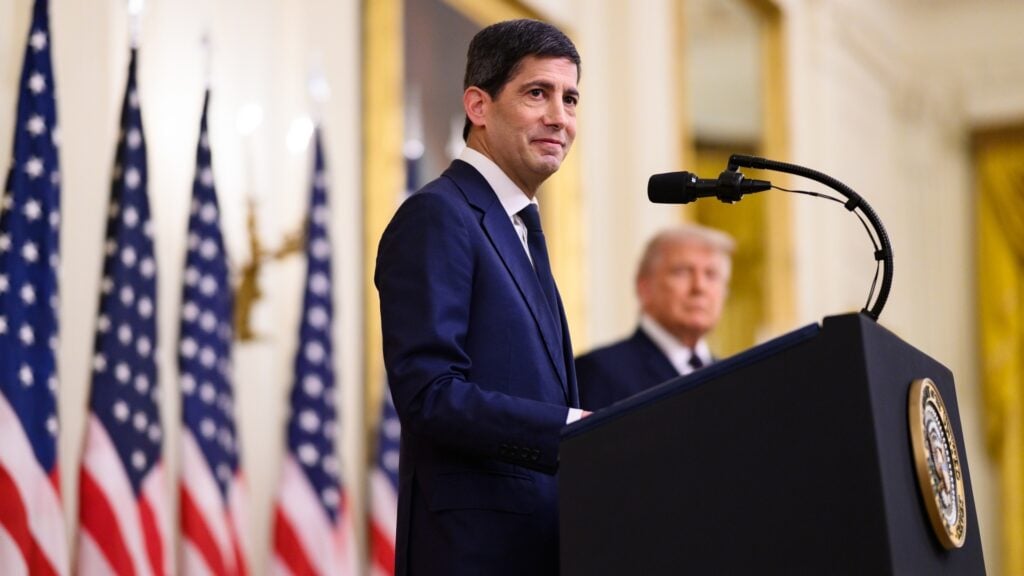
Veteran economist Peter Schiff said Federal Reserve Chair Kevin Warsh‘s inflation-fighting rhetoric doesn’t match the central bank’s actions after the Fed’s balance sheet jumped by more than $11 billion last week.
Fed is Creating Inflation, Schiff Says
“Forget about what Warsh says; pay attention to what the Fed does,” Schiff said in a post on X.
Schiff said if the Fed was serious about hitting its 2% inflation target would be shrinking its balance sheet rather than growing it, adding, “While Warsh talks about fighting inflation the Fed is creating it.”
Balance Sheet Widens
The Fed’s total assets stood at $6.76 trillion as of Aug. 12, up $11.38 billion from the prior week and up $116.3 billion from a year earlier, according to the central bank’s most recent data.
That’s down sharply from the nearly $9 trillion peak reached during pandemic-era stimulus.
The Fed’s multi-year balance sheet reduction, known as quantitative tightening, officially ended in December 2025, after several years of shrinking assets since June 2022, when then-Chair Jerome Powell ended the program to ensure the Fed maintained what officials call ‘ample reserves’ in the banking system.
A Cooler CPI Print
On Wednesday’s Consumer Price Index report, which showed inflation rising 3.4% year-over-year in July, in line with estimates and down from June’s 3.5% increase, while core CPI eased to 2.5% from 2.6%.
The report drew mixed reactions from economists, with former Fed economist Claudia Sahm calling it a sign of building disinflation, while Schiff said the print itself was “misleading” as it still reflected May’s oil price collapse rather than July’s rebound.
Echoes Of Volcker
Since becoming Fed chair, Warsh has emphasized his commitment to the 2% inflation target and a smaller central bank balance sheet, a tone that has drawn comparisons to former Chair Paul Volcker‘s aggressive rate hikes in the early 1980s to tame runaway inflation.
The U.S. federal debt stands at about 123% of GDP compared with about 31% in 1980.
Disclaimer: This content was partially produced with the help of AI tools and was reviewed and published by Benzinga editors.
Photo courtesy: Rawpixel.com / Shutterstock.com