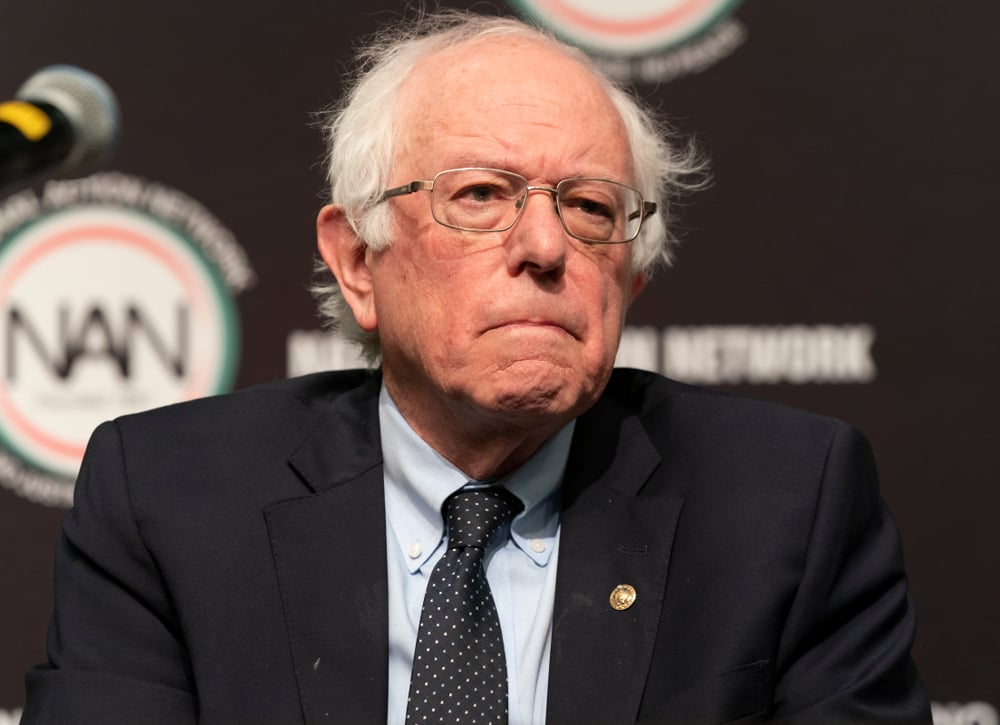
Sen. Bernie Sanders (I-Vt.) on Thursday said Meta Platforms Inc. (NASDAQ:META) CEO Mark Zuckerberg could owe about $10.5 billion if California voters approve a proposed 5% billionaire wealth tax in November, saying the revenue could help preserve healthcare for 3 million low-income people.
The proposed ballot measure would impose a one-time 5% tax on people with a net worth above $1 billion who were California residents as of Jan. 1, 2026. Supporters say it could raise about $100 billion to help offset federal cuts to Medicaid and food assistance programs.
In a post on X, Sanders wrote, “If voters in California approve the 5% billionaire wealth tax in November, Mark Zuckerberg would owe $10.5 billion in taxes & healthcare would be saved for 3 million low-income people.” He then joked, “Poor Mr. Zuckerberg would only have $200 billion left to feed his family. How will he survive?”
Sanders has repeatedly argued that higher taxes on billionaires could fund public services while leaving the country’s wealthiest individuals with vast fortunes. Earlier this year, he challenged Amazon.com Inc. (NASDAQ:AMZN) founder Jeff Bezos to debate his proposed 5% billionaire wealth tax, saying it could help expand Medicare benefits, guarantee universal childcare, raise starting teacher pay and provide $12,000 to a working family of four, while Bezos would still be worth $269 billion after paying the tax.
Opposition Grows
The California proposal has drawn opposition from several business leaders and politicians. Google co-founder Sergey Brin donated $57 million to a committee fighting the measure, while Palantir Technologies Inc. (NASDAQ:PLTR) Chairman Peter Thiel also contributed to the campaign. Venture capitalist Chamath Palihapitiya has argued the proposal could eventually expand beyond billionaires, and Democratic Gov. Gavin Newsom has warned it could drive wealthy residents out of California.
Sanders’ post was later accompanied by a Community Note on X stating that Zuckerberg moved to Florida after California lawmakers proposed the tax and therefore may not owe the California billionaire wealth tax if the measure passes. The note cited reports from IFC Review, Architectural Digest and Fox Business.
Critics of wealth taxes have also questioned whether they can generate lasting revenue. Earlier this year, podcaster Joe Rogan and financial creator Caleb Hammer argued that while billionaire taxes may raise significant money in the short term, wealthy individuals could relocate or move assets over time, reducing the expected long-term tax benefits.
Disclaimer: This content was partially produced with the help of AI tools and was reviewed and published by a Benzinga editor.
Image via Shutterstock