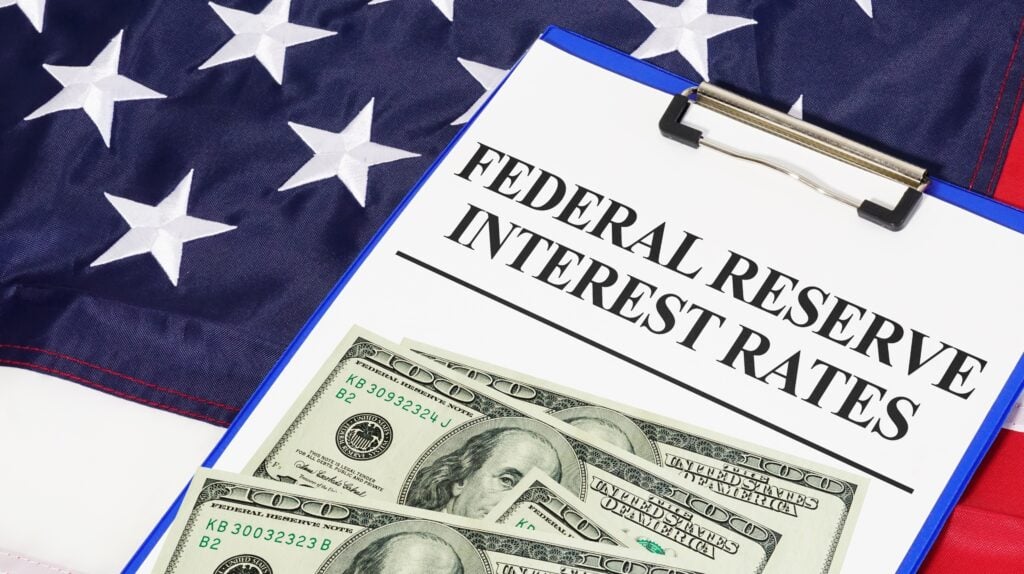

The Federal Reserve’s October policy decision could set the tone for bond and equity ETFs, with investors weighing the prospect of another interest-rate hike in December against mounting concerns about labor-market weakness.
The Fed is widely expected to keep its benchmark federal funds rate unchanged at 3.75%-4.00% on Wednesday, following September’s 25-basis-point increase, its first rate hike in more than three years. However, the possibility of a hawkish pause is keeping investors focused on Chair Kevin Warsh’s comments for clues about the next policy move.
The Kobeissi Letter said Wednesday morning in a post on X that it expects policymakers to prioritize inflation and leave the door open to another increase in December, potentially bringing cumulative rate hikes in 2026 to 50 basis points.
The inflation backdrop complicates the Fed’s decision. U.S. consumer prices rose 3.7% year over year in September, accelerating from 3.4% in August. The monthly increase was 0.6%, while core CPI rose 2.6% annually, highlighting the challenge of bringing inflation back toward the Fed’s 2% target.
Meanwhile, the 10-year Treasury yield reached 5.00% on Monday and stood near 5.028% on Wednesday ahead of the Fed announcement. Longer-term yields reflect not only expectations for the policy rate but also inflation expectations and the compensation investors demand for holding government debt.
5 ETFs to Watch if the Fed Stays Hawkish
1. iShares 0-3 Month Treasury Bond ETF (NYSE:SGOV)
SGOV offers exposure to ultra-short-term U.S. Treasury bills. Its short duration limits sensitivity to interest-rate changes, making it an option for investors seeking Treasury income while retaining flexibility to reinvest at higher yields. However, its income can decline as short-term rates fall.
2. WisdomTree Floating Rate Treasury Fund (NYSE:USFR)
USFR invests in floating-rate Treasury securities whose interest payments reset with short-term rates. That structure can help the fund adapt to higher rates more quickly than conventional fixed-rate bonds, although it does not eliminate price or income risk.
3. iShares 7-10 Year Treasury Bond ETF (NASDAQ:IEF)
IEF could face pressure if persistent inflation pushes intermediate-term Treasury yields higher. Conversely, a weakening economy that eventually prompts rate cuts could support its holdings.
4. iShares 20+ Year Treasury Bond ETF (NASDAQ:TLT)
TLT carries substantially greater interest-rate sensitivity than short-duration Treasury funds. Further increases in long-term yields could hurt its price, while falling yields could deliver stronger capital gains if economic weakness overtakes inflation concerns.
5. Vanguard Value ETF (NYSE:VTV)
For equity investors, VTV provides exposure to U.S. value stocks. Value-oriented companies could prove relatively resilient if higher yields pressure expensive growth-stock valuations, although an economic slowdown could also hurt cyclical holdings.
What Investors Should Watch Next
The central question is whether inflation remains persistent enough to justify tighter policy even as employment conditions soften. A hawkish signal could favor short-duration Treasury exposure over long-duration bonds, while a more dovish message could reverse that relationship.
Investors should also watch high-yield credit. The ICE BofA U.S. High Yield Index’s effective yield stood at 7.96% on Wednesday, with an option-adjusted spread of 3.18 percentage points. Those yields offer income potential but also compensate investors for credit risk, which can rise if tighter financial conditions weaken corporate borrowers.
Ultimately, a Fed pause would not automatically mean easier financial conditions. With Treasury yields near 5%, investors may need to distinguish between earning income from short-term government debt and betting on a recovery in longer-duration bonds.
Photo: Shutterstock