
Over the past month, SpaceX (NASDAQ:SPCX) and Tesla Inc. (NASDAQ:TSLA) have been trading almost like one company. The 30-day correlation between the two stocks is 0.66, according to data CNBC cited.
“SpaceX and Tesla are feeding off each other,” Charles Moon, a technical trader at Prosper Trading Academy in Chicago, told CNBC. “They’re moving more in sync lately.”
- TSLA stock is moving. See the real-time price action here.
What the Number Means
Correlation shows how reliably two stocks move in the same direction. The scale runs from -1 to 1. A reading of 1 means the shares rise and fall together every time. A reading of -1 means they always move in opposite directions. Zero means there’s no relationship.
A 30-day correlation uses only the last 30 trading sessions. Each day, the oldest session drops out and the newest one is added, so the number keeps changing.
At 0.66, the link between SpaceX and Tesla is moderately strong. On most days, when one stock rises, the other tends to rise too.
The reading doesn’t measure the size of the moves. It doesn’t mean SpaceX moves 66% as much as Tesla. It only tracks whether the two move in the same direction and how consistently.
The Common Link: Elon Musk
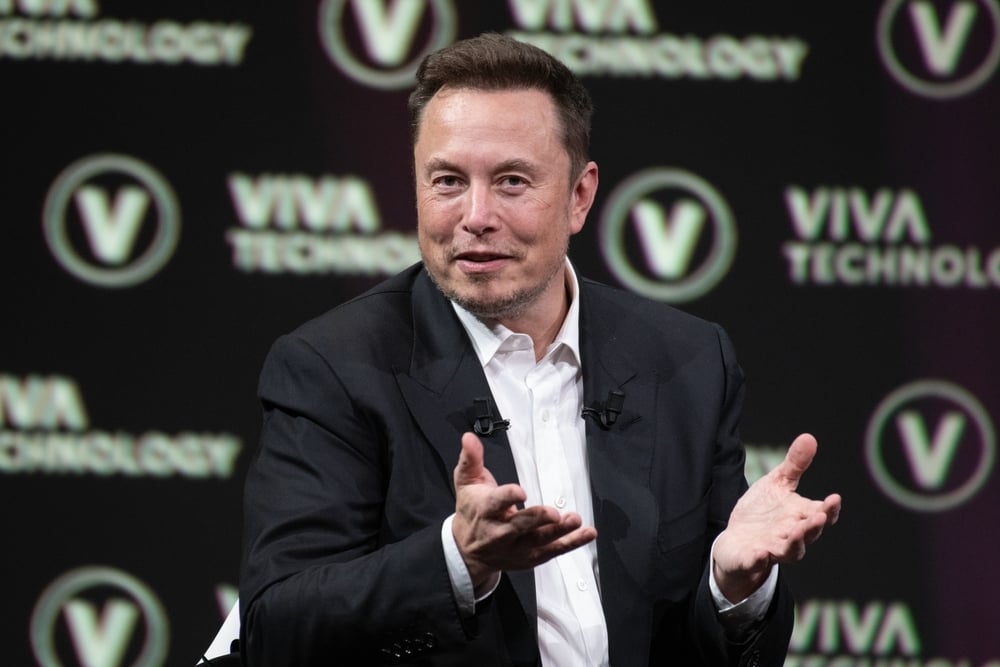
Elon Musk runs both companies, and much of his wealth sits in their shares. Monday’s SpaceX rally made Musk a trillionaire again, with Forbes estimating his wealth at $1.03 trillion, counting his Tesla and SpaceX holdings.
SpaceX also trades on artificial intelligence. It acquired Musk’s xAI last year and earns substantial revenue by renting out computing capacity to Google and Anthropic.
See More:
Top Growth Stocks
The Rally Behind It
SpaceX rose nearly 8% Monday to close at $171.09, its highest level since mid-June. CNBC reported that the shares are up about 58% since bottoming in early August. In a Sunday note, Morgan Stanley called the stock “cheap” and kept its $300 price target, about 75% above Monday’s close.
Options traders moved in quickly. Monday’s volume hit 1.7 million contracts, twice the 30-day average. About 1 million of those contracts were calls worth more than $640 million, CNBC reported.
Risk Runs Both Ways
A tight link works in both directions. Investors who hold both names for diversification may be less protected than they think. One Musk headline, good or bad, could hit both positions at once.
Options pricing reflects that risk. SpaceX puts carry implied volatilities equal to or higher than calls, meaning market-makers see a sharp drop as about as likely as a surge.
Correlations can also break down. Thirty days is a short window, and a company-specific event could quickly pull the two stocks apart. The next Starship test flight or SpaceX’s third-quarter report could do it.
Photo: Shutterstock