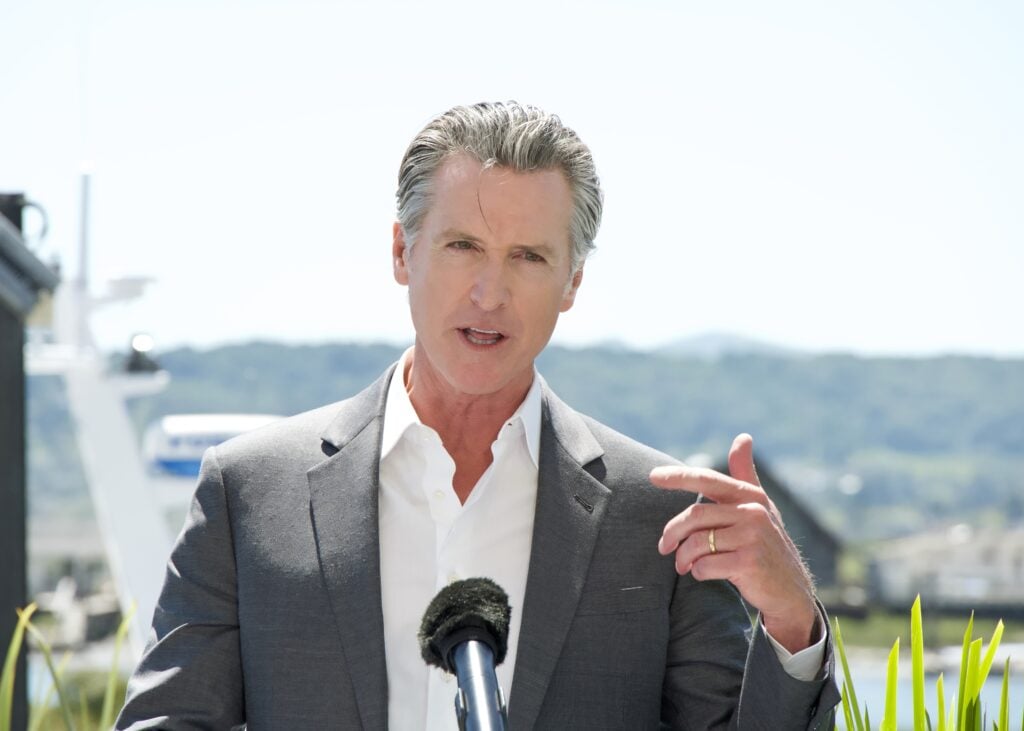
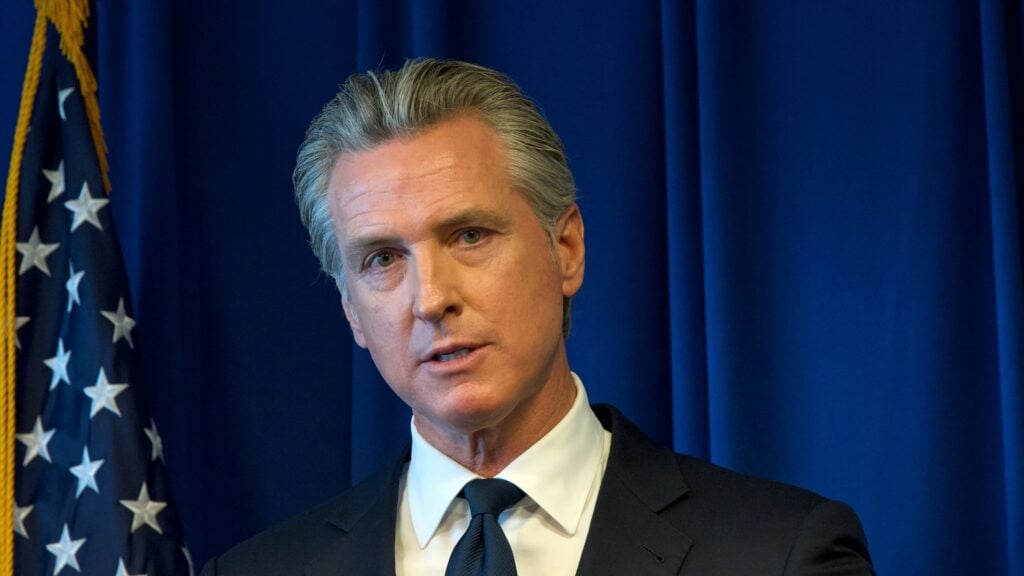
On Wednesday, California Gov. Gavin Newsom (D) signed a new law requiring advertisers to disclose when AI-generated performers appear in audio or video advertisements.
California Requires Disclosure of AI-Generated Performers
Newsom announced the law, saying consumers should be able to tell the difference between authentic and AI-generated content.
“We should be able to easily tell the difference between what’s real and what’s not — but AI is making that harder every day,” Newsom said in a post on X.
Under the law, covered video, audio and audiovisual advertisements that prominently feature AI-generated performers to sell a product or service must include a clear disclosure that the performer is AI-generated.
The measure aims to increase transparency as generative AI makes it easier to create realistic digital people and voices that can appear to be genuine performers.
SAG-AFTRA Backs California AI Transparency Rules
The legislation was developed in part with support from SAG-AFTRA, the union representing actors, which has pushed for protections as AI-generated avatars and digital replicas become more common across entertainment and advertising.
Newsom described the measure as part of California’s broader effort to establish guardrails around artificial intelligence.
NYC Eyes AI Disclosure for Apartment Listings
The push for AI transparency is also emerging in other areas.
New York City Mayor Zohran Kwame Mamdani (D) said the city is working on rules that would require apartment listings to disclose when photos or videos have been generated by AI.
“New Yorkers should know whether the apartment they’re looking at is real,” Mamdani said on X, arguing that AI-generated visuals could create additional problems for people searching for housing.
Warren Calls For Pause On Advanced AI Development
Sen. Elizabeth Warren (D-Mass.) has also called for an immediate pause on advanced AI development while lawmakers and regulators work to establish safeguards for the public.
Earlier this month, Sen. Bernie Sanders (I-Vt.) and Rep. Greg Casar (D-Texas) introduced the Ban Artificial Superintelligence Act, which would ban superintelligent AI and pause advanced AI development until federal safety rules are established.
Meanwhile, President Donald Trump has argued that the U.S. must maintain its AI lead over China, warning that excessive regulation could threaten that advantage.
Disclaimer: This content was produced with the help of AI tools and was reviewed and published by Benzinga editors.
Photo courtesy: Shutterstock