
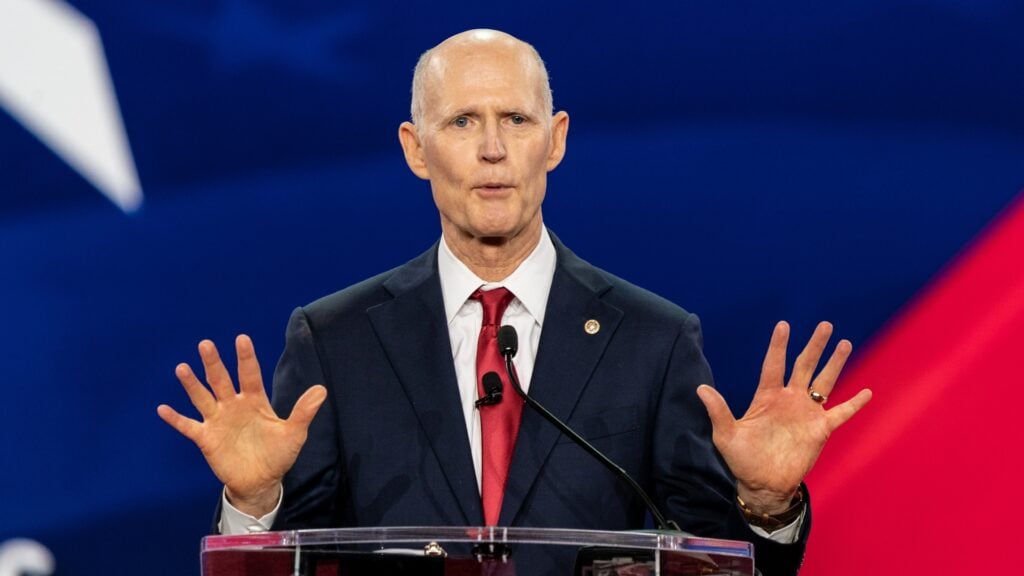
Sen. Rick Scott (R-Fla.) urged Congress to stay in Washington and address economic challenges facing American families, saying lawmakers must do more to ease financial pressures before January.
Scott Urges Congress to Focus on Affordability
On Wednesday, in a post on X, Scott highlighted the financial struggles of American households, saying that “63% of Americans live paycheck to paycheck.”
“Washington hasn’t worked hard enough to make life more affordable for them,” he wrote.
Scott said lawmakers still had time to deliver results, urging them to “stay here and GET TO WORK for as long as it takes” to address issues affecting American families.
He identified three priorities for Congress: “lower the cost of living, balance the budget, create good-paying jobs.”
“That should be our focus EVERY DAY between now and January,” Scott added.
Debate Over US Affordability Crisis
Last month, White House economic adviser Kevin Hassett called the affordability crisis “a myth,” arguing Americans were “a trillion dollars better off” under President Donald Trump after adjusting for inflation.
J.P. Morgan said housing costs had outpaced incomes for decades, with homeownership among Americans under 35 falling to a nine-year low of 35%.
In August, Sen. Rand Paul (R-Ky.) blamed inflation for affordability concerns, citing the $2 trillion federal deficit and Federal Reserve money creation.
He said, “Every new dollar that’s printed dilutes the value of the money in our pockets.”
Zandi Warned of Economic Risks and Growing Debt
Last week, Moody’s Analytics Chief Economist Mark Zandi said October’s strong jobs report gave the Federal Reserve “latitude to raise rates.” He also warned that mortgage rates above 7% had left the housing market “frozen solid,” while suggesting a cooling AI boom could ease inflationary pressures.
In October, the U.S. recorded a $1.992 trillion fiscal 2026 budget deficit, with interest payments exceeding defense spending. Zandi warned of a “fiscal reckoning,” calling the primary deficit “eye-popping” and blaming rising interest costs on the “ballooning debt load.”
Disclaimer: This content was partially produced with the help of AI tools and was reviewed and published by Benzinga editors.
Photo courtesy: Shutterstock