

The midterm elections brought major changes to the U.S. political landscape, which could materially affect the business outlook for companies in the stock market.
Markets appear to be experiencing some indigestion as they process new realities.
Stocks fell Tuesday night, surged Wednesday, plummeted Thursday, and then ticked up Friday. I’ll reiterate what I said Wednesday morning:
It’s a reminder to be careful about rushing to conclusions based on a couple of hours of market action. Frankly, we should be careful about drawing long-term conclusions based on even a few days or weeks of market moves.
Historically, the stock market trended higher once the election results became clearer. But the stock market usually rallies, so that market observation offers limited insight into what to expect in the coming months.
Sure, the elections were an uncertainty-clearing event. But that doesn’t mean we have complete clarity on what’s next.
As we await further developments on the policy outlook and everything else, here are some excerpts from the wave of research and commentary that hit TKer’s inbox last week.
There have been no recessions during the third year
“Notably, since 1946, stocks have been higher one year after every midterm election, including all four instances when both the House and Senate flipped to the party opposing the president. Simply moving past the uncertainty of the midterms has also often led to a relief rally. Part of that consistency is likely attributable to no recessions having occurred during the third year of the presidential cycle. If the recession pattern were to break, the strong third-year market pattern could break as well.” – Keith Lerner, Truist
Delaying or reducing Medicaid and SNAP cuts could boost activity
“The One Big Beautiful Bill Act (OBBBA) includes approximately $900 billion in Medicaid spending reductions and $200 billion in cuts to the Supplemental Nutrition Assistance Program (SNAP) over the next decade. With Democrats controlling both chambers of Congress, some of these reductions could be delayed, softened or reversed as part of negotiations around upcoming fiscal deadlines… Delaying or reducing planned Medicaid and SNAP cuts could support household finances and consumer spending, providing a modest boost to economic activity.” – Ariana Salvatore, Morgan Stanley
Trump can continue issuing executive orders
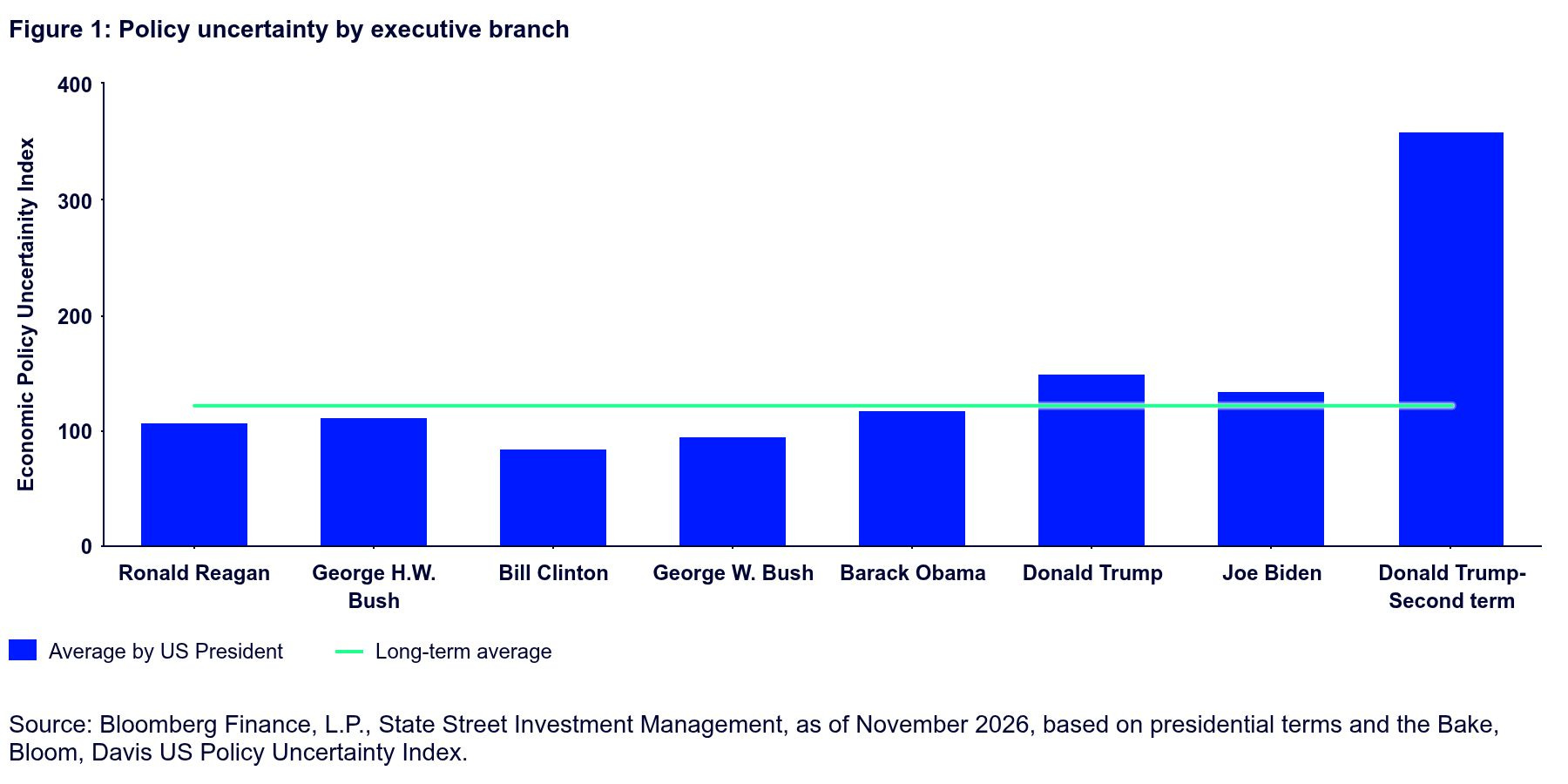
“Democratic control of Congress may shift the legislative agenda, but many of the policy levers driving market volatility remain with the executive branch (Figure 1). As a result, while legislative uncertainty may fade, broader policy-driven volatility may persist. Trade policy, in particular, remains an important executive branch tool and may increasingly be used to pursue targeted foreign policy objectives.” – Matthew Bartolini, State Street
Risks to Fed independence reduced
“The past two years have brought novel risks to the Fed’s independence, underscored by the first-ever attempted removal of a sitting Fed governor by the White House. The change in control in the Senate should mitigate those risks, as the Senate must approve any nominee the administration puts up for the Federal Reserve Board. There is only one governor whose term ends in the next two years—Jay Powell’s in January 2028. As a result of last night’s election, the administration will now need to replace him with someone amenable to Senate Democrats, or else leave the seat vacant. The election outcome may also lower the stakes in the administration’s ongoing effort to remove Governor Cook, as even a successful removal would not open a seat up to a friend of the administration.” – Michael Feroli, JPMorgan
Debt ceiling standoff could spark volatility
“Fiscal policy may prove to be the bigger flashpoint. Divided government raises the risk of funding standoffs and government shutdowns. Debt ceiling negotiations could also become more contentious, though the outgoing Congress may seek to address the issue before its term ends in early January. Either way, gridlock is unlikely to alter the U.S. fiscal trajectory. Large deficits and heavy government borrowing are likely to persist, intensifying competition for capital and reinforcing our view of structurally higher interest rates. Historically, policy gridlock has not been bad for risk assets. Debt ceiling standoffs have been the bigger source of market volatility.” – BlackRock Investment Institute
Most proposed data center moratoriums in Texas will not impact currently permitted projects
“Democrat outperformance in state elections – in particular the governorship in Texas as well as the state legislature – has called into the question the outlook for data center capex in the US. It is important to remember that the vast majority of the proposed ‘moratoriums’ on data centers focus on new projects that have yet to be permitted and will not impact projects currently permitted.” – Matthew Luzzetti, Deutsche Bank
Any data center moratoriums may not last long
“The states where Democrats are likely to further restrict data centers account for roughly 45% of planned US data center capacity, with Texas alone accounting for roughly 25%. However, since data centers are low on the list of priorities for voters this election, we expect that the issue will fade somewhat in importance in the ensuing months and that these moratoria will not be long-lived if they are enacted.” – Jan Hatzius, Goldman Sachs
Blue trifecta in 2028? More spending in 2029?
“For now, a Democratic-controlled Congress would likely lead to greater legislative gridlock over the remainder of Trump’s term, limiting the scope for major fiscal policy changes before 2029. A strong Democratic showing has improved market perceptions of the party’s prospects for securing a blue trifecta in 2028 with a probable scenario of a supermajority in the Senate. Such an outcome could shift fiscal risks toward greater spending commitments from 2029.” – Aichi Amemiya, Nomura
Zooming out 🔭
I’m no policy analyst. But in my experience, policy rhetoric swings positively for markets on some days and negatively on others as we eventually move toward some middle ground. In other words, market volatility is unlikely to settle soon.
Historically, broadly diversified stock market investors have not benefited from thinking too hard about how politics could affect their long-term returns.
Still, it helps to know what market participants are watching and chattering about. Because any widely recognized concern is likely to be at least somewhat priced into the markets, which helps us better understand why prices will move in response to incrementally positive or negative developments.
Benzinga Disclaimer: This article is from an unpaid external contributor. It does not represent Benzinga’s reporting and has not been edited for content or accuracy.