
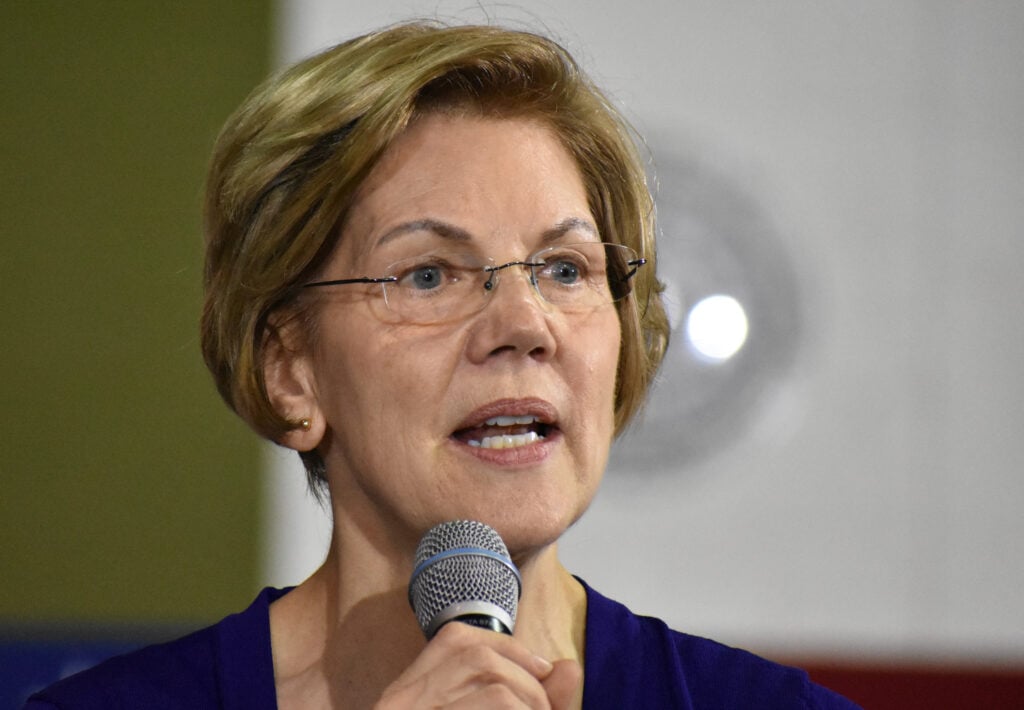
Sen. Elizabeth Warren (D-Mass.) said the richest people should not pay a lower tax rate than working people and called for closing a loophole to protect Social Security.
Warren made the remarks in a post on X on Monday with a video. “The richest people should not pay a lower tax rate than working people. Let’s close this loophole and protect Social Security,” she wrote.
Teacher Versus $10 Million Earner
In the video, Warren said a teacher earning $60,000 pays Social Security taxes on every dollar she earns, and so does a worker earning $184,500. “But someone earning $10 million pays taxes on just the first $184,500. And you know, that’s just not fair,” she said.
Warren said she has a plan “to level the playing field” and that it would keep Social Security solvent for “a whole nother generation.” She ended the video by saying, “We can protect Social Security if everyone pays their fair share. Let’s do this.”
Warren Has Targeted the $184,500 Cap Before
Warren made a similar pitch in September, when she wrote on X that the setup “doesn’t make sense.” The maximum earnings subject to Social Security tax is $184,500 in 2026, and the payroll tax rate is 6.2% for employees and employers. The cap will rise to $192,300 in 2027.
Warren and Sen. Bernie Moreno (R-Ohio) have proposed eliminating the Social Security taxable-earnings cap, requiring high earners to pay the payroll tax on income above the current threshold.
COLA Reaction and Funding Outlook
The cap came up last week after the Social Security Administration (SSA) announced a 3.6% cost-of-living adjustment for 2027. Warren wrote that the $75 average monthly raise “barely covers a tank of gas” and that Congress needs to “scrap the cap and expand benefits for our seniors.”
Sen. Bernie Sanders (I-Vt.) wrote that applying the payroll tax to all income above $250,000 would make Social Security “solvent for 75 years.”
Earlier this month, SSA Commissioner Frank Bisignano said on CNBC’s Squawk Box that the program would be around for another 90 years. The main trust fund is projected to be depleted in 2032, according to the 2026 Social Security Trustees Report, after which income would cover 78% of scheduled benefits.
Disclaimer: This content was partially produced with the help of AI tools and was reviewed and published by Benzinga editors.
Photo courtesy: Shutterstock