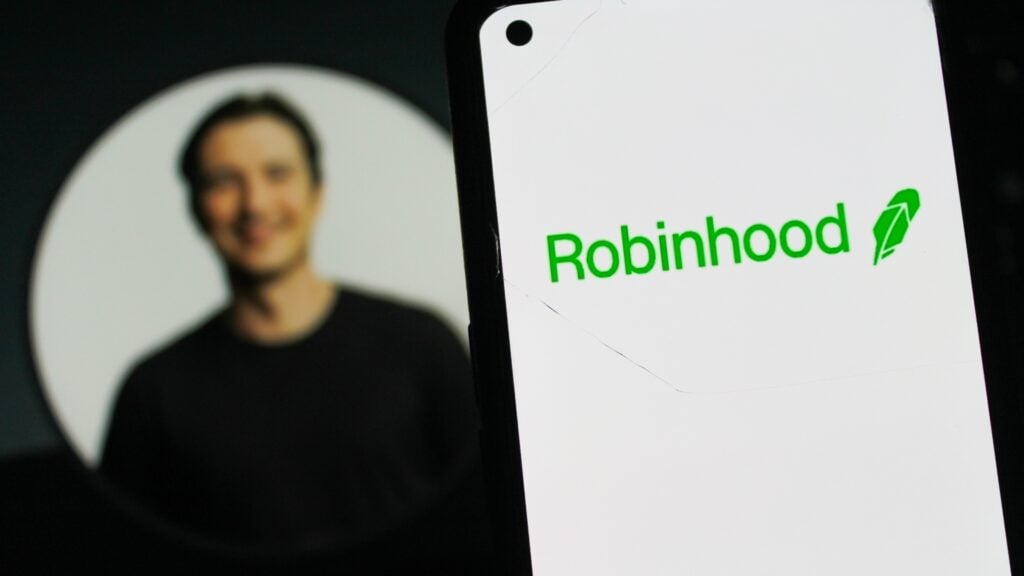
A public feud over tokenized stocks spilled from social media onto television Wednesday, with Robinhood Markets, Inc. (NASDAQ:HOOD) CEO Vlad Tenev pushing back on claims that his company oversteps its bounds.
Once a company goes public, he argued, that company loses the ability to dictate every financial product built on top of its shares.
Tenev’s pushback targeted AMC Entertainment (NYSE:AMC) CEO Adam Aron, who had accused Robinhood of tokenizing AMC shares without the company’s blessing.
Aron framed the practice as a threat to the traditional bond between a company and its shareholders, as well as a form of dilution.
See More:
Top Momentum Stocks
Tenev’s Defense of Tokenized Stocks
Speaking on CNBC’s “Squawk Box,” Tenev cast Robinhood’s tokenization work as a neutral wrapper layered onto stocks that already trade freely. Shares, once public, become transferable property, he said, and other firms should be free to build products referencing them without first seeking the issuer’s blessing.
“Issuers should have control and do have control over the rights and obligations of the stock that they issue, but that doesn’t mean they control everything about it,” he said, per CNBC.
“In particular, they don’t control other companies issuing their own securities that reference those shares.”
Consent, in his view, hinges on the mechanics of the product itself.
“Issuer consent depends on what exactly you’re doing,” Tenev said, “and in the case of Robinhood stock tokens — which are tokenized securities that are issued by a separate entity that are backed by underlying shares — those should not automatically require issuer consent.”
Tokenization, broadly, means creating digital representations of stocks, real-world assets or other value on a blockchain. Token buyers never hold the underlying asset outright.
Voting Rights Left Unresolved
The difference between owning shares and tokenized shares became central to the exchange. Tenev conceded that stock-token holders lose a right ordinary shareholders keep: voting on company matters.
Robinhood built the tokens as debt securities backed by real shares underneath, yet the firm has stayed quiet on what happens to the voting power those shares still carry.
Pressed on whether Robinhood intends to cast votes tied to the shares backing its tokens, Tenev offered no commitment. The company, he said, “hasn’t really announced plans for the voting aspect of that.”
The public dispute comes as tokenization gains traction among retail brokerages eager to widen access to popular names, even as some companies behind those names, AMC among them, push back on losing a say in how their stock gets repackaged.
HOOD Stock Price Activity: Robinhood Markets stock was down 0.75% at $116.45 at the time of publication on Wednesday, according to data from Benzinga Pro.
Photo: Shutterstock