
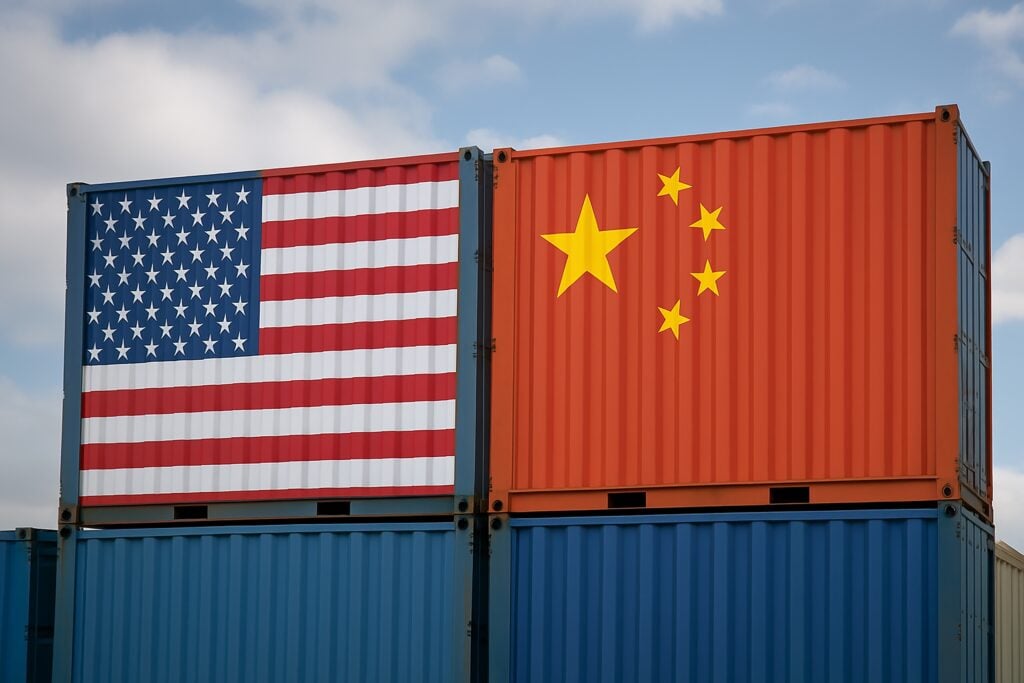
China’s export-driven economic model is approaching a point where global markets may no longer be able to absorb its growing supply of manufactured goods.
The country’s trade surplus reached nearly $1.2 trillion in 2025, growing three times faster than global goods trade, while China’s manufacturing expansion has increased pressure on economies in the U.S., Europe and developing countries.
In an article published in Foreign Affairs in August, Michael B. G. Froman, a former U.S. trade representative and president of the Council on Foreign Relations, warned that the world’s ability to absorb “Chinese overcapacity is approaching a breaking point.”
He warned that a sharp slowdown could spread through China’s trading partners and leave the United States with a major role in managing the fallout.
China’s challenge is not only political. Its economy has become large enough that export growth at several times the pace of global goods trade may eventually leave it without enough foreign demand. At the same time, rising protectionism could restrict access to overseas markets and put further pressure on Chinese manufacturers.
Trade Pushback
The pressure is already appearing in global trade policy. Treasury Secretary Scott Bessent has urged G20 nations to rethink their trade relationships with China, saying the world cannot sustain a country with a $1.2 trillion trade surplus. He has also called for Beijing to move toward greater domestic consumption rather than relying so heavily on exports.
The United States is also weighing additional tariffs on Chinese goods following a Section 301 investigation into excess industrial capacity. The probe targets manufacturing sectors where Washington says persistent trade surpluses and underutilized capacity may be contributing to global imbalances.
China is facing broader resistance as well. At a G20 meeting, the other 19 members backed language addressing cheap exports and policies that worsen global economic imbalances, while China opposed the provisions.
China’s exports rose 25% year over year in August, accelerating from 23.9% growth in July, while imports jumped 28.2%, according to customs data reported by Reuters.
If foreign markets become less accessible, the fallout could spread beyond China. Commodity exporters and developing economies that depend on Chinese demand could face weaker exports and lower prices for raw materials, while Chinese companies, banks and local governments could come under pressure.
The Way Out
Froman argues that the most effective solution is a gradual rebalancing of China’s economy toward domestic consumption, alongside lower industrial subsidies and adjustments to the renminbi. He also calls for coordination among China, the U.S. and other major economies to manage trade barriers and prevent the adjustment from becoming a wider economic shock.
Froman points to the G-20 summit in Miami this December as an opportunity for the U.S. to place China’s economic imbalances at the center of discussions. He argues that Washington should work with other major economies to secure verifiable commitments from Beijing to revalue the renminbi, reduce subsidies and rebalance the economy.
Disclaimer: This content was partially produced with the help of AI tools and was reviewed and published by Benzinga editors.