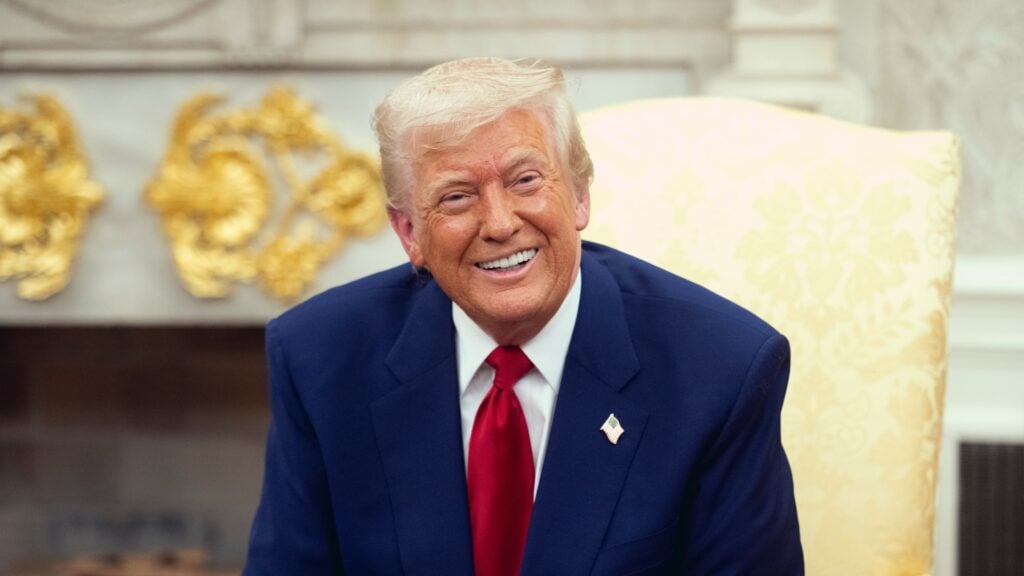
President Donald Trump defended the White House ballroom project as a national security necessity, saying private donors and companies will cover the ballroom’s cost as construction moves forward.
Trump Calls Ballroom Project a National Security Upgrade
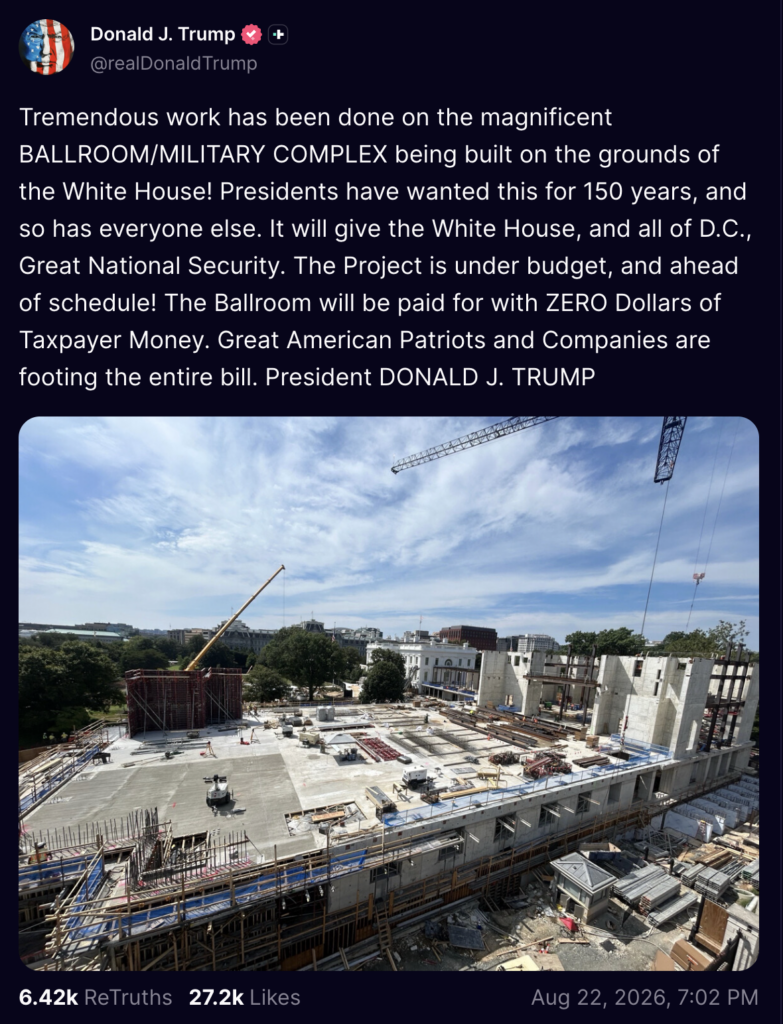
On Saturday, Trump wrote on a Truth Social post that “tremendous work” has been completed on the “magnificent BALLROOM/MILITARY COMPLEX” being built on the White House grounds.
“Presidents have wanted this for 150 years, and so has everyone else,” he said, adding that “It will give the White House, and all of D.C., Great National Security.”
Trump also declared that the project is “under budget, and ahead of schedule.”
“The Ballroom will be paid for with ZERO Dollars of Taxpayer Money,” he said.
He added that “Great American Patriots and Companies are footing the entire bill.”
Supreme Court Temporarily Clears Construction
On Friday, Chief Justice John Roberts temporarily allowed construction to continue while the Supreme Court considers the administration’s emergency appeal, The Hill reported.
The order delays a lower court ruling that would have halted above-ground construction but does not resolve the underlying legal dispute.
Attorney General Todd Blanche welcomed the decision, saying the administration would “keep on building” while the case moves through the courts.
Trump Cited National Security
Earlier, the Trump administration asked the Supreme Court to let White House ballroom construction continue, arguing that the project was part of a broader military-security complex and essential to presidential safety.
The administration said construction was about 65% complete and maintained that the project was on schedule and under budget.
Its estimated cost had risen from $200 million to $400 million and eventually about $600 million, with reports indicating taxpayers could cover roughly half.
The administration disputed those claims, saying about $400 million in private donations had been secured and that no taxpayer dollars were needed.
Disclaimer: This content was partially produced with the help of AI tools and was reviewed and published by Benzinga editors.
Photo courtesy: Shutterstock