
The hottest trade in AI may also be the one Cathie Wood is avoiding.
As investors have piled into high-bandwidth memory (HBM) suppliers such as SK hynix Inc. (NASDAQ:SKHY) and Micron Technology, Inc. (NASDAQ:MU) on expectations of years of AI-driven demand, the ARK Invest founder believes history points in a different direction. And to explain why, she reached for an example from Tesla, Inc. (NASDAQ:TSLA).
Technology companies have a long history of engineering their way around expensive supply constraints rather than accepting them as permanent, she argued on the Insightful Investor podcast.
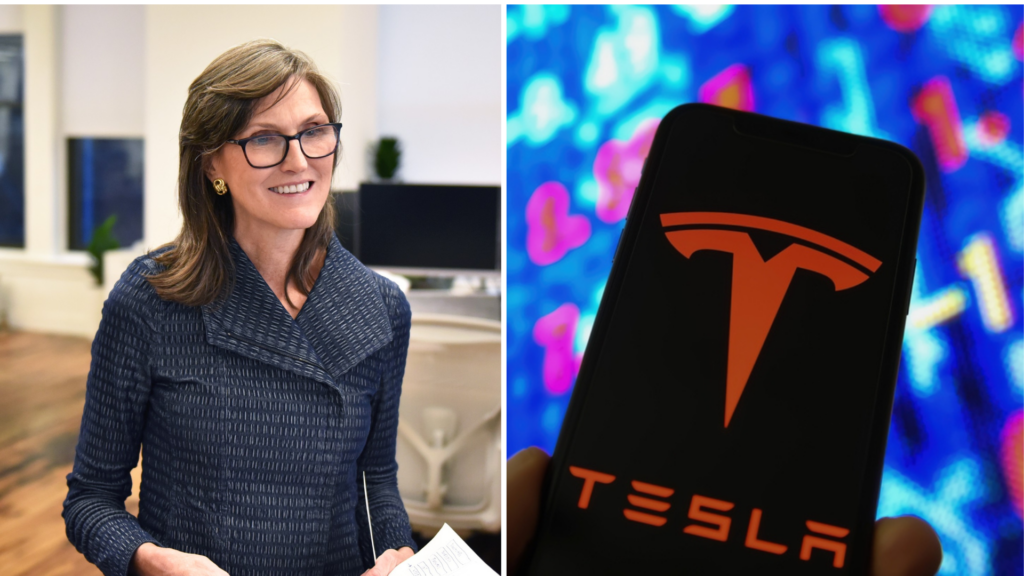
“We’ve seen it many times with Tesla,” she said. “If there’s a supply chain issue… Cobalt from the Congo, using slave labour and all of that, Elon engineered it out – of the batteries. Or, mostly out. And, so we’re seeing engineering out the need for high-bandwidth memory.”
That analogy forms the backbone of her investment thesis.
Rather than viewing HBM as a permanently scarce resource, Wood sees today’s pricing as an incentive for chip designers to rethink AI architectures altogether.
Why Avoid SK Hynix and Micron?
Wood described memory as the “most cyclical” and “most commoditized” segment of the semiconductor industry, arguing that periods of extraordinary pricing rarely persist.
“When prices triple or quadruple or go up tenfold, that is not the normal state for technology,” she said. “That’s actually a negative, but most people think it’s a huge positive.”
Instead of betting on sustained pricing power for memory manufacturers, Wood believes innovation will gradually reduce dependence on external HBM for AI inference.
She pointed to companies including Cerebras Systems Inc. (NASDAQ:CBRS) and Groq, whose inference-focused architectures rely heavily on fast on-chip memory and, in certain workloads, can reduce or avoid the need for traditional high-bandwidth memory. According to Wood, “We’re seeing engineering out the need for high-bandwidth memory when it comes to inference.”
That distinction matters because industry observers expect inference—the stage where trained AI models generate responses—to become a much larger computing market than model training.
Cathie Wood Questions AI Memory Cycle, Not the AI Boom
Wood isn’t bearish. Instead, she is drawing a distinction between AI demand and the components that capture the most value from that demand.
Extraordinary profits tend to attract capital, new supply and ultimately competitive pressure. But soaring HBM pricing is “an invitation for SK Hynix and Samsung” to expand production, she said.
“When I see a lot of capital flowing very quickly into a very cyclical industry, I basically say, you have it. I’m going to be focused on how to solve that pricing problem,” she added.
That is a different investment philosophy from simply chasing the fastest-growing segment of the semiconductor market.
Wood’s thesis ultimately rests on a familiar principle in technology investing: today’s bottleneck often becomes tomorrow’s engineering challenge. Whether AI inference architectures meaningfully reduce reliance on HBM remains an open question, particularly as demand for increasingly powerful AI models continues to grow.
Cathie Wood: courtesy Ark Invest Tesla: Shutterstock