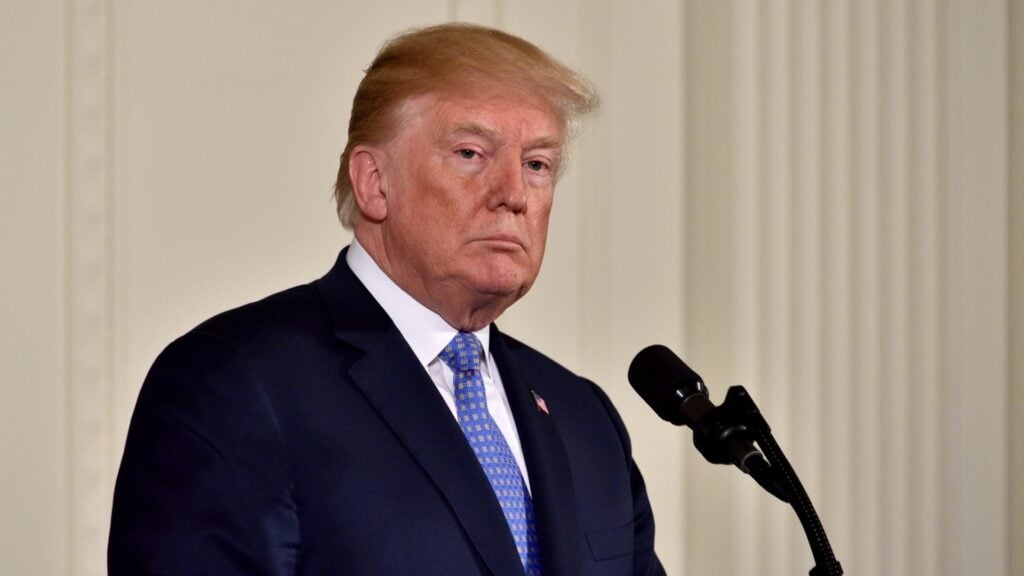
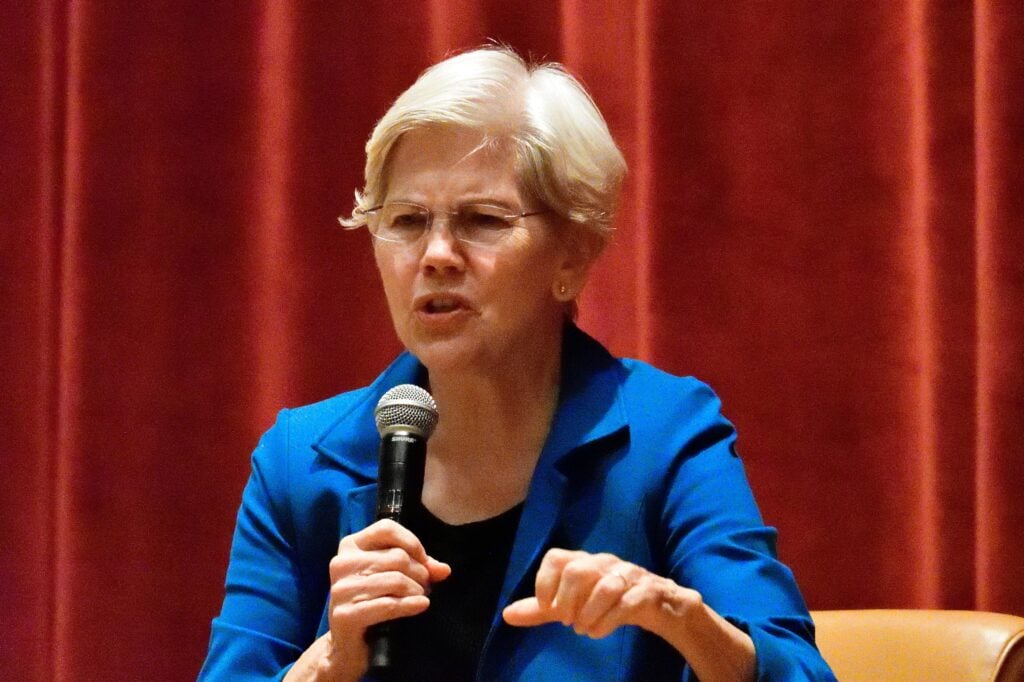
Sen. Elizabeth Warren (D-Mass.) criticized President Donald Trump’s economic record, arguing that weaker job growth, slowing wages and rising costs are squeezing American workers.
July Jobs Fall, Wage Growth Slows
On Tuesday, Warren aimed at Trump’s economic policies in a post on X, citing the latest labor-market figures.
“Trump’s failed economic policies are hammering America’s workers,” Warren said.
She added, “July: 23,000 jobs lost. Wage growth: slowest in five years.”
She further said, “And after accounting for rising costs, workers’ paychecks are shrinking.”
Warren contrasted the figures with Trump’s economic promises, saying, “Trump promised an economic boom. Instead, families are getting squeezed.”
Conflicting Views on Trump’s Economy
Earlier, Moody’s chief economist Mark Zandi blamed lower labor demand, Trump’s immigration policies, tariffs and the war in Iran for putting pressure on the U.S. economy, warning of slower growth and higher inflation.
He said AI had helped prevent the economy from falling into “complete shambles.”
Rep. Jim Jordan (R-Ohio) said the economy had been moving in a “pretty good direction,” while acknowledging that high costs had continued to pressure middle- and working-class families.
He said Republicans had delivered on tax cuts and were working to improve affordability.
Meanwhile, Trump warned that expansive government benefits could eventually weaken the economy.
He argued that losing companies and their tax contributions could shrink the tax base and lead to “hunger and squalor and death and destruction.”
Full-Time Employment Continued to Decline
Last week, The Kobeissi Letter said the U.S. labor market had shown deeper weakness, with full-time employment falling by 106,000 in July to 133.55 million, its lowest level since December 2024.
The decline marked the fourth consecutive monthly drop, bringing the total decrease to 1.11 million. Since January 2025, full-time employment had fallen by 2.35 million.
The market commentator said full-time employment had been only 1.4% above pre-pandemic levels, while the full-time employment-to-total employment ratio had dropped to 82.4%.
“The US labor market is weak beneath the surface,” The Kobeissi Letter said.
The unemployment rate fell to 4.1% in July, while the labor-force participation rate declined to 61.4%.
Disclaimer: This content was partially produced with the help of AI tools and was reviewed and published by Benzinga editors.
Photo courtesy: Shutterstock