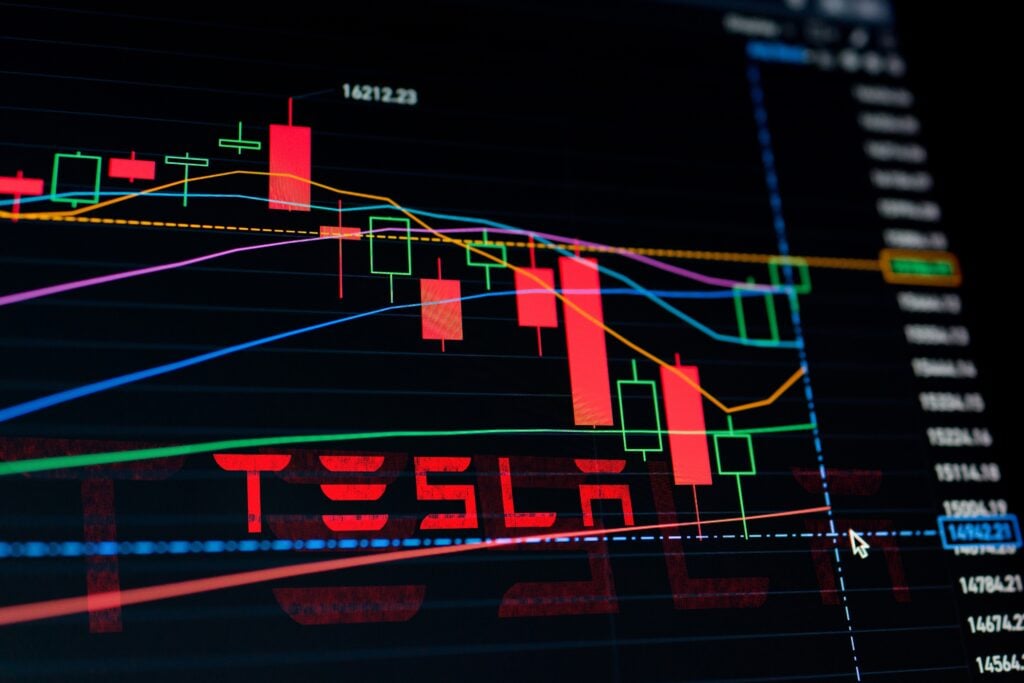
Tesla, Inc. (NASDAQ:TSLA) investors gave a resounding thumbs-down to the EV maker’s latest earnings report, causing shares to suffer a historic collapse on Thursday, wiping out $214.5 billion in market value in a single session. That’s more than the entire market capitalization of Toyota Motor Corp (NYSE:TM).
The stock plunged 14.52% to close at $319.69—the largest one-day loss in Tesla’s history. Trading volume surged to 115.61 million shares, more than double its three-month daily average of 49.4 million shares.
The rout spilled over to Wall Street analysts. According to Benzinga Pro, both JPMorgan and UBS lowered their price targets on Tesla following the results, reflecting growing concerns over the company’s profitability and increasingly expensive AI ambitions.
Earnings Miss Was Only the Beginning
Tesla’s second-quarter results gave investors multiple reasons to hit the sell button.
While revenue topped Wall Street estimates, adjusted earnings of 33 cents per share fell well short of expectations as automotive margins deteriorated. Gross margin slipped below analyst forecasts, highlighting continued pressure on Tesla’s core vehicle business even as deliveries improved.
But the bigger surprise came below the income statement.
Tesla reported negative free cash flow for the first time in more than two years after capital expenditures more than doubled to roughly $5.8 billion. Management also said capital spending will exceed $25 billion in 2026 and continue climbing as the company ramps investments in robotaxis, Optimus humanoid robots, AI infrastructure and next-generation manufacturing.
Wall Street Wanted More Than AI Promises
Tesla has long argued that its future valuation depends less on selling cars and more on becoming an AI and robotics company.
The earnings call reinforced that strategy, but investors appeared unconvinced that the payoff is close enough to justify the growing bill. Analysts noted that while spending plans became clearer, updates on commercialization timelines for Robotaxi, Optimus and other AI initiatives offered few new catalysts to offset concerns about mounting cash burn.
The market’s reaction suggests investors are beginning to ask a tougher question: if Tesla is entering one of the heaviest investment cycles in its history, how long will shareholders have to wait before those billions translate into higher earnings?
Thursday’s answer was painful. In a single trading session, Tesla lost more market value than Toyota is worth. And with JPMorgan and UBS joining the growing list of firms trimming their expectations, Wall Street is signaling that Tesla’s AI future may take longer—and cost more—than investors had anticipated.
Photo: TY Lim / Shutterstock