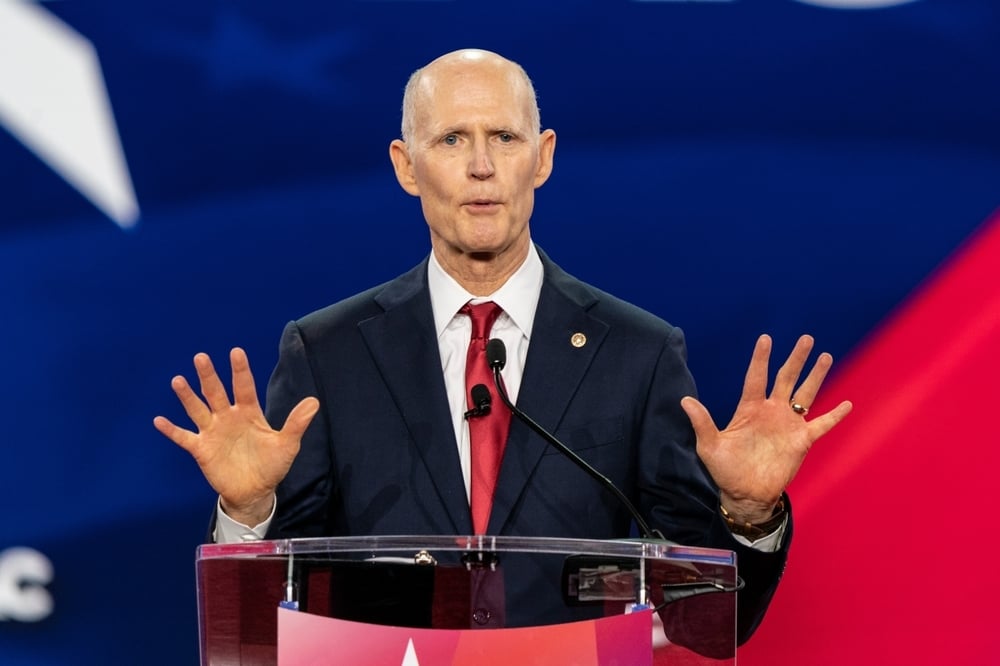
Sen. Rick Scott (R-Fla.) warned of growing economic risks as rising U.S. borrowing costs pushed long-term Treasury yields to levels not seen since the period before the 2008 financial crisis, renewing concerns over federal debt and spending.
Treasury Yields Surge Amid Debt Concerns
On Monday, in a post on X, Scott raised concerns about the nation’s growing debt burden after sharing a post from The Kobeissi Letter highlighting rising costs to finance U.S. government borrowing.
“Does anyone remember what happened after 2007? Things got bad. We don’t want to go back there,” he said.
The senator argued that Congress needs to take action to reduce federal spending, adding, “The only way out of this is for CONGRESS to stop spending like there’s no tomorrow.”
“Cut up the credit cards and start tackling our debt like any responsible family would do,” Scott said.
He added, “Let’s act like we have some sense before it’s too late!”
US Borrowing Costs Hit 2007 Levels
The Kobeissi Letter pointed to a recent 30-year Treasury bond auction where yields reached 5.06%, marking the highest auction result for the maturity since 2007.
The 30-year Treasury yield also moved back above 5%, reflecting investor concerns over rising government borrowing needs, inflation risks and increased Treasury supply.
The firm noted that long-term borrowing costs have climbed sharply from early 2022, when similar Treasury auctions were priced near 2%.
2007–08 Financial Crisis
The 2007–08 financial crisis was a global financial meltdown triggered by the collapse of the U.S. housing market.
It caused severe liquidity shortages, the failure or near-failure of major financial institutions, and led to the Great Recession, the worst economic downturn since the Great Depression.
Dimon Warned Of Pre-2008 Market Risks
Earlier this year, JPMorgan Chase CEO Jamie Dimon warned that the financial environment resembled the period before the 2008 crisis, with high asset prices, increased borrowing and greater risk-taking.
He said competition among financial firms was encouraging some companies to take excessive risks, while warning that geopolitical tensions, trade conflicts and other global uncertainties could pose serious long-term threats to the economy.
Debt Burden Raises
Last week, publicly held U.S. federal debt also surpassed 100% of GDP for the first time since 1946, raising concerns over long-term economic risks.
Analysts noted that the debt surge reflected decades of spending and policy challenges rather than a major global crisis, while rising debt-service costs had increased pressure on the federal budget.
Disclaimer: This content was partially produced with the help of AI tools and was reviewed and published by Benzinga editors.
Image via Shutterstock