
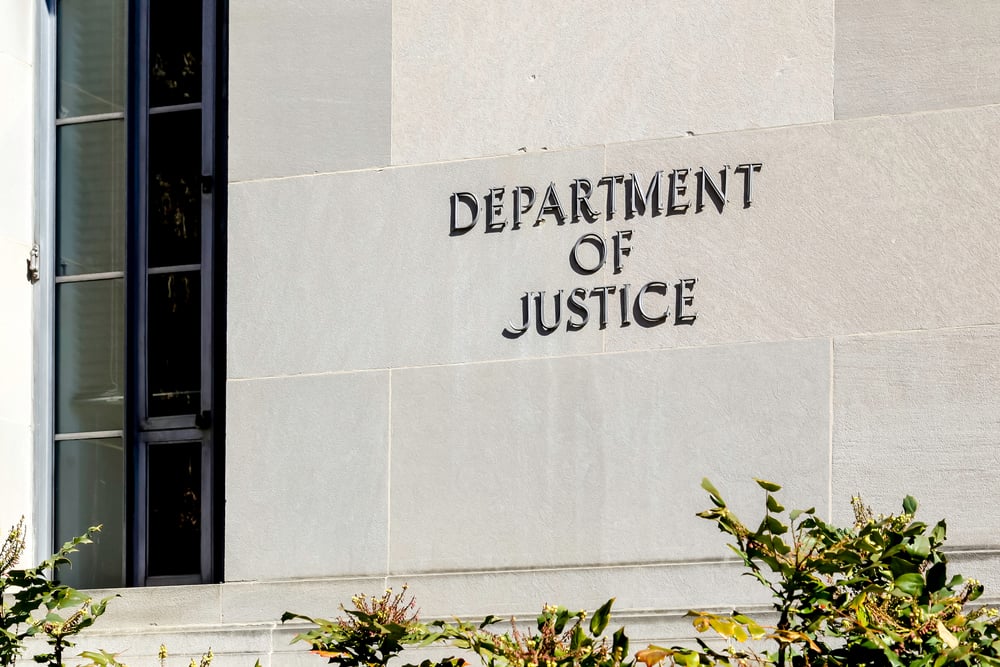
Federal prosecutors are seeking a prison sentence far below federal sentencing guidelines for a defendant in the infamous $100 million New Jersey deli stock-manipulation case, but key portions of the government’s reasoning reportedly remain hidden from public view.
DOJ Recommends 12–18 Months Despite Guidelines Calling For More
Federal prosecutors have asked a judge to sentence former stockbroker James Patten to 12 to 18 months in prison, even though federal sentencing guidelines recommend 70 to 87 months for his role in the securities fraud scheme, CNBC reported on Friday.
The recommendation, disclosed in a sentencing memorandum filed ahead of Patten’s July 21 sentencing before U.S. District Judge Christine O’Hearn in Camden, argues that a shorter prison term would avoid “unwarranted sentence disparities among defendants with similar records who have been found guilty of similar conduct.”
Prosecutors noted that Patten’s co-defendants already received significantly lighter sentences. Peter Coker Sr. was sentenced to six months in prison, while Peter Coker Jr. received a 40-month sentence.
“A sentence more severe than his co-defendants’, particularly Coker, Sr.’s, would be unfair,” prosecutors wrote.
Hometown International And E-Waste Were At The Center Of Fraud
The case drew widespread attention after Hometown International, which owned a single, unprofitable deli in Paulsboro, New Jersey, reached a market capitalization of more than $100 million despite its modest business.
A second company, E-Waste, a shell company with little underlying business, also saw its valuation soar after prosecutors said its shares were manipulated as part of the same scheme.
Authorities alleged the inflated stock prices made both companies more attractive candidates for reverse mergers. Prosecutors said investors ultimately lost nearly $5 million, including consulting fees paid to Patten and the Cokers.
Redacted Court Filing Keeps DOJ’s Full Rationale Secret
While prosecutors publicly outlined some reasons for seeking a reduced sentence, three of the filing’s 11 pages remain heavily redacted, concealing their full justification for requesting a significant downward variance from the sentencing guidelines, the report said.
Prosecutors Still Say Prison Is Warranted
Despite seeking a lighter sentence, prosecutors said Patten “participated in a serious crime” and “played an important role” in the fraud scheme.
They also cited his criminal history, noting he was convicted of mail fraud in 2010 and served about two years in prison before being released in 2012.
“A prison sentence is necessary because his return to fraud so soon after spending approximately two years in prison is troubling,” prosecutors wrote.
Disclaimer: This content was partially produced with the help of AI tools and was reviewed and published by Benzinga editors.
Image via Shutterstock