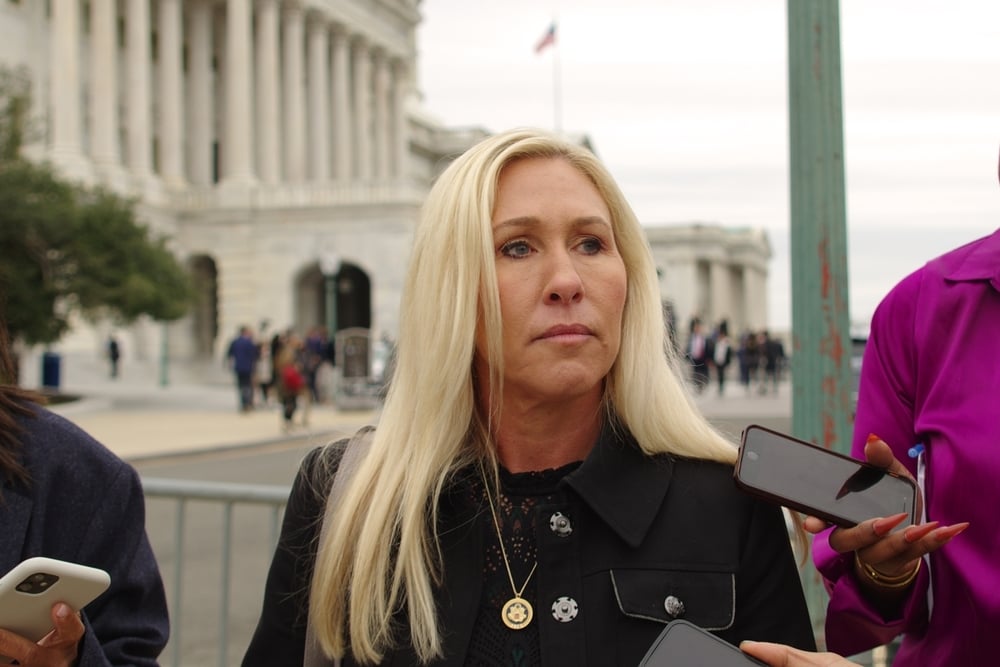
Former Congresswoman Marjorie Taylor Greene said Wednesday she does not have health insurance and traveled to Mexico for stem cell therapy, citing soaring U.S. healthcare costs as a key reason.
In a post on X, Greene said many Americans are leaving the U.S. for medical treatments they either cannot access at home or cannot afford.
Greene said the stem cell therapy she received is not approved by the U.S. Food and Drug Administration, which is one reason she sought treatment in Mexico.
Healthcare Costs Continue Rising
Greene said a family of four in the U.S. can spend up to $27,000 a year on health insurance, with another $7,000 to $10,000 in deductibles.
“Health insurance is absurdly expensive,” Greene said.
Her comments came as new data from Gallup and West Health showed healthcare affordability in the U.S. fell to its lowest level in five years.
Only 49% of U.S. adults said they could consistently afford quality healthcare and prescription drugs in 2025, down from 61% in 2022.
The survey found that about 2.8 million more Americans struggled to afford healthcare in 2025 than in 2024.
Rising Costs Strain Americans
Gallup found young adults, women, Black and Hispanic Americans, and people with chronic or mental health conditions were among the groups facing the biggest affordability challenges.
Concern over future healthcare costs is also rising. About 51% of Americans said they worry about paying for healthcare services, while 42% said they are concerned about affording prescription drugs.
Healthcare costs are also rising for insured Americans. Employer health benefit costs are expected to rise 6.7% in 2026 to at least $18,500 per employee, the largest annual increase in 15 years.
Many large employers are also expected to raise deductibles, copays and out-of-pocket costs, while prescription drug benefit costs are projected to rise around 9% in 2026.
Healthcare costs have become a growing political issue across party lines. Earlier this month, Sen. Bernie Sanders (I-Vt.) said the U.S. spends more than $15,000 per person on healthcare while millions remain uninsured or underinsured, calling for broader healthcare reform.
Disclaimer: This content was partially produced with the help of AI tools and was reviewed and published by Benzinga editors.
Image via Shutterstock