
Crude began unwinding months of conflict premium after the Trump administration claimed that the Strait of Hormuz has reopened as part of an agreement reached with Iran on Sunday.
Yet three corners of the market that the war hammered have still not climbed back to where they traded the day it began.
West Texas Intermediate slid to around $80 a barrel on Tuesday, its lowest since early March, after President Donald Trump said on social media that the deal with Iran was complete and the U.S. naval blockade would be lifted.
But financial markets are sending a different signal beneath the rally.
The Laggards The Rally Left Behind
Wall Street has continued to hit record highs since the U.S. attacked Iran in February. The SPDR S&P 500 ETF Trust (NYSE:SPY) rose 10% throughout that time.
But not all sectors have shared in the rally, with some of the market’s biggest laggards posting steep losses.
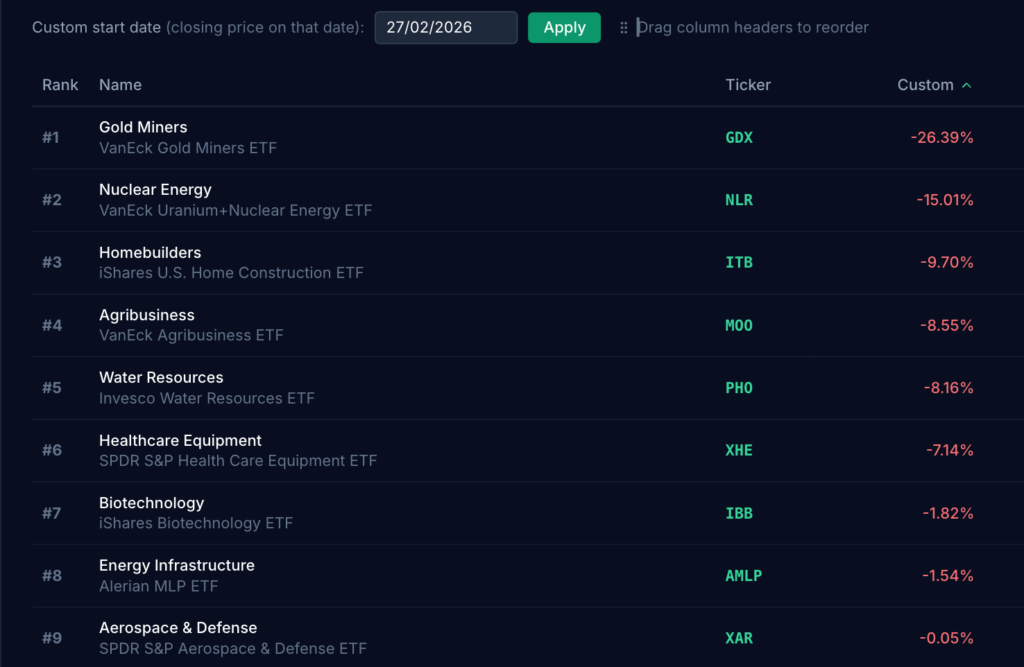
Data from CountryETFTracker, which measures performance against the Feb. 27 starting point of the conflict, shows three U.S. industry funds still in negative territory nearly four months later. They are the laggards the recovery left behind:
- The VanEck Uranium and Nuclear Energy ETF (NYSE:NLR) has lost 15.01%, ranking as the second-worst industry over the same stretch.
- And the third-worst performer has been the iShares U.S. Home Construction ETF (NYSE:ITB), which is off 9.70%.
Gold Miners Took A Double Hit
Mminers were squeezed on both sides during the Iran war. Gold has fallen about 17% from its Feb. 27 level, and silver is down roughly 24% as rising Treasury yields lifted the opportunity cost of holding metals that pay no income.
At the same time, the war drove energy costs higher, inflating the fuel and power bills that dominate mining budgets. Lower output prices met higher input costs.
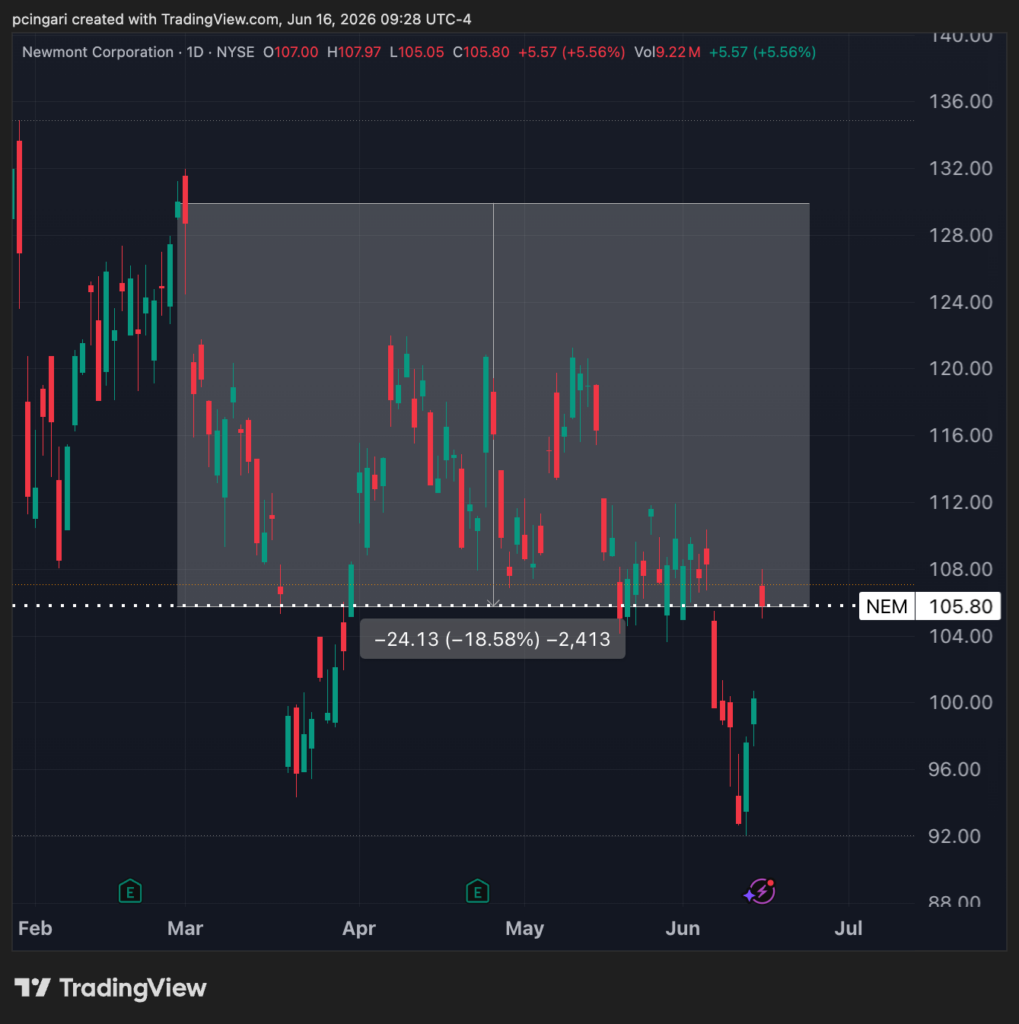
Shares of Newmont Corp. (NYSE:NEM), the world’s largest gold miner, remain 18% below their pre-war levels, though they rallied 5.6% on Monday after President Donald Trump announced a peace deal.
Rates Crushed Nuclear And Housing
Nuclear and uranium names were caught in the same vise.
The companies that build reactors and dig for uranium have cash flows that are years or decades in the future, making them acutely sensitive to interest rates.
When the oil shock pushed inflation to a 4.2% annual rate in May and forced markets to price out Federal Reserve cuts, the 10-year Treasury yield climbed above 4.5% and the present value of those distant payoffs shrank.
Homebuilders ran into the same wall.
Higher long-term yields feed straight into mortgage rates, and richer mortgage rates cool buyer demand.
The rate backdrop punished nuclear housing, too.
The Reversal Test
The common thread is rates, and rates were a function of the war. The conflict pushed oil higher, oil pushed inflation higher and inflation pushed yields higher.
Every link in that chain leaned on these three groups. Now the chain is running in reverse.
If the cease-fire holds and oil keeps sliding, May’s inflation print may mark the ceiling of this cycle, and the yield pressure that flattened gold miners, nuclear and homebuilders could ease with it.
What’s Next?
The Federal Reserve delivers its next decision on Wednesday, Kevin Warsh‘s first as chair, with fresh projections that will tell investors how far the reversal might run.
Even with the agreement reached on Sunday, the situation remains fragile. Iran has put Israel on notice that further military action in Lebanon or any ongoing presence on Iranian soil would be considered a breach of Tehran’s newly signed agreement with Washington.
Image: Shutterstock