Iran’s economic pressure is reportedly intensifying, with food prices surging, the rial collapsing and workers reporting unpaid salaries as U.S. sanctions restrict Tehran’s ability to export oil.
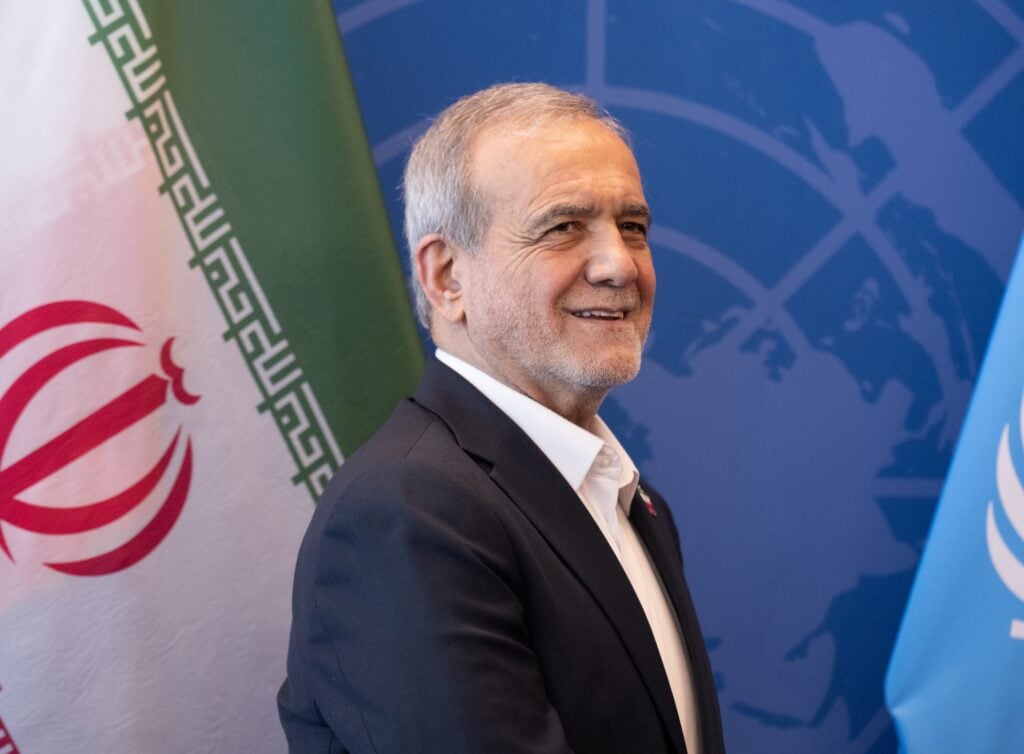
During a televised national address last week, President Masoud Pezeshkian said, “We have no money,” underscoring the financial strain visible across Iranian cities, the Wall Street Journal reported on Wednesday. Diplomacy intended to end the war remained stalled as the government confronted mounting economic problems.
Government statistics cited by the Journal indicate that food and beverage prices increased more than 110% from a year earlier. The surge has placed additional pressure on households already dealing with weakening purchasing power. Authorities were reducing food and electricity subsidies while workers protested delayed wages.
Iran’s rial has fallen to about 2.9 million per dollar, compared with 32,000 per dollar when Tehran reached its 2015 nuclear agreement with world powers, according to the WSJ. Pezeshkian described the pressure as “a silent war” and “an economic war” during his remarks on Nov. 20 and Nov.21.
Iran’s rial hit a record low against the U.S. dollar on Wednesday, with the greenback trading above 2.9 million rials on the open market, reported Iran International. Notably, the official exchange rate stood at approximately 1.96 million rials per dollar as of Nov. 26.
US Sanctions Intensify Economic Pressure
The latest economic deterioration follows escalating U.S. measures. On Nov. 24, Treasury Secretary Scott Bessent announced sanctions targeting more than two dozen Iranian exchange houses, front companies and key personnel under the administration’s Operation Economic Outcast.
Later, Bessent said that Iran had not loaded a single tanker with oil since Operation Economic Outcast began in August. Meanwhile, Iranian security chief Mohsen Rezaee dismissed President Donald Trump’s blockade as “delusional” and “futile,” comparing it to Washington’s failed war strategy. He warned that Tehran was determined to break the blockade and would respond with “full force” to any further U.S. aggression.
Earlier this week, Iran vowed to use all available means to challenge the U.S. naval blockade, calling it an act of military aggression that is damaging its economy. Foreign Ministry spokesperson Esmaeil Baghaei said Tehran considers the blockade, along with the U.S.-Israeli military campaign, an unlawful use of force and invoked Article 51 of the UN Charter to assert its right to self-defense.
West Texas Intermediate (WTI) futures contracts expiring in January climbed 1.68% to $85.08. Brent futures contracts expiring in February also rose 0.05% to $91.71 at the time of writing.
Disclaimer: This content was partially produced with the help of AI tools and was reviewed and published by Benzinga editors.
Image via Shutterstock