
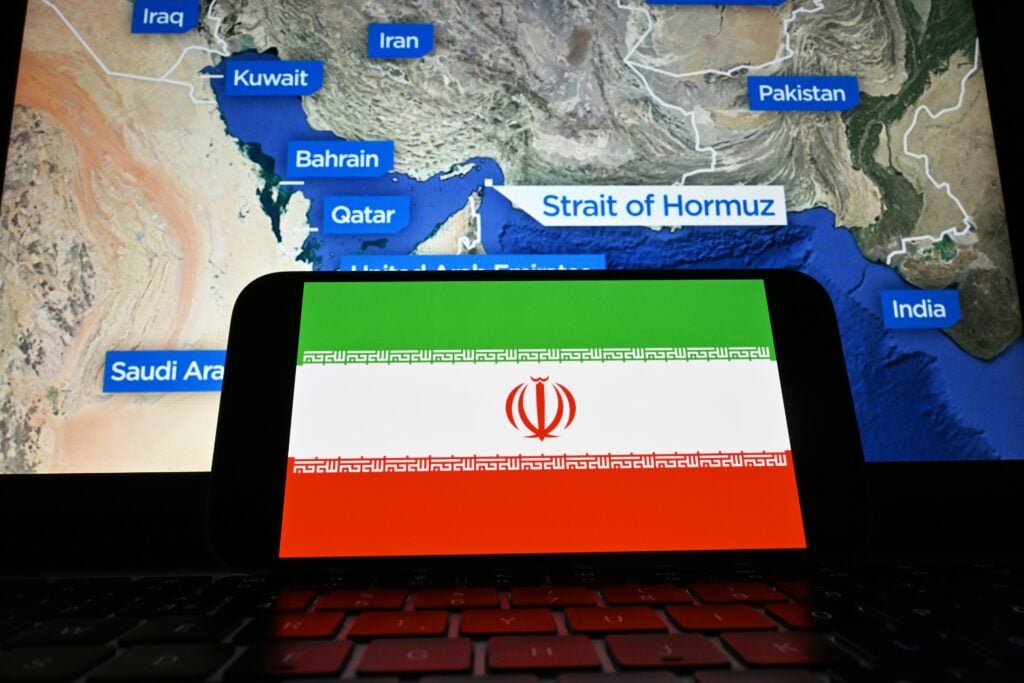
Iran’s Parliament Speaker and chief negotiator Mohammad Bagher Ghalibaf warned that the Strait of Hormuz would “never return” to its pre-war status, asserting that Tehran and Oman should govern the strategic waterway rather than international maritime regulations.
Iran Challenges International Rules Governing Hormuz
In an Al Jazeera interview published on Wednesday, Ghalibaf said both countries had reached an understanding on overseeing shipping through the strait as part of Iran’s seven conditions for ending the US-Israel war.
“There are no ‘free waters’ [international waters] there,” Ghalibaf declared, arguing that the 1982 United Nations Convention on the Law of the Sea does not apply to the strait.
He maintained that maritime regulations fall under Iranian and Omani laws, reinforcing his earlier warnings that Washington cannot pressure Tehran without consequences.
However, Article 38 of the United Nations Convention on the Law of the Sea recognizes the right of transit passage through international straits, while Article 44 prohibits bordering states from hampering such passage. Although Iran has signed but not ratified the convention, the U.S. maintains that these navigation rights reflect customary international law.
The White House did not immediately respond to Benzinga’s request for comment.
Tehran Demands Washington Accept Seven Conditions
Ghalibaf said Iran submitted its demands through Qatari mediation and awaits Washington’s response. “The ball is now in the American court,” he declared.
The conditions include lifting American sanctions and the naval blockade, releasing frozen Iranian assets and formally ending hostilities across the region.
Tehran previously refused to reopen Hormuz without guarantees under the June Islamabad agreement.
“What stands in the way of an agreement is our lack of trust in the United States,” Ghalibaf added, warning President Donald Trump against renewed attacks.
Shipping Attacks Threaten Fragile Peace Prospects
Reuters reported Wednesday that Iran attacked navigation infrastructure on Oman’s Didamar island, highlighting persistent maritime risks despite diplomatic efforts.
The conflict has disrupted global oil shipments, with Reuters reporting 37 vessel attacks in October.
The US Energy Information Administration reported in March that approximately 20.9 million barrels of oil passed through Hormuz daily during the first half of 2025, highlighting the waterway’s importance to global energy markets.
Disclaimer: This content was partially produced with the help of AI tools and was reviewed and published by Benzinga editors.
Photo courtesy: Shutterstock