
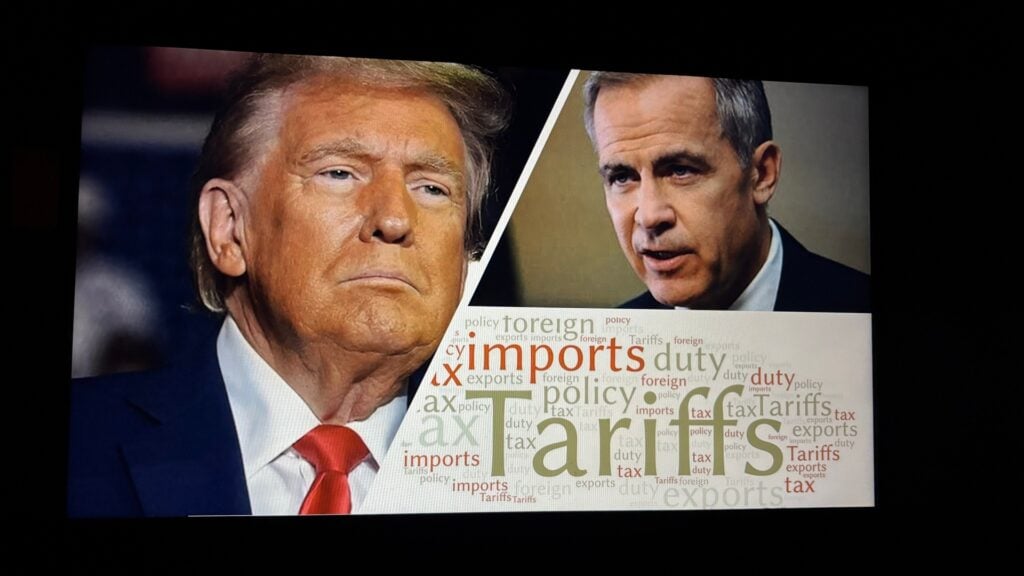
Democrats plan to make President Donald Trump‘s tariffs on Canadian imports their first major legislative target after taking control of Congress in January, with Senate Democrats hoping to attract Republican support for a repeal.
Democrats Target Canada Tariffs After Midterm Victory
“There is overwhelming support for repealing the tariffs on products from Canada,” Sen. Ron Wyden (D-Ore.) told The Wall Street Journal in a report published on Thursday. The incoming Senate Finance Committee chairman said he was “already talking” with colleagues about legislation after Democrats assume control in January.
Trump imposed 50% tariffs on approximately $20 billion in Canadian imports in August, invoking Section 338 of the Tariff Act of 1930. Canada subsequently retaliated against American products, escalating a dispute that drew criticism from Democratic leaders.
Trump later exempted selected Canadian imports, including machinery and packaging materials, while adding others to the tariff list. The administration defended the measures as necessary to counter Canada’s treatment of American commerce.
Benzinga reached out to Sen. Wyden office, the White House and the U.S. Trade Representative (USTR) for comment but did not receive an immediate response.
Republican Defections Could Strengthen Democratic Repeal Efforts
Democrats are hoping opposition in trade-dependent states will attract Republican support. They already have some precedent: In February, six Republicans joined Democrats in the House to pass a 219-211 resolution opposing Trump’s earlier Canada tariffs imposed under the International Emergency Economic Powers Act.
The vote came before the Supreme Court struck down Trump’s use of IEEPA to impose tariffs. The current 50% Canada tariffs, however, rely on Section 338 of the Tariff Act of 1930, a separate authority.
However, Democrats’ 54 Senate seats fall short of the 60 votes generally needed to overcome a filibuster. Overriding Trump’s veto would require two-thirds support in both chambers, making immediate repeal difficult.
Trump Retains Broad Authority Over Trade Policy
“Ultimately, Congress must take away the president’s ability to unilaterally and arbitrarily impose tariffs,” Wyden said.
Democrats could also challenge Trump’s use of Sections 338 and 122, although broader restrictions on presidential trade powers face bipartisan resistance. The Supreme Court struck down Trump’s emergency tariffs in February this year, but other trade authorities remain available.
Meanwhile, Trump has continued exploring negotiations with Canada, while his administration prepares additional trade measures. Reuters reported on Sunday that the White House intends to continue exercising executive authority despite Democrats’ congressional victory.