
The ongoing war in Iran has had far-reaching consequences across the board since it kicked off at the end of February this year, with the world grappling with high energy and food costs, among other impacts. Ride-hailing giant Uber Technologies Inc. (NYSE:UBER), too, is feeling the pressure.
Iran War Causing Uber to Rethink Emerging Market Strategy?
During the company’s Q3 2026 earnings call on Wednesday, Uber’s CFO Balaji Krishnamurthy was asked about supply constraints in emerging markets like Brazil and India.
“With the escalation in the war in the Middle East, fuel cost impacts have been felt globally,” Krishnamurthy said. He added that the impact shows up “materially” in emerging markets, “where there is a level of price sensitivity on both the consumer and the driver side.”
He then added that Uber had “seen the elevated fuel price impact in markets like Brazil and India, in particular, quite meaningfully impacting the supply situation.”
Uber CEO Weighs in on Incentives, Pricing and Algorithms.
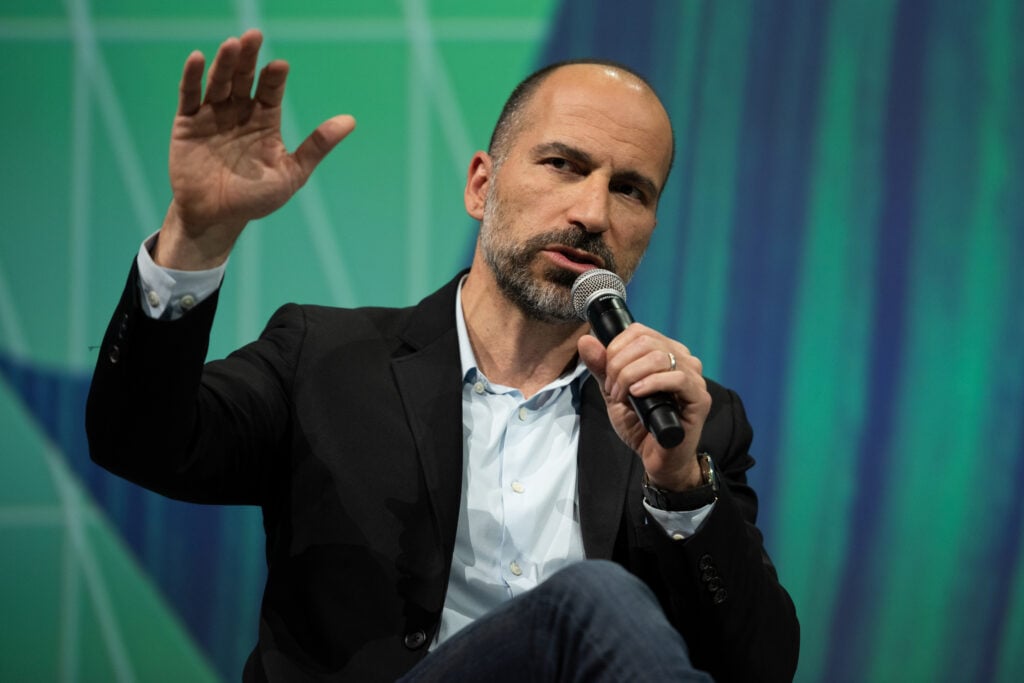
Uber CEO Dara Khosrowshahi also chimed in and offered more insights, saying that Uber offered incentives to both customers and the delivery partners/driver partners that were dependent on special days, places etc.
“The cool thing is that we just rebalance incentives between riders and drivers,” Khosrowshahi said. However, he also acknowledged the impact of geopolitical tensions on prices.
“Last year, more of the incentives went to riders to reduce price, now this year, we are taking down rider incentives, and we are using those dollars to fund driver incentives,” he said, which could translate to higher prices for riders.
“We will do trade-offs against profitability, but that is something that we handle. There is a flexible incentive pool that we allocate to supply or demand based on the balance of the marketplace,” Khosrowshahi outlined.
The CEO also outlined the role of algorithms to determine where to allocate incentives. “There is a lot of science, algorithmic science that goes into [incentives],” he said.
“The algorithms are making these choices, and they structurally can make these choices based on training on billions of trips, and they can allocate these investments in a way that humans just can’t,” Khosrowshahi said.
Uber Earnings
Uber’s third-quarter revenue of $14.77 billion was up 10% YoY and also exceeded Wall Street consensus estimate of $14.70 billion. The ride-hailing company’s adjusted EPS of 88 cents per share, however, missed the analysts’ consensus of 91 cents per share, according to Benzinga Pro data.
Uber also repurchased $750 million worth of shares in Q3 as the company’s gross bookings also grew 20% YoY to $59.8 billion during the quarter.
Price Action: UBER shares were up 0.07% to $69.92 during overnight trading on Wednesday after the stock surged 4.91% to $69.87 at market close.
Check out more of Benzinga’s Future Of Mobility coverage by following this link.
Photo courtesy: Shutterstock