Election forecaster Nate Silver says Democrats are clear favorites to take control of the Senate in Tuesday’s midterms, despite needing victories in Republican strongholds that haven’t elected a Democratic senator in decades.
“It would be a really bad night for pollsters if Democrats don’t win the Senate,” Silver said on Bloomberg’s Odd Lots podcast, published Tuesday and recorded Oct. 29.
Silver’s final forecast gives Democrats an 82.4% chance of winning the Senate, up from 57.3% when his model launched in August.
Democrats Lead in Republican Strongholds
Republicans hold 53 Senate seats, against 45 Democrats and two independents who caucus with them. Democrats need four net pickups to take control.
Kansas hasn’t elected a Democratic senator since 1932. Texas hasn’t elected one since 1988.
Yet Silver’s final polling averages show Democrats leading by four points in Kansas and 3.3 points in Texas. Democrats also lead in Ohio and Maine, and in Michigan, where they are defending an open seat.
Silver cited President Donald Trump’s roughly 37% approval rating, economic dissatisfaction and the Iran war as factors hurting Republicans.
Silver said Republicans appear to recognize the danger, citing their polling and campaign activity in traditionally safe states.
“They’re bracing for a landslide,” he said.
Why Silver Trusts the Polls
Pollsters underestimated Trump in three consecutive presidential elections, raising an obvious question: why should anyone trust polls showing Democrats ahead this time?
Silver argues that the problem wasn’t necessarily a systematic Republican polling bias. Instead, Trump attracts voters, particularly younger men, who rarely participate in elections and are difficult for pollsters to reach.
Those voters can be missed or dismissed as unlikely to vote in surveys, only to turn out for Trump on Election Day.
But without Trump on the ballot, many may stay home. Silver points to the 2025 gubernatorial elections in Virginia and New Jersey, where polls actually underestimated Democrats.
He acknowledges that polling errors can still occur across several states simultaneously, potentially changing the Senate outcome. But he argues there’s little reason to assume another Republican polling surprise simply because it happened in previous presidential elections.
Silver said AI could be the one policy area where Congress takes action before 2028, even if the election produces political gridlock.
Silver said he would watch for evidence that voters punish candidates seen as too supportive of AI. Any measures that slow data-center construction could affect demand for chips from Nvidia (NASDAQ:NVDA), a major supplier to the AI industry.
Silver Explains the Polymarket Gap
On Polymarket, traders give Democrats approximately a 78% chance of taking the Senate, slightly below Silver’s forecast.
That’s up from 72% on Friday, when traders were increasingly pricing in Democratic control of Congress.
Silver believes prediction markets have “a slightly Republican leaning clientele.”
He said his model and Polymarket’s state-by-state forecasts had a correlation of 0.995, but suggested large traders could explain some of the difference in their overall Senate predictions.
Silver said calling the Senate a toss-up would be hedging.
“You either have to lie and say it’s a toss up. It’s not.”
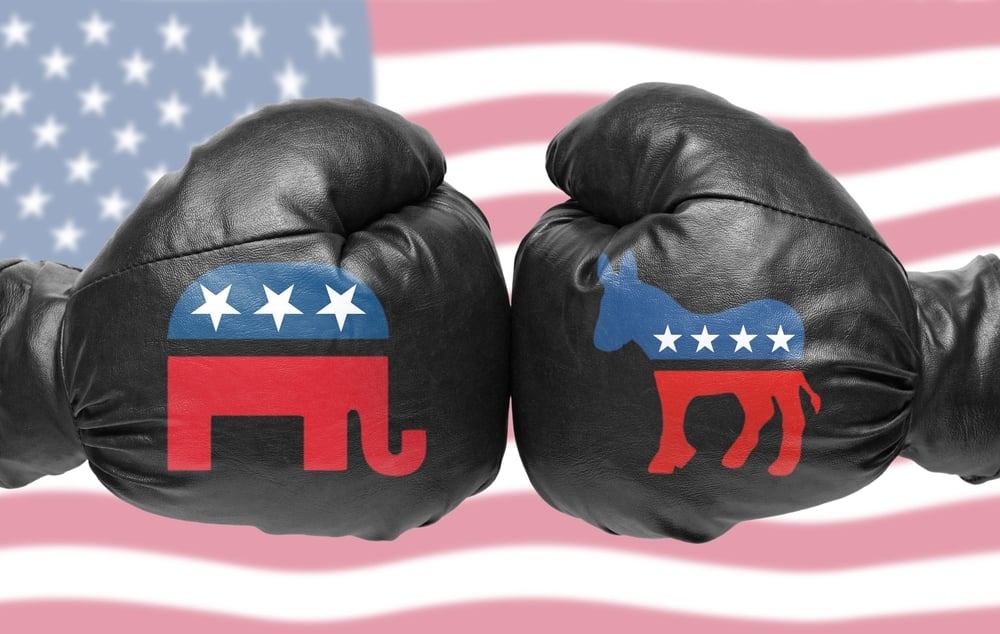
Image: Shutterstock