Florida’s golf carts may soon have something to look up at, and the person promising to make room for it has about 11 weeks left in office.
Gov. Ron DeSantis said the state will make the new flying Roadster from Tesla Inc. (NASDAQ:TSLA) legal, at least enough to hop over slow traffic in The Villages, the central Florida retirement community famous for its golf cart culture.
“We will make sure that it’s legal — at a minimum could be used to leapfrog golf carts in the Villages,” DeSantis wrote on X on Oct. 15, replying to a user who asked whether the vehicle would be street legal in Florida.
Tesla CEO Elon Musk responded to DeSantis’s post with a fire emoji.
Hop, Flip, Repeat
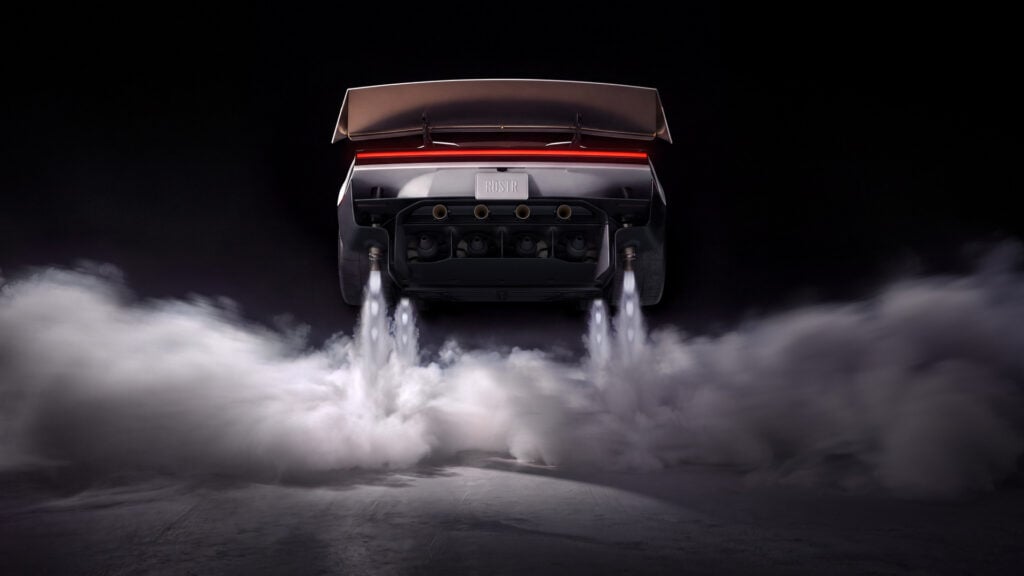
The exchange followed Tesla’s unveiling of the redesigned Roadster on Oct.15. During the livestreamed event, a prototype used cold-gas thrusters fed by compressed air to hop, flip and perform short airborne maneuvers. The car also drove upside down on a ramp using a suction system, and some versions accelerated from zero to 60 miles per hour in under one second.
Tesla showed three versions. The Performance trim is labeled road-ready and available for a $50,000 reservation. The Thrust trim adds rear thrusters and carries a $250,000 reservation. The single-seat Rocket version uses thrusters around the body for lift and rotation, is invite-only and is not approved for public roads.
Musk said production is targeted for 2028. Tesla has not announced final prices for any version. On the question of legality, Musk’s own answer during the event was that it “depends on your street.”
A Promise Without a Permit
DeSantis’ post is a statement of intent, not an executive order or an enacted law. Florida regulates vehicle registration and road use, while the National Highway Traffic Safety Administration sets federal motor vehicle safety standards. Anything involving sustained flight would also fall under Federal Aviation Administration rules.
No legislation, rulemaking or detailed regulatory plan has been announced in connection with the post.
The Villages reference is specific. Many residents use golf carts for everyday travel there, so DeSantis’ line points to a limited use case inside that community rather than full public-road operation across the state.
The Clock Is Not on His Side
DeSantis’ term ends in early January. With Roadster production not expected until 2028, any formal effort to create a regulatory pathway would fall to the next governor and the state legislature, along with federal agencies.
The Roadster remains a low-volume halo vehicle years from production. Whether Florida creates a pathway for thruster-equipped cars, and whether federal regulators treat brief hops differently from true flight, will determine if the vehicle ever operates beyond closed courses or special events.
For now, DeSantis’ comment is the clearest public signal from a sitting governor that a state is open to the idea. Whether the claim to leapfrog the golf carts outlasts his time in office is a question for the governor who follows him.