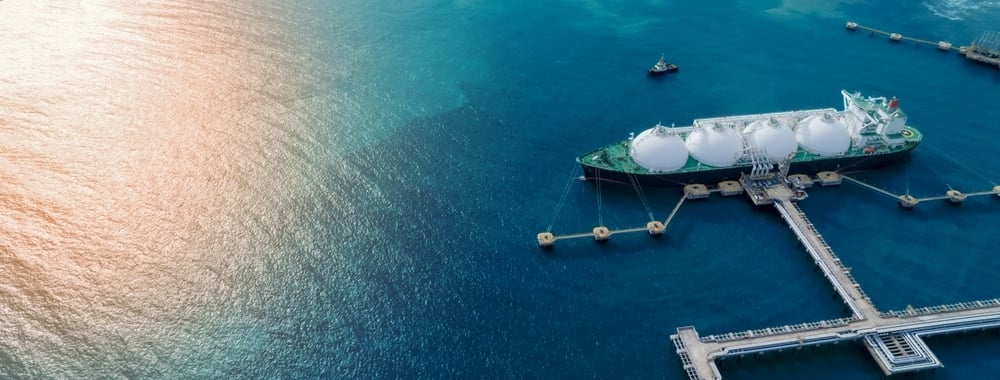
The global freight‑rate boom supporting tanker operators DHT Holdings Inc. (NYSE:DHT), Frontline plc (NYSE:FRO) and International Seaways Inc. (NYSE:INSW) may face new pressure as the Trump administration considers easing sanctions on selected shadow‑fleet vessels.
The proposal could expand the pool of ships competing for mainstream cargoes. But analysts question whether it would unlock enough usable vessels to meaningfully lower tanker rates.
To expand the pool of available ships, the administration is considering allowing legitimate buyers to acquire selected sanctioned tankers and return them to mainstream commerce carrying non-sanctioned crude and petroleum products.
Companies would need U.S. Treasury Department approval for transactions involving the vessels, according to Reuters. A Treasury official described the intended outcome as removing vessels from the shadow fleet “for use in legitimate global commerce.”
Tanker Shares Retreat
The proposal remains under discussion. Still, markets reacted quickly.
Tanker shares and a tanker-freight ETF ended the week lower, while supertanker rates eased as investors weighed potential sanctions relief and weaker shipping demand.
Bermuda-based DHT (NYSE:DHT) fell 4.2% for the week ended Oct. 16, Cyprus-based Frontline (NYSE:FRO) dropped 6.4%, and New York-based International Seaways (NYSE:INSW) retreated 8.2%.
Chinese tanker stocks, including COSCO Shipping Energy Transportation and China Merchants Energy Shipping, led the selling in Asia following the reports.
The Breakwave Tanker Shipping ETF (NYSE:BWET) fell 9% to $907.84 on Thursday and another 0.98% to $898.97 on Friday. The ETF, which tracks crude-oil tanker freight futures rather than shipping-company shares, declined approximately 9.95% for the week.
Lloyd’s List separately reported that forward freight assessments softened in anticipation of greater vessel availability.
High Rates Lift Earnings
The U.S.-Israeli conflict with Iran disrupted oil transport, tying up vessels and driving tanker freight rates to record levels on key routes. Ship-to-ship transfers used to move oil out of Hormuz increased demand for tankers, supporting the industry’s earnings boom.
“Producers are paying higher freight rates and more risk premiums to shuttle cargoes out of Hormuz,” Vitol’s Asia head, Kieran Gallagher, said.
DHT Holdings reported Monday that estimated third-quarter fleet-wide time charter equivalent earnings rose to $141,300 per day from $40,500 per day a year earlier. The measure reflects shipping revenue after voyage expenses, not corporate net profit.
DHT’s preliminary fourth-quarter bookings point to higher daily earnings. As of Oct. 12, approximately 78% of available revenue days across spot and time-charter operations had been secured at an estimated average of $225,200 per day.
Frontline also reported strong earnings alongside elevated tanker rates in August.
International Seaways Expands
International Seaways is expanding its crude-tanker exposure. It announced Friday agreements to buy Bruton Ltd in transactions valuing Bruton at approximately $370 million.
The proposed acquisition would add four very large crude carriers, or VLCCs, including newbuildings, to its diversified fleet of about 70 vessels.
“Seaways will remain well-positioned to continue executing on our growth strategy, generating attractive returns and creating long-term value for our shareholders,” Lois K. Zabrocky, International Seaways President and CEO, said.
International Seaways also reported preliminary third-quarter blended spot earnings of about $68,000 per day, up from $29,000 a year earlier but below the second quarter’s $79,000.
As of its Friday announcement, International Seaways said it had fixed about 37% of expected fourth-quarter revenue days at blended spot rates averaging about $180,000 per day.
Can Relief Unlock Ships?
Sparta Commodities analyst Michael Ryan told Reuters that administration comments about potentially removing sanctions on some shadow-fleet tankers drove freight rates lower because relief would increase the number of ships available to carry oil.
Kpler freight analyst Matthew Wright said demand on the Gulf of Oman-to-China route had weakened following fresh attacks, as higher Middle East Gulf freight rates and lower export volumes reduced demand for tankers on that route.
Rates for VLCCs shipping oil from the Gulf of Oman to China fell to about 776 on the Worldscale pricing system from 841 the previous week, according to Baltic Exchange data cited by Reuters on Friday. The earlier reading was the highest since the series launched this year.
Research published on Friday by the Centre for Research on Energy and Clean Air highlights a distinction: sanctioned tankers are not necessarily idle.
They carried 57% of Russia’s seaborne oil in September, the group found. Returning those vessels to mainstream commerce could therefore shift existing ships between trades rather than add equivalent new global capacity.
Sanctions Limit Capacity
Kpler, a ship-tracking firm, estimates that about 160 supertankers are under U.S. sanctions, representing about 22% of the commercial fleet. After accounting for age and excluding ships owned by Iran’s National Tanker Company, only about 24 could potentially rejoin global trade.
Some shadow-fleet vessels lack a class certificate confirming compliance with technical, safety and environmental standards.
Others lack credible international insurance. Other countries’ sanctions could remain an obstacle after U.S. relief.
For tanker‑stock investors, the question is whether sanctions relief can turn blacklisted vessels into credible competitors for mainstream cargoes. Any new competition must be weighed against the disruption already supporting freight rates — and the revenue operators have already locked in.