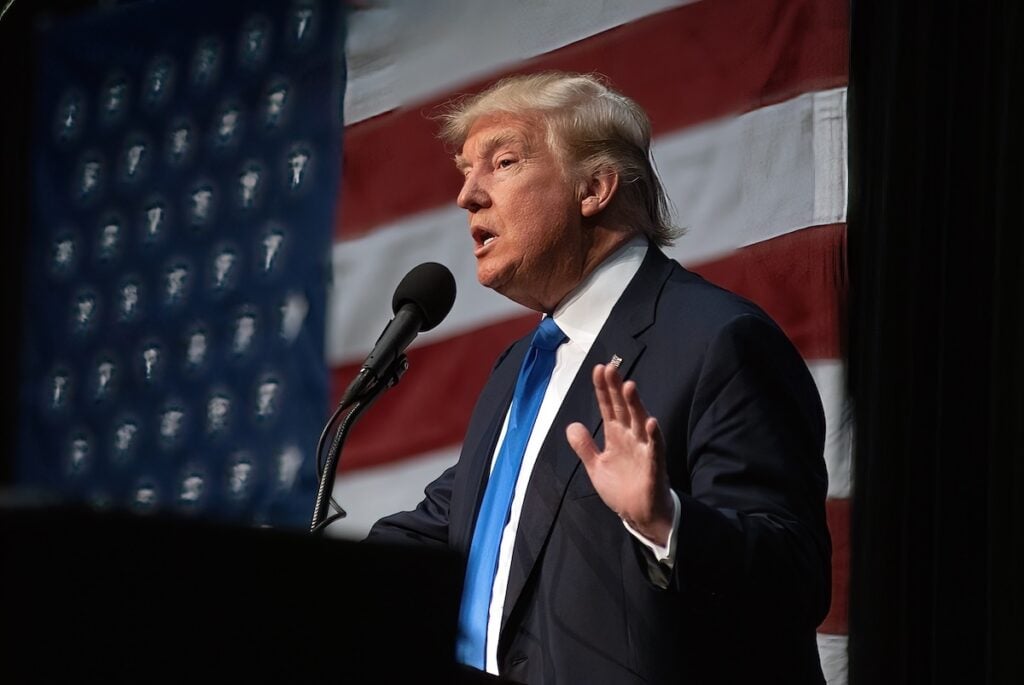
Investor Peter Schiff warned on Sunday that President Donald Trump’s proposed $5,000 payments to American adults, if enacted, would become the third-largest federal expenditure, as interest on the national debt would rise to the top.
Payments Would Add $1.35 Trillion to Deficits
Schiff said on X that Trump is trying to “buy the midterm elections with taxpayer money and inflation.”
The payments would add about $1.35 trillion to annual deficits, cost more than Medicare, and rank second only to Social Security in size, according to the investor.
“If the program were actually enacted, it would soon become the third-largest federal expenditure, as interest on the national debt would quickly surge to number one,” Schiff added.
Trump promised the dividend for every adult citizen at the Republican midterm convention in Dallas last month, but only if Republicans win both the House and Senate.
The administration has not released a formal funding plan.
Debt and Deficits Climbing
The national debt currently stands at $40.37 trillion, and the federal government ran a deficit of $1.97 trillion in fiscal 2026, according to the Congressional Budget Office.
At about $1.35 trillion, the estimated cost of the payments would equal roughly two-thirds of that deficit.
Trump has said the payments are possible “because we’ve done so well and because our country is making so much money.”
Vice President JD Vance has suggested the benefit could draw on tariff revenue and might exclude wealthy Americans, according to the Associated Press.
Voters Doubt Delivery
Congress would have to authorize the payments, since the Constitution requires that federal spending be approved by law.
An Economist/YouGov poll found that 48% of registered voters support sending every adult citizen $5,000, while 40% oppose it. Only 21% said they believe Trump would deliver the money if Republicans keep control of Congress, while 57% said he probably or definitely would not.
On Polymarket, traders give Democrats a 62% chance of sweeping both chambers in the Nov.3 elections, compared with 29% for a Republican Senate and a Democratic House.
Disclaimer: This content was partially produced with the help of AI tools and was reviewed and published by Benzinga editors.
Photo Courtesy: Mark Reinstein on Shutterstock.com