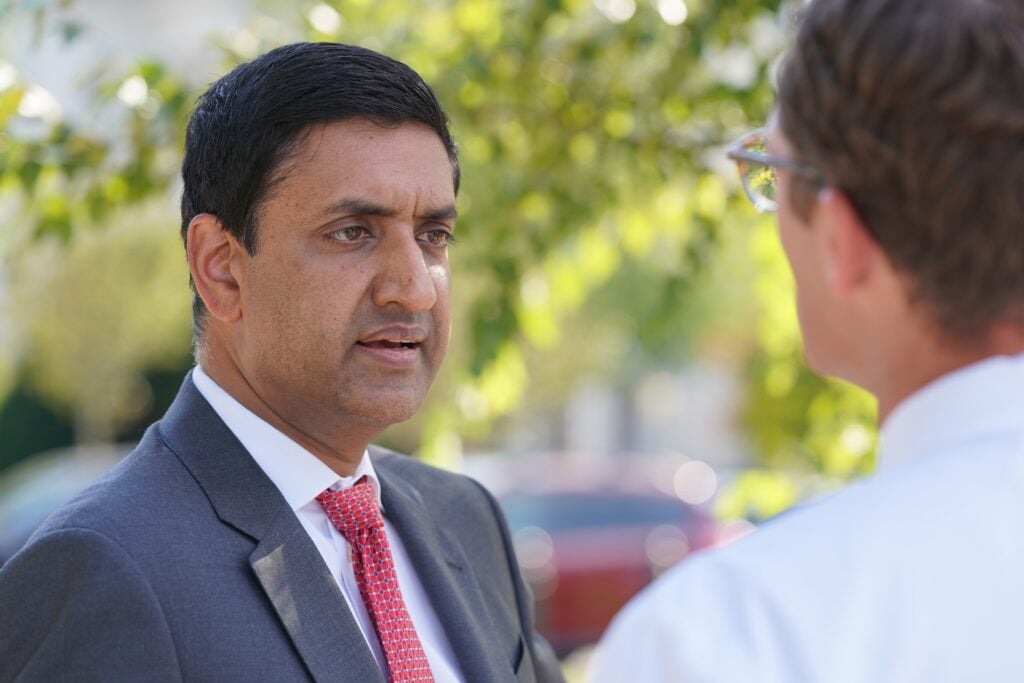
Rep. Ro Khanna (D-Calif.) defended a proposed billionaire wealth tax, arguing that the modern economy requires new approaches to taxation as wealth increasingly concentrates among a small number of individuals.
Khanna Compares Billionaire Tax
On Saturday, in a post on X, Khanna compared California’s proposed billionaire tax with Wisconsin’s introduction of an income tax in 1911, arguing that existing tax structures must evolve alongside changes in how wealth is generated.
“In 1911, Wisconsin pioneered the income tax because a property tax on land was not sufficient when industrialization began producing most of the wealth,” Khanna wrote.
He argued that California was addressing a similar challenge today, as asset appreciation allows substantial wealth to accumulate without necessarily being taxed as ordinary income.
“A billionaire tax is not class warfare or punitive, but an innovative economic solution for a changing economy,” Khanna added.
Economist Highlights Billionaires’ Wealth Gains
Khanna also reshared a post from economist Gabriel Zucman, who argued that a one-time 5% wealth tax would bring Silicon Valley billionaires’ fortunes back to their Sept. 7 levels.
Zucman said their wealth was still 178% higher than on Jan. 1, 2023, despite the proposed tax.
“They’d rather let 3 million people lose their health insurance than let that happen,” he wrote, criticizing opponents of the tax.
Debate Over California Billionaire Tax
Last month, Sen. Bernie Sanders (I-Vt.) said California’s proposed 5% billionaire wealth tax could protect health coverage for 3 million residents, while accusing billionaires of spending $229 million to defeat it.
In August, Mark Cuban warned Khanna that the tax could discourage investment and push startups out of California, saying he would require companies to leave the state before investing.
Political commentator Steve Hilton also opposed the proposal, calling it an “asset-seizure tax” and warning it could drive Silicon Valley talent and investment out of the state.
Billionaire Tax Sparks Debate
Earlier, Nvidia Corp. (NASDAQ:NVDA) CEO Jensen Huang said he would consider paying up to $8 billion in taxes over five years a privilege if California approved the proposed 5% billionaire wealth tax.
Economist Peter Schiff, however, warned that the measure could trigger a “mass exodus” of wealthy entrepreneurs, including Mark Zuckerberg, and weaken California’s tax base by forcing billionaires to sell assets or leave the state.
Disclaimer: This content was partially produced with the help of AI tools and was reviewed and published by Benzinga editors.
Photo courtesy: Shutterstock