
The Middle East war’s toll on the global airline industry went from bad to worse this week after deadly attacks on Riyadh’s international airport.
Strikes by Yemen’s Houthi militia on the Saudi capital’s airport on Saturday left 12 dead and more than 300 wounded. Attacks on Saudi airports, oil infrastructure, and Gulf shipping have already pushed Brent above $100 a barrel.
The Iran war that began at the end of February has sent jet fuel prices soaring. The International Air Transport Association (IATA) forecasts a 2026 global average of $152 a barrel, almost 70% higher than the $89.90 average in 2025.
Jet fuel prices in the U.S. Gulf of Mexico region almost doubled to $4.34 on Thursday from $2.19 a year earlier, CNBC reported, citing FactSet data.
Ryanair Group CEO Michael O’Leary told reporters in Brussels on Thursday that jet fuel prices are likely to stay elevated for the next 12 to 18 months.
“We are all facing an enormous cost challenge next year,” he said.
U.S. Airlines Struggle
For U.S. airlines, already suffering from the Middle East’s impact on jet fuel prices, the latest Houthi attacks will only add to the uncertainty facing the industry.
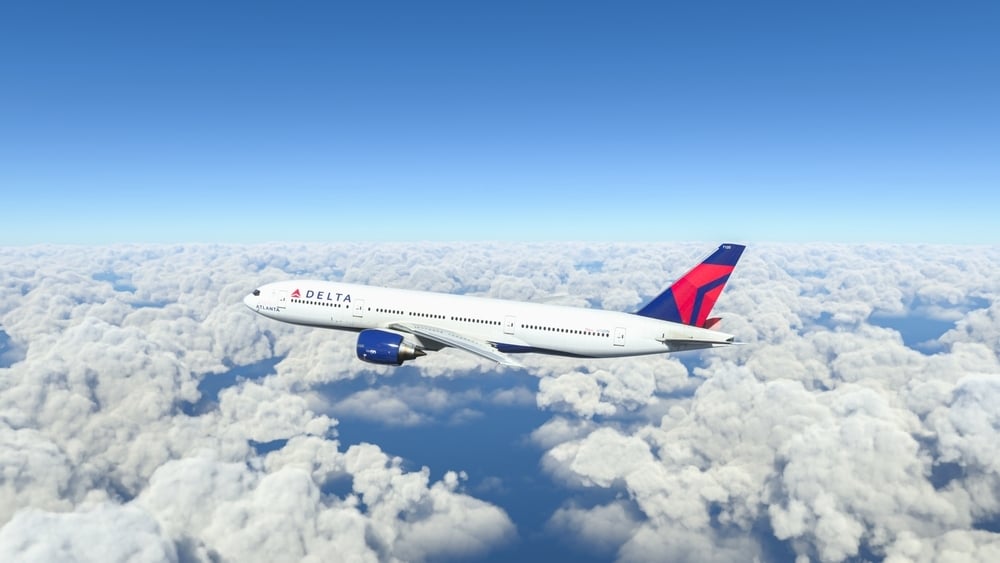
Delta Air Lines (NYSE:DAL) cut its 2026 profit outlook by nearly a quarter on Friday, citing a $6 billion increase in annual fuel costs.
Delta now expects full-year adjusted earnings of $5.10 to $5.60 per share, down from its July outlook of $6.50 to $7.50, when fuel prices were lower. The airline also issued fourth-quarter guidance that came in below analyst expectations, according to CNBC.
“Obviously the fuel pricing, the volatility of fuel prices have something to do with that,” Delta CEO Ed Bastian told CNBC in an interview on Friday.
United Airlines Holdings (NASDAQ:UAL), American Airlines Group (NASDAQ:AAL) and Southwest Airlines (NYSE:LUV) have not yet reported third-quarter results.
Global Profitability Halved
Globally, airlines are expected to see profitability halve compared to 2025, according to IATA. Profits will shrink from $45 billion in 2025 to $23 billion this year.
IATA expects airlines’ net profit margin to fall to 2.0% in 2026, less than half the 4.2% it had forecast before the Iran war. Net profit per passenger transported is expected to be $4.50, half the $9.10 achieved in 2025.
“War-related disruptions in the Middle East and rising fuel costs have shifted the outlook for airlines to the worse,” Willie Walsh, IATA’s Director General, said in June. “Some of the additional cost is being recuperated by adjusting prices and improving efficiency, but it will not be sufficient to maintain profitability at the previous year’s level.”
The region’s Gulf carriers face operational uncertainty following a near-complete shutdown of airspace at the outbreak of the war, Walsh said.
“These carriers are doing an amazing job maintaining connectivity, but major financial impacts are unavoidable,” he added.
Airlines Can’t Survive
For global carriers, survival will depend on passing costs on to consumers.
Higher fuel costs are already reaching passengers. The latest U.S. consumer price data, released in September, showed airfares up 23.4% in August from a year earlier.
“The airlines cannot survive unless they pass on these insanely higher fuel costs in the form of higher offers, and the customers will have to pay,” O’Leary said.
European airlines could face more than another year of elevated fuel costs and higher fares due to the Iran war, O’Leary said. This was the first warning by an executive that the knock-on effect could spill into 2028, Reuters reported.
Ryanair has cut its annual passenger target by two million to limit its exposure to expensive winter fuel, AeroTime reported last month. The airline warned that some competitors with less protection against price increases could struggle to maintain their schedules or survive the winter.
O’Leary told reporters at the Airlines for Europe (A4E) press conference that the situation was already a “full-blown crisis.”
Cessation Seems Unlikely
Any relief on fuel costs for airlines depends on the regional conflict cooling, and the Houthis are signaling the opposite.
The group says it struck Riyadh in retaliation for Saudi airstrikes on Sanaa during a Saudi-backed government offensive. It warned airlines that Saudi airspace is unsafe, sparing Mecca and Medina, and urged people to avoid oil facilities.
“The Houthis are pursuing a deliberate strategy designed to impose significant economic, military, and psychological costs on Saudi Arabia,” Danny Citrinowicz, a senior researcher at Israel’s Institute for National Security Studies, posted on X.
The threat is already reaching U.S. carriers.
Delta’s Bastian said the airline would weigh whether to go ahead with launching a flight between Atlanta and Riyadh as planned for October 23.
“Safety is going to make the call,” he said.