Fighting has intensified across the Middle East, with a key 7-million-barrel-a-day crude pipeline in Saudi Arabia temporarily closed and an Iranian-backed militia seizing territory in Yemen that allows it to disrupt a key shipping route.
The disruption to the East-West pipeline in Saudi Arabia, the world’s largest oil supplier, and the Yemen-based Houthis’ battlefield successes have kept oil prices above $100 a barrel. Analysts say this week’s developments could push prices toward $120, according to Capital Economics.
The oil price rally has investors braced for interest rate hikes by central banks worldwide. JP Morgan forecasts eight to nine developed economies could hike rates by year‑end. It said higher energy costs are adding to already‑elevated inflation pressures in those economies, including the United States, Japan and Australia.
The European Central Bank (ECB) on Thursday raised three key interest rates by 25 basis points, citing the conflict in the Middle East. It said the fighting is generating persistent inflation pressures that will keep price growth well above target for an extended period.
“Renewed disruption of energy supplies could cause energy prices to rise further and for longer than currently expected,” Christine Lagarde, President of the ECB, said. “A worsening of global financial market sentiment or spillovers in global bond markets could tighten credit conditions and thereby dampen demand.”
Fed Rate Hike Expected
ING Think has forecast that the U.S. Federal Reserve will hike rates by 25 basis points in September in the wake of Chair Kevin Warsh’s Jackson Hole speech.
He emphasized at the end of August a focus on inflation, which has been above target for five and a half years, and a sense that financial conditions aren’t tight in an environment of full employment, ING said.
“The Fed needs clear market signals, as unfiltered as possible,” Warsh said, pointing to “the price of a broad set of commodities” among other things.
The Middle East‑driven rise in energy prices adds to those domestic inflation concerns, reinforcing expectations of a September Fed move. Taken together, the latest rate expectations reflect how energy‑market shocks in the Middle East are continuing to ripple through global inflation and monetary policy.
Pipeline Shut After Drone Strikes
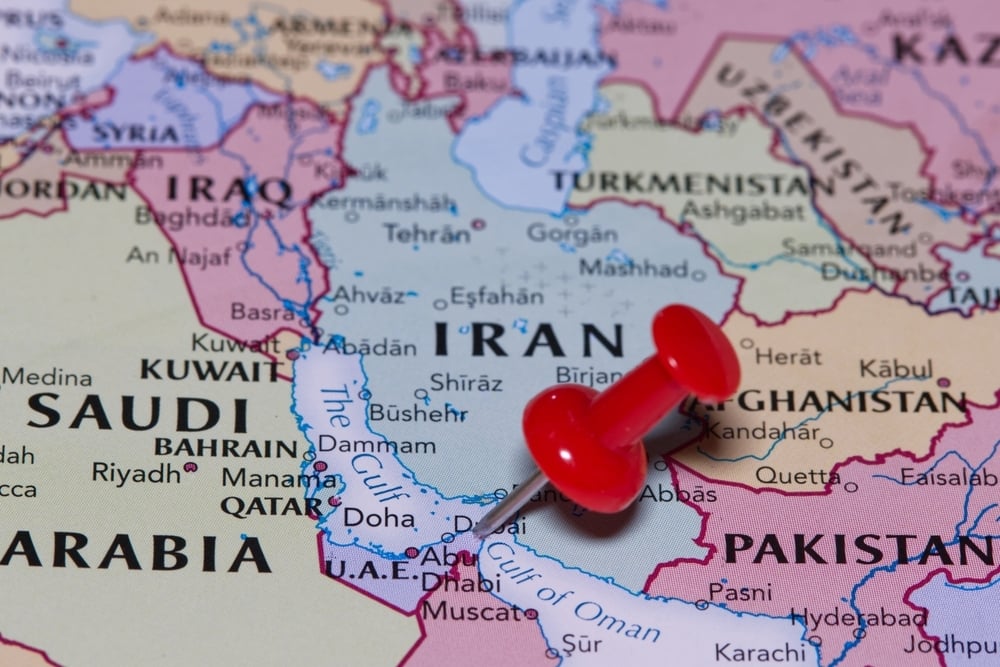
Saudi Arabia temporarily closed its East-West pipeline, a key alternative to the Strait of Hormuz for its oil exports, following multiple drone attacks on Thursday. The conduit was shut as a precautionary measure, the Ministry of Energy said Friday in a post on X.
The attacks caused several injuries, and emergency teams took steps to secure the pipeline and assess its safety, the ministry said. Operated by the state energy company Saudi Aramco, it stretches about 745 miles from Abqaiq in the kingdom’s Eastern Province to Yanbu on the Red Sea coast.
The route has proved a critical lifeline for Saudi exports amid disruption from the Iran war. It reached full capacity earlier this year when tanker traffic came to a near standstill in the Strait of Hormuz.
“While many people are trying to wave away the strikes on Saudi Arabia’s East-West pipeline under the pretense that ‘it can be repaired,’ the overall impact of this is far more consequential,” Brett Erickson, Managing Principal, Obsidian Risk Advisors, wrote on X. “The past 24 hours have been nothing short of catastrophic for the global energy markets, but the harsh reality? The pain is just getting started.”
The pipeline disruption comes after the kingdom’s oil exports slumped to just about 3 million barrels a day in August, the lowest in records going back to early 2017. Saudi Arabia has leaned heavily on the Red Sea route since the Iran conflict effectively closed Hormuz, which had carried roughly a fifth of global oil supply.
Houthis Gain Ground Near Second Chokepoint
The shutdown of the East-West line means about 3.5 million barrels a day that were previously flowing through Yanbu “is off the board (at least for now),” Gregory Brew, a geopolitical analyst at the Eurasia Group, said on X. “From the point of view of regional flows, that drops it from 12-13 million barrels a day (conservatively) to about 9 million barrels a day.”
For Tehran, the move directly undercuts the U.S. efforts in the Strait of Hormuz, Brew said. Iran has responded through its Houthi ally in Yemen, which has targeted Saudi energy facilities in Abha, Najran and Jazan.
Houthi forces reached Perim Island in Bab al-Mandeb on Friday. Their control of the body of water, where as much as 12% of global maritime trade flows, could give Iran leverage over a second major oil transit route.
This would reduce global oil supplies further and push prices higher.
“The entire global energy market is now hinging on the Houthis being nice and only shutting down Saudi traffic through the Bab al-Mandeb,” Erickson said. “Literally that’s the thread the world hangs on. Lovely.”