In May, Jamie Dimon said that a crack was coming in the bond market. In June, Ray Dalio published a book arguing that the U.S. debt position has already reached a point of no return.
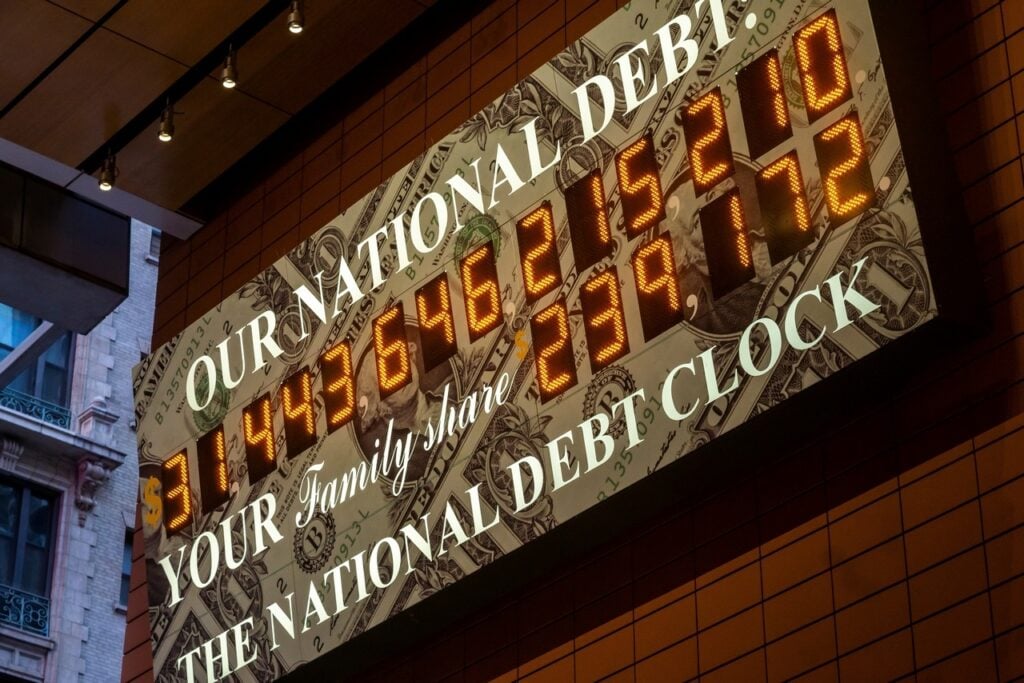
Total public debt passed $40 trillion in August, and the 30-year Treasury yield is still trading above 5% in September, near the highest seen two decades ago.
Yet, veteran Wall Street investor Ed Yardeni is not buying the panic.
In a note shared this week, the Yardeni Research founder said that the trade built on those concerns has been a costly one, and that his own gauge of bond market stress is not flashing.
“Anyone who has followed their consistently pessimistic outlook over the past few years has missed a huge rally in the stock market,” Yardeni said.
Over the past three years, the S&P 500 – as tracked by the SPDR S&P 500 ETF Trust (NYSE:SPY) – has rallied 75%. That strong performance occurred despite rising Treasury yields.
The One Test He Trusts
Yardeni said he will start worrying about the debt when the bond vigilantes do. The term is his own, coined in July 1983 to describe investors who impose discipline on governments by demanding higher yields.
The test behind it is narrow.
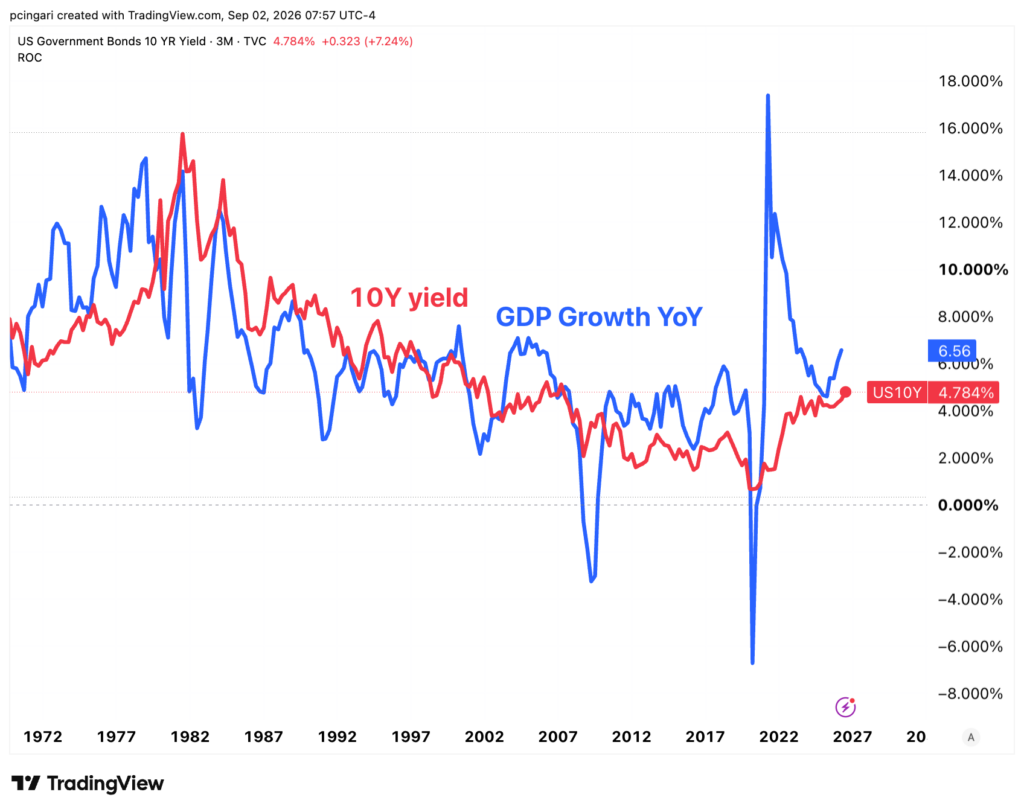
“The Bond Vigilantes tend to be on the loose when the 10-year US Treasury bond yield exceeds nominal GDP. The yield is currently well below nominal GDP,” he said.
Nominal growth ran at 6.56% in the second quarter against a 10-year bond yield near 4.60% in July.
He also said the 10-year has held inside 4.00%–5.00%, the band that prevailed from before the 2008 financial crisis through the pandemic.
He treats that range as evidence that the economy is functioning rather than breaking.
“We’ve contended that this range is the old normal,” Yardeni said.
The 5% Test
Yardeni’s argument ultimately comes down to one number: 5%.
If the 10-year yield stays below nominal GDP, he sees little evidence that bond investors are forcing Washington to pay an unsustainable price.
But the 10-year yield is approaching 5%, while the 30-year yield has already moved above it.
That makes 5% more than a psychological threshold. It is the level where Yardeni’s bond-vigilante test could face its biggest challenge.
If yields break above 5% while nominal growth remains near current levels, investors may start demanding a larger premium to hold long-term U.S. debt.
Two Backstops Before Five Percent
Yardeni gave two reasons why the range should hold.
The first is the Treasury.
He said Secretary Scott Bessent has already moved to keep yields from rising, and that if the 10-year reaches 5.00%, he expects Bessent to sell more short-dated Treasury bills and use the proceeds to buy back longer bonds. Janet Yellen did that in 2023 and it worked.
The second is the Federal Reserve.
Yardeni said Chair Kevin Warsh has committed to restoring price stability, and that if inflation stays stubborn, the Federal Open Market Committee, the Fed panel that sets interest rates, will probably raise rates in September.
Hawkish now, calmer later.
Image via rblfmr/Shutterstock