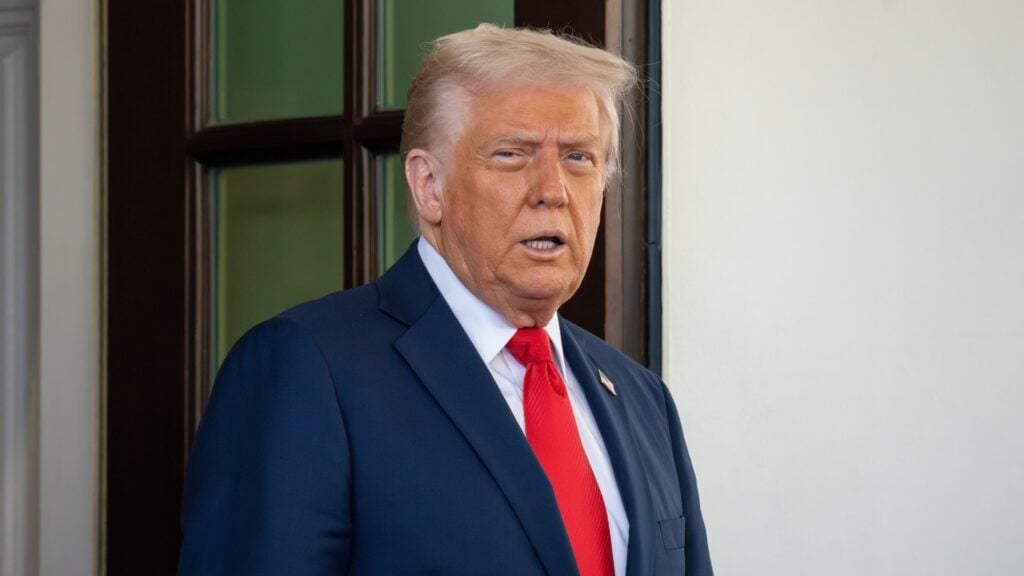
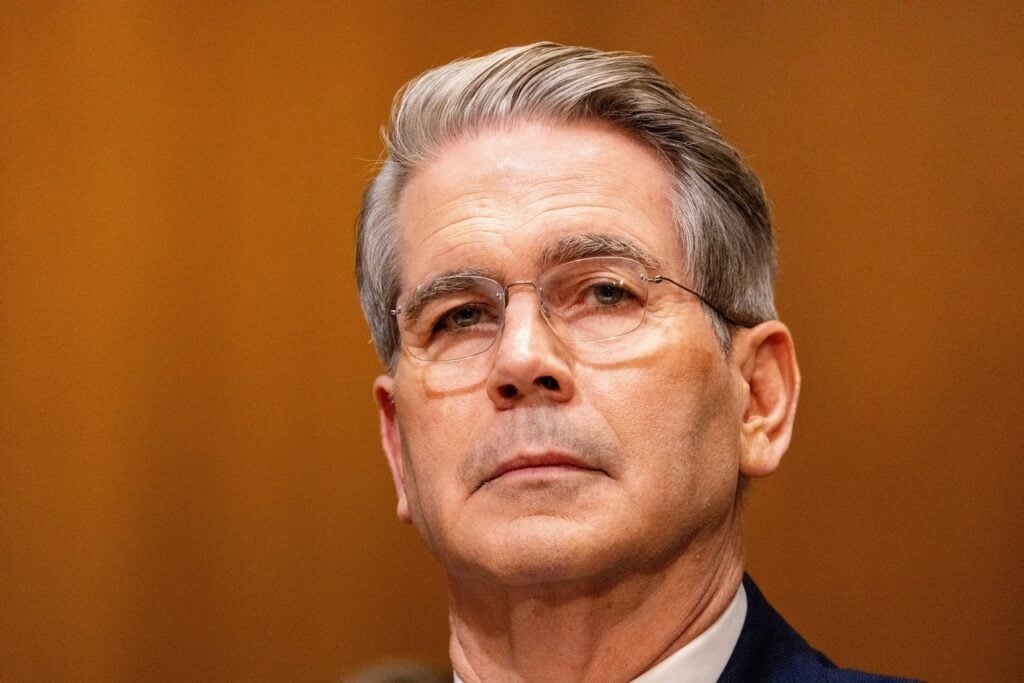
Treasury Secretary Scott Bessent said the Trump administration is entering the “endgame” against Iran, shifting its campaign toward an unprecedented economic offensive aimed at isolating Tehran.
Bessent Declares ‘Economic D-Day‘
On Sunday, Bessent said in a post on X that President Donald Trump had “dismantled Iran’s military capabilities, destroyed nearly 100 percent of its military factories, and buried its nuclear program.”
“We are now entering the endgame,” the Treasury Secretary said.
He added, “At dawn begins an economic D-Day — the single greatest financial offensive ever marshaled against an adversary.”
He accused Iran of relying on the expectation that Tehran could retaliate while U.S. enforcement could be negotiated.
“The Islamic Republic has subsisted by dressing extortion as security guarantees,” Bessent said.
He added, “Under President Trump, that era is over.”
US Targets Iran’s Economic Lifelines
Bessent also warned governments and entities that continue supporting Iran, saying those “who fear the danger of defying Tehran ought not to discount the cost of testing Washington.”
He said the administration would use “every agency, every authority” available to pursue its objectives.
“Our objective is to sever every economic lifeline that sustains the tyrannical regime until Tehran stands alone,” Bessent said.
Trump Escalated Economic Pressure
Last week, Trump announced a sweeping economic campaign against Iran, calling it the “most crushing economic operation ever taken against any country.”
He warned countries and entities supporting Tehran through oil smuggling, financial transfers and shipping networks of severe consequences.
Trump called the campaign an “economic D-Day” and said the measures were designed to “cripple” Iran’s ability to project power, while reiterating that “Iran will never have a nuclear weapon.”
Iran Warns Over Economic Pressure
Iran’s security chief, Mohsen Rezaei, warned Gulf countries against supporting Trump’s economic pressure campaign, saying Tehran could consider them enemies and target their interests.
He also warned that continued economic pressure could halt oil exports through the Strait of Hormuz, while Iranian military officials threatened a “crushing, punishing and devastating” response to new U.S. sanctions.
The threats raised concerns about further shipping disruptions and tighter global oil supplies, particularly affecting China, a major buyer of Iranian oil.
Rezaei previously said Hormuz would reopen only after the U.S. ended the war and blockade, released Iran’s frozen assets and agreed to a regional ceasefire.
Disclaimer: This content was partially produced with the help of AI tools and was reviewed and published by Benzinga editors.
Image via Shutterstock/ Maxim Elramsisy