
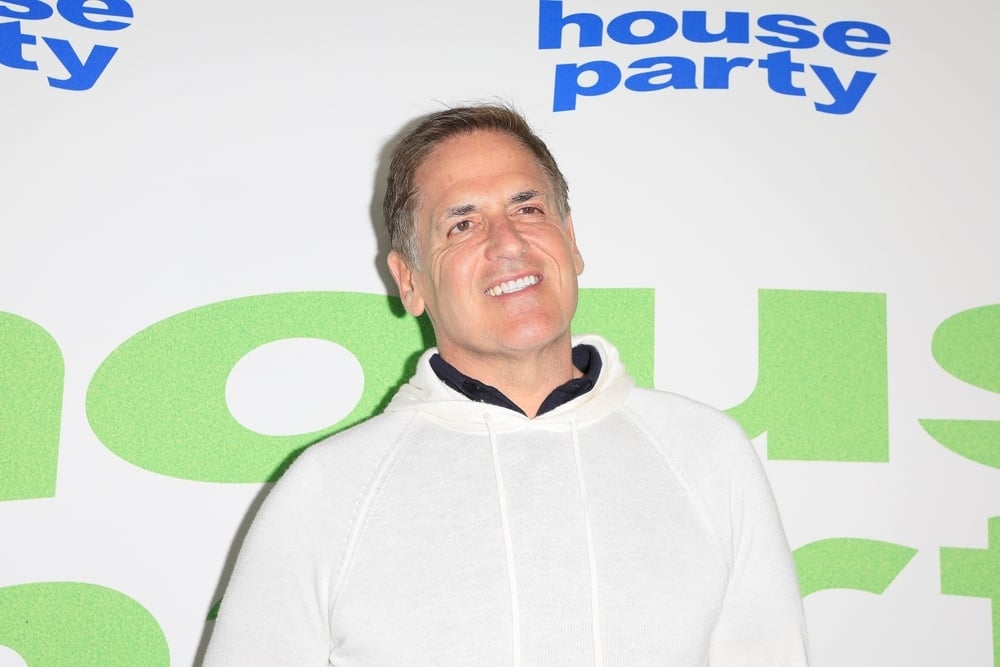
Mark Cuban is urging investors to take on America’s biggest health insurers, but ETF investors may already have skin in the game.
The billionaire entrepreneur this week called on investors to tell the funds they own to divest from major insurers, arguing that the companies put share prices ahead of patients and contribute to rising healthcare costs.
In a follow-up on X, Cuban accused insurers of underpaying and delaying providers, clawing back payments, obscuring contract terms and holding premiums to earn interest while patients wait for care.
But for investors using ETFs as core portfolio holdings, avoiding those companies is not necessarily straightforward.
Broad-Market ETFs Already Own Health Insurers
Vanguard Total Stock Market ETF (NYSE:VTI) offers a clear example. The fund held 3,531 stocks as of June 30 and allocates 9.1% of its portfolio to healthcare.
Its holdings include UnitedHealth Group Inc (NYSE:UNH), CVS Health Corp (NYSE:CVS), Cigna Group (NYSE:CI), Elevance Health Inc (NYSE:ELV), Humana Inc (NYSE:HUM) and Centene Corp (NYSE:CNC)—the major insurers that fall within the broader group Cuban is criticizing.
Cuban’s proposal is more complicated for passive investors because broad-market ETFs are designed to track indexes rather than selectively exclude companies.
An investor holding VTI, Vanguard S&P 500 ETF (NYSE:VOO) or State Street SPDR S&P 500 ETF Trust (NYSE:SPY) isn’t necessarily making a deliberate bet on health insurance. They may simply want diversified exposure to U.S. equities.
Yet that diversification means owning businesses across industries—and potentially companies whose practices an investor dislikes.
The same issue applies to S&P 500 funds. UnitedHealth, CVS, Elevance, Cigna, Centene and Humana are part of the SPY fund, illustrating how insurer exposure can appear even outside dedicated healthcare funds.
Can ETF Investors Actually Follow Cuban’s Advice?
Cuban is effectively asking investors to use their ownership stakes to pressure fund managers.
But an individual investor cannot instruct an index ETF to remove a company while continuing to expect it to track its benchmark. To eliminate the exposure, investors would generally need to choose a different strategy or fund with specific exclusion criteria.
That creates an unusual dilemma: the more passive an investor’s portfolio is, the less control that investor has over which individual companies they own.
Cuban’s comments therefore highlight a broader issue for the ETF industry. Index investing has made it cheap and easy for millions of Americans to own the market. But owning the market also means owning companies that investors may not personally want in their portfolios.
For someone with $100,000 in a broad-market ETF, the dollar exposure to any single insurer may be relatively small. Across millions of retirement and brokerage accounts, however, those small stakes add up to significant ownership—and potentially significant shareholder influence.
Cuban’s challenge is whether investors are willing to use that influence.
Photo: Joe Seer / Shutterstock