
America’s job market cracked last week. Payrolls fell by 23,000 in July, and traders cut the odds of a Federal Reserve rate hike in September to roughly 44% from 67% a week earlier. Weak hiring is supposed to lower borrowing costs.
This time, it didn’t.
The 30-year Treasury yield, the interest rate the U.S. government pays to borrow money for three decades, is back at 5.26%, testing the highest level since 2007.
The bond market has stopped listening and is sending a dire warning to President Donald Trump.
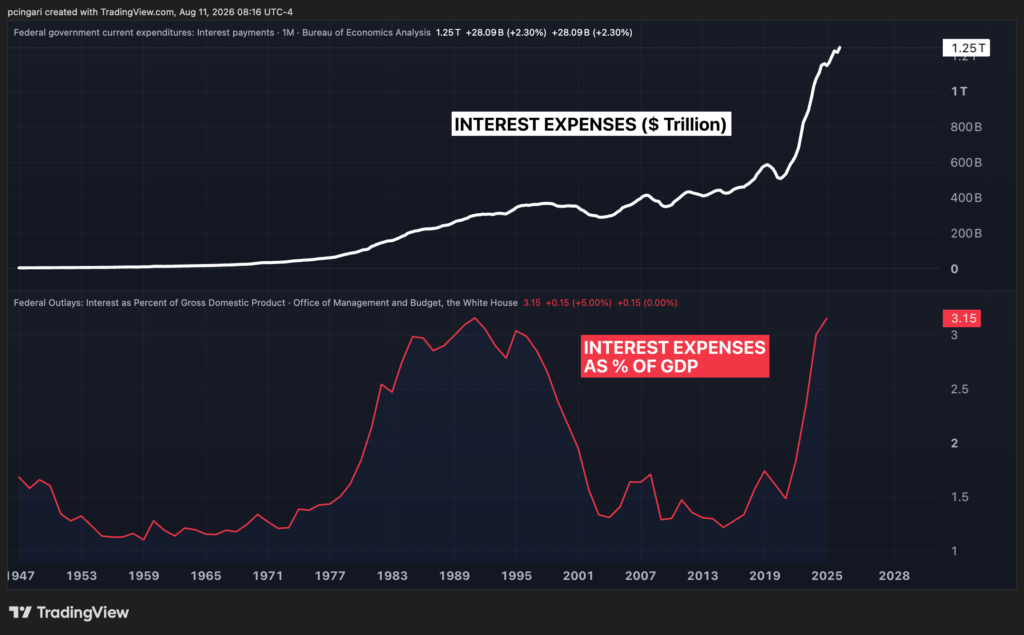
Washington’s annual interest bill has crossed $1.25 trillion.
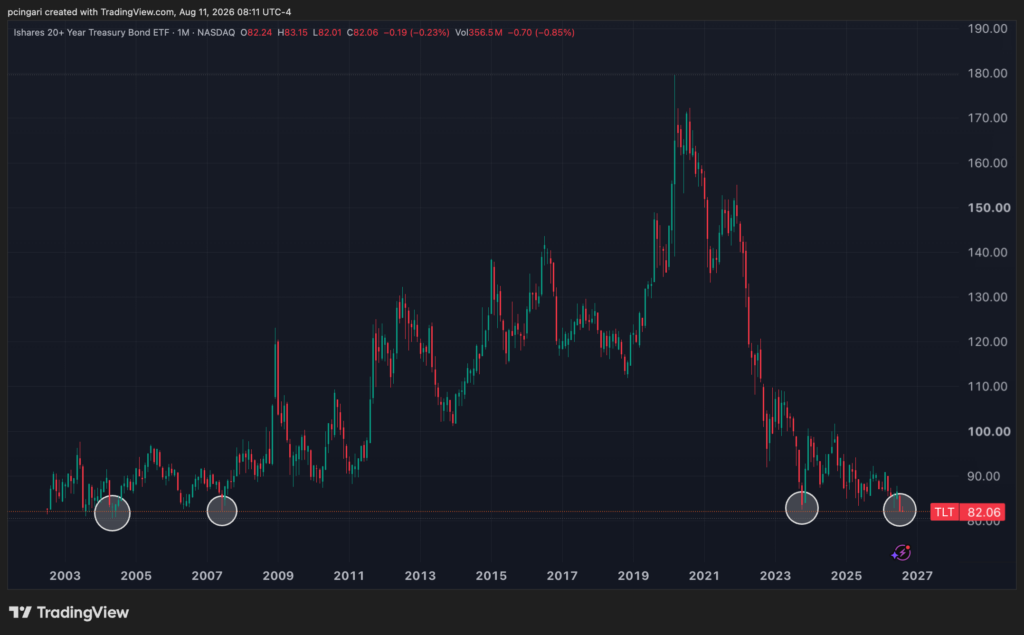
TLT ETF Now Testing Multi-Decade Lows
Investors track the move through the iShares 20+ Year Treasury Bond ETF (NASDAQ:TLT), which holds long-dated government bonds.
Prices fall when yields rise.
The TLT ETF is now testing multi-decade support and is on track to potentially hit its lowest levels since 2003.
“Friday’s weak jobs report hasn’t altered the scenario embedded in the yield, suggesting that financial markets continue to believe that the labor market is at full employment, while inflation remains above the Fed’s 2.0% target,” veteran investor Ed Yardeni said in his latest note.
According to the expert, the concern now is that “Bond Vigilantes” could drive yields higher if the Fed loses credibility as an inflation fighter by keeping monetary policy too loose for too long.
The Interest Bill Just Went Vertical
Federal interest payments are running at an annual rate of $1.25 trillion, according to Bureau of Economic Analysis data.
The interest bill has soared since 2021, now reaching 3.15% of GDP — its highest level since 1991.
The mechanism is simple.
Every time old debt matures, the Treasury replaces it with new debt at today’s rates. With annual deficits approaching $2 trillion, the pile keeps growing while the interest rate on it resets to a higher level.
Rising yields are not just a bond investor’s problem. They land in the federal budget.
Washington Blinked First
The more revealing story last week came from the Treasury, not the Fed.
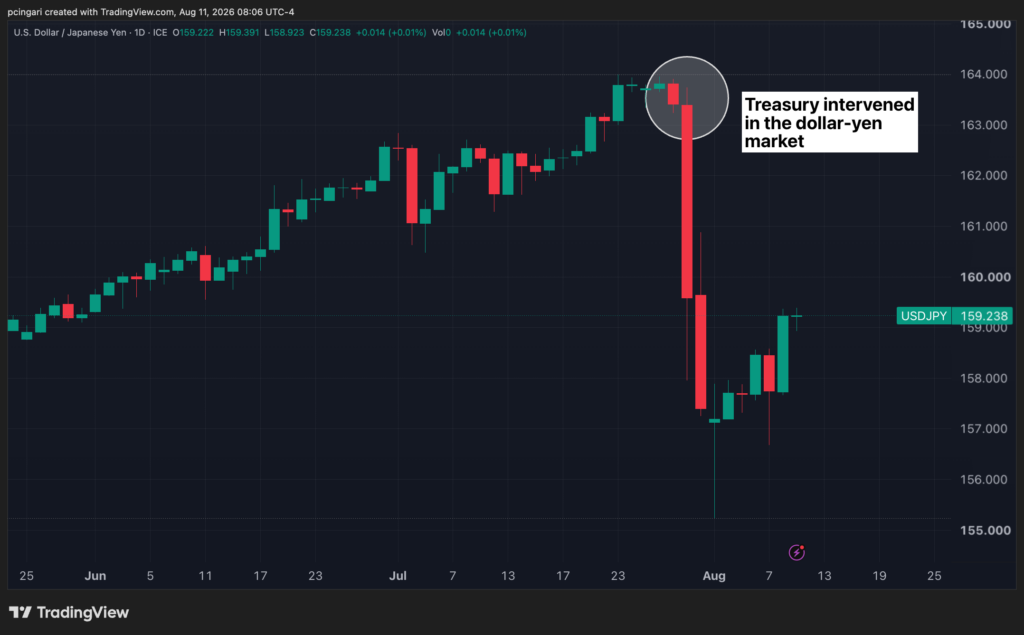
Secretary Scott Bessent made three moves in a single week: the first U.S. intervention to support the Japanese yen since 1998, a change to quarterly debt guidance that markets read as opening the door to fewer long-bond sales, and a public defense of Fed Chair Kevin Warsh‘s communication style.
Nigel Green, chief executive of deVere Group, sees intent: “Three separate actions from the same official within one week signals something deliberate.”
The yen move has a direct bond-market logic.
If Japan were forced to sell U.S. Treasuries to defend its currency, one of the largest foreign holders of American debt turns into a seller in an already fragile market.
So What This Means For Investors?
The market is drawing a red line between Fed policy and Washington’s borrowing problem.
The two-year Treasury yield, which is much more sensitive to expectations for Fed policy, remains around 4.2%. The 30-year yield, meanwhile, is near 5.3%.
That gap matters.
It suggests investors are increasingly demanding a premium for holding long-duration U.S. debt, even as expectations for monetary policy shift.
In other words, this is becoming less about what the Fed does next month and more about what investors think Washington will have to pay for the next 30 years.
That price increasingly reflects inflation, deficits, Treasury supply and confidence in the Fed.
Photo: Shutterstock