The U.S. military campaign against Iran has revealed a deeper concern about America’s defense industrial base.
The largest defense spender in the world is managing a more than five-month military campaign with dwindling supplies of missiles and interceptors. Senior military commanders have warned that the Pentagon’s munitions stockpile is “dangerously low,” CNN reported, citing multiple sources familiar with the matter.
The Department of Defense has exhausted nearly 80% of its interceptors for a key missile-defense system since February 28. That was when the Americans and Israelis launched their strikes to set back the Iranian nuclear weapons program.
The Center for Strategic and International Studies (CSIS) has estimated the U.S. had around 2,330 Patriots and 452 THAAD missiles in its stockpile before the Iran war started. Stockpiles have dropped to 759–827 for Patriots and 234–278 for THAAD, according to CSIS.
“The U.S. shortage of key munitions has entered the national debate and reportedly become a major element in presidential decisionmaking in the ongoing U.S. conflict with Iran,” CSIS’s Mark F. Cancian and Chris H. Park wrote on July 31. “Use during the war against Iran is indeed a major driver of the issue, but it is not the only one.”
The White House has pushed back on concerns about depleted inventories.
Far More Munitions
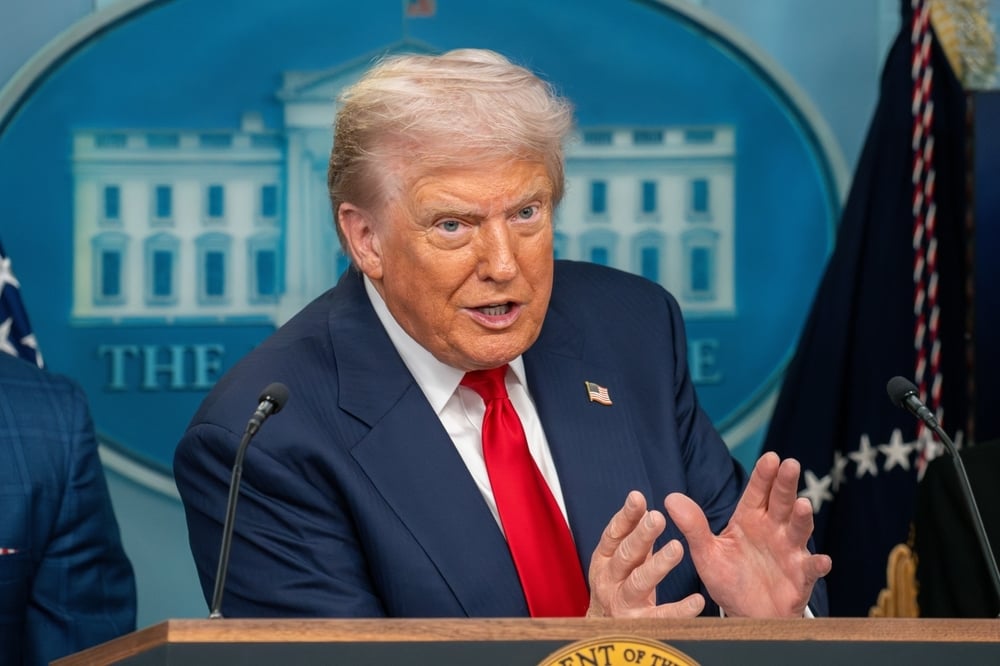
In response to questions about U.S. stockpile shortfalls, the White House issued a statement from Trump. He said the U.S. had “far more munitions than anyone in the world” and “far more than we need.”
“Our defense companies are, at this moment, making more munitions than they have ever made before, in addition to expanding their plants and equipment at record levels,” Trump said.
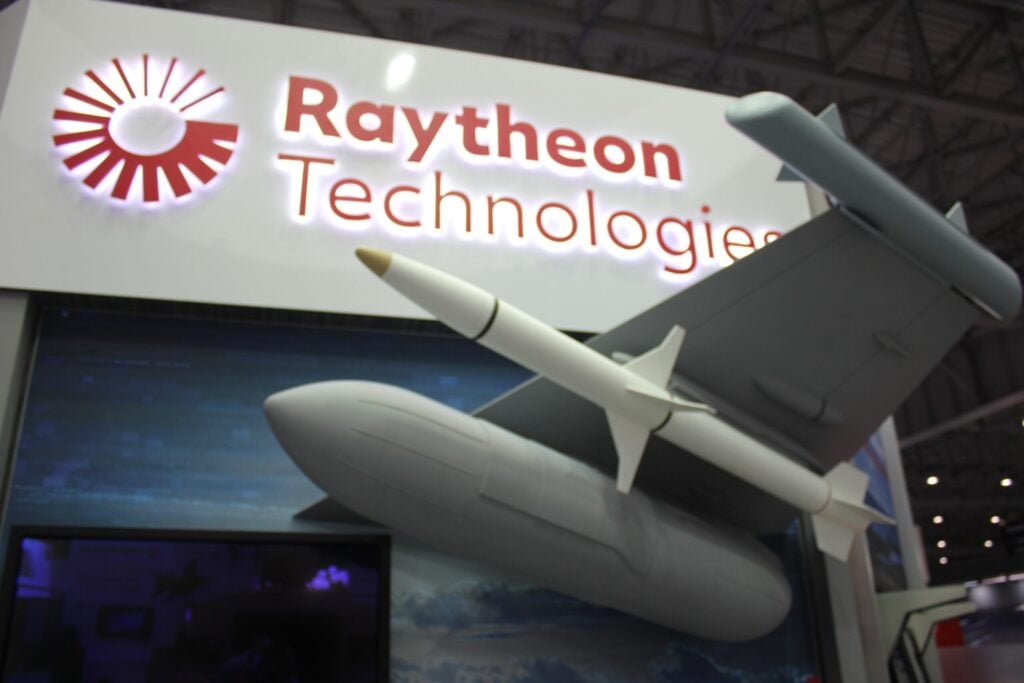
Defense contractor Raytheon (NYSE:RTX) makes the PAC-2 series and Lockheed Martin (NYSE:LMT) manufactures the more advanced PAC-3 interceptors. Lockheed Martin is the prime contractor to build the THAAD (Terminal High Altitude Area Defense) interceptor missiles and launchers.
The strain on stockpiles has accelerated efforts to rebuild the industrial base. The Pentagon announced on Friday that Raytheon received two defense contracts worth a combined $1.28B for missile and weapons-system production.
The Missile Defense Agency awarded Raytheon a $745.4M contract to manufacture and assemble Standard Missile-3 Block IIA missiles for the U.S. government and Japan’s Ministry of Defense. The U.S. Army awarded the company a $536.0M contract modification for full-rate production and engineering services supporting the TOW Weapon System.
Defense Production Is a Priority
Russia’s 2022 invasion of Ukraine made the need for larger stockpiles clear. Under the Biden and second Trump administrations, the U.S. has made increasing munitions production a priority.
The second Trump administration recognized in its November 2025 National Security Strategy that revitalizing and expanding the country’s defense industrial base is a top priority.
“American national power depends on a strong industrial sector capable of meeting both peacetime and wartime production demands,” the strategy said.
Russia’s ongoing war in Ukraine and the current U.S.–Iran war have demonstrated that the defense sector cannot mobilize quickly enough, according to the Hudson Institute.
The “Pentagon remains severely compromised in terms of surge capacity,” Hudson Institute’s Nadia Schadlow and Michael Dressler wrote on Tuesday. “The Trump administration is responding to this crisis by trying to revitalize the defense industrial base.”
Yemen, Ukraine Conflicts Deplete Stockpiles
CSIS analysts say the Iran war is only one factor behind the depletion. They include regional Middle Eastern conflicts, the ongoing war in Ukraine and the structure of the U.S. industrial base.
The Biden and second Trump administrations expended munitions in the Middle East to deal with the regional war precipitated by Hamas’s October 7 attack on Israel. Under President Biden, the campaign against the Houthis used hundreds of SM-2/3/6 ship-based interceptors and at least 135 Tomahawk missiles, according to CSIS.
About 600 Patriot interceptors have been sent to Ukraine since the beginning of the war in February 2022. These missiles have protected Ukraine against Russian ballistic missile attacks, with some Patriots drawn from U.S. inventories.
After the Cold War, U.S. defense strategy shifted from countering a superpower to preparing for two shorter regional conflicts. That shift sharply cut munitions procurement. U.S. thinking began changing after Russia’s 2014 Crimea invasion and China’s assertiveness in the South China Sea, according to CSIS.
Trade-Off In Defense Priorities
Regarding Iran, the CSIS said the U.S. has enough for any plausible scenario in the war.
The risk comes from potential future wars, particularly with China, as well as with Russia or North Korea. Long-range anti-ship munitions, such as LRASM, Maritime Strike Tomahawk, and the Naval Strike Missile, would be critical in a war against China.
There are also increasing concerns that the U.S. may lack stockpiles to confront Russia. The Wall Street Journal reported, citing new U.S. intelligence assessments, on August 6 that Russian President Vladimir Putin could attempt a limited military action against a NATO member within the next few years to gauge the alliance’s response.
“Even before the current war, many analyses showed a need for larger munition inventories,” Cancian and Park wrote. “The question facing the U.S. is whether the risk in a future conflict arising from reduced inventories is worth the gain in the current conflict. That is a political question about which the country is deeply divided.”