
President Donald Trump renewed his push to restrict “birth tourism” and birthright citizenship through Executive Orders after the Supreme Court rejected his earlier attempt.
He signed two executive orders Thursday that tighten existing laws and limit recognized exceptions. “We had a very unfortunate decision in the Supreme Court concerning birthright,” Trump told reporters in the Oval Office Thursday.
One of the executive orders applies only to future births, expanding existing exceptions to birthright citizenship to include children of foreign government employees and individuals classified as alien enemies, including members of federally designated terrorist groups.
The orders could also affect people born in U.S. territories if Congress passes a proposed law ending automatic citizenship there. This would primarily affect people in Puerto Rico.
The order targets children born to mothers who enter the U.S. solely for “birth tourism,” including through surrogate arrangements, aiming to restrict birthright citizenship in such cases.
White House Deputy Chief of Staff for Policy, Stephen Miller, said: “As of the signing of this order, birth tourism is hereby banned.”
New Order After Court Setback
After the Supreme Court struck down his earlier broader birthright citizenship order on June 30, Trump issued new executive orders after previously urging Congress to act. The administration argues the latest directive reinterprets historical exceptions to birthright citizenship and falls outside the scope of the court’s ruling.
In the past, Trump argued that birthright citizenship was never intended to grant U.S. citizenship to children born to wealthy foreigners who come to the country specifically for that purpose.
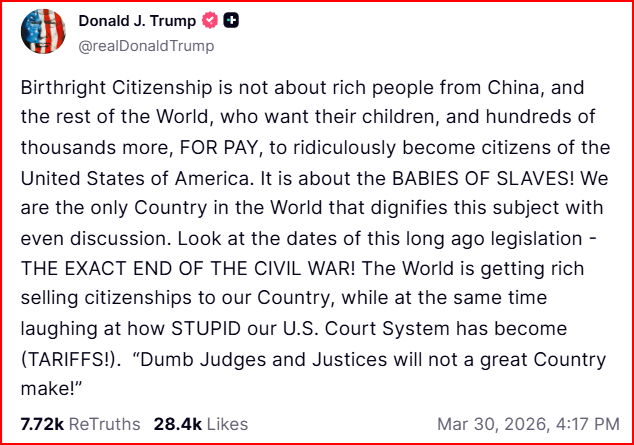
While U.S. law already prohibits issuing visas to people whose primary purpose is to give birth in the U.S. to secure citizenship for their child, Trump’s latest order seeks to further address the issue.
Meanwhile, the House Oversight Committee is already investigating birth tourism centers, arguing they could pose national security and election integrity risks, particularly as many clients reportedly come from China and Russia. In May, the committee requested a range of documents from a company called “Have My Baby in Miami.“
Disclaimer: This content was partially produced with the help of AI tools and was reviewed and published by Benzinga editors.
Image via Shutterstock