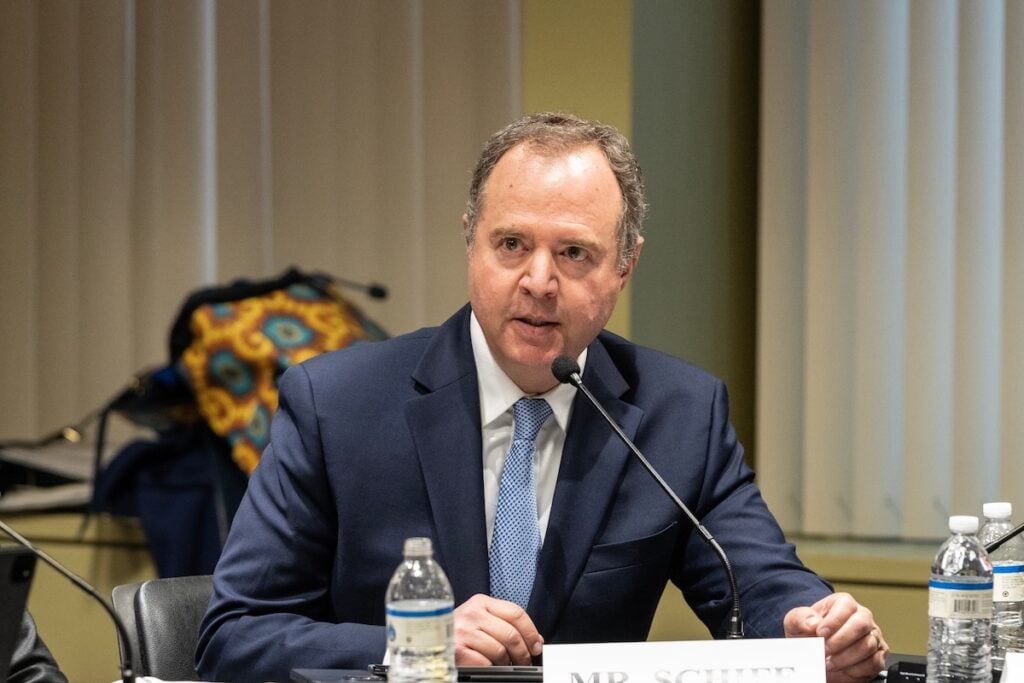
Sen. Adam Schiff (D-Calif.) reportedly plans to introduce two bills Monday aimed at requiring disclosures for some paid political influencer content and restricting fraudulent AI-generated impersonations of political candidates and committees,
The legislation comes as campaigns increasingly use social media influencers and artificial intelligence to reach voters, creating new questions over whether existing political advertising rules provide enough transparency online, according to a Semafor report published Sunday.
Disclosure Rules
The Promoting Authenticity with Influencer Disclaimers Act would amend the Federal Election Campaign Act to require certain audiovisual and audio-only content paid for by political committees to disclose that sponsorship, Semafor reported.
The second proposal, the AI Ads Act, would expand existing restrictions on fraudulent candidate impersonation to cover AI-generated content, it said. Schiff first introduced the legislation while serving in the House in 2024.
“California’s primary this year made a clear case that our current guardrails around campaign advertisements are not keeping up with the changing landscape of political speech,” Schiff said in a statement.
The proposals follow two California races highlighted by Schiff’s office. Billionaire Tom Steyer’s gubernatorial campaign spent millions on influencer content, while Republican Spencer Pratt’s unsuccessful Los Angeles mayoral campaign used quick-turn AI-generated videos.
Schiff’s office did not immediately respond to Benzinga’s request for comment.
Election Risks
The proposals arrive as concerns grow over how AI and social media could shape elections. Billionaire entrepreneur Mark Cuban warned in January that the 2026 cycle could become the first “AI driven election season,” arguing that algorithms could increasingly shape voters’ perceptions.
Those concerns extend beyond campaign advertising. OpenAI said in June that it disrupted alleged Chinese influence operations that used ChatGPT to create social media content aimed at influencing U.S. discussions around tariffs, AI and data centers.
The debate also comes amid disagreement over how aggressively Washington should regulate AI. Former White House AI policy adviser Sriram Krishnan said earlier this month that the Trump administration would not create an FDA-style centralized AI licensing body, arguing that such regulation could slow American innovation.
Schiff said disclosure requirements would give voters a clearer picture of who is funding political content while closing what he called a “pernicious loophole” in existing election rules.
Disclaimer: This content was partially produced with the help of AI tools and was reviewed and published by Benzinga editors.
Photo Courtesy: lev radin on Shutterstock