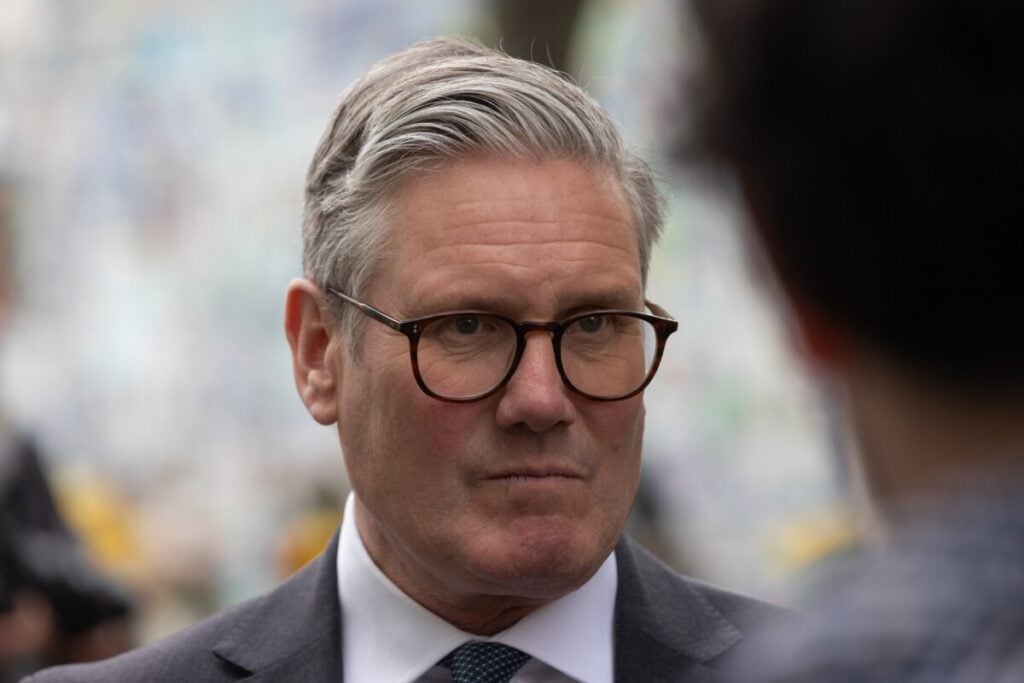
British Prime Minister Keir Starmer announced his resignation today, bowing to pressure from Labour Party members of parliament confronting declining political support and weak economic growth.
His resignation paves the way for the United Kingdom to have its seventh prime minister in just over a decade. He said he was stepping down as leader of the governing Labour Party but will remain caretaker prime minister until a new Labour leader is chosen by the party.
“The question my party is asking now is whether I am best placed to lead us into the next general election,” Starmer said. “I have heard the answer of my parliamentary party to that question. And I accept that answer with good grace.”
Starmer became the sixth leader in a decade to depart prematurely. He will remain as caretaker until a successor is chosen before Parliament returns in September, with nominations opening July 9.
Illegal immigration, weak economic growth, and a decline in consumer confidence eroded public support for his leadership and the Labour Party more broadly. Labour lost about 1,200 council seats in elections in May, losing out to the right-leaning Reform UK.
GDP Fails to Rebound
The UK’s economy, under his nearly two-year leadership, has failed to rebound economically despite mass immigration and efforts to boost growth.
Gross domestic product contracted by 0.1% in April, the first monthly fall since August, as industrial production stalled after contracting by 0.2% year-on-year in March.
The political fallout intensified as economic frustrations mounted. The UK’s relationship with the US has also deteriorated since US President Donald Trump took office.
It drew a reaction from the White House, a day before Starmer announced his resignation
“Keir Starmer will resign as Prime Minister of the United Kingdom,” Trump posted on Truth Social. “He failed badly on two very important subjects- IMMIGRATION AND ENERGY (OPEN NORTH SEA OIL!). I wish him well! President DJT.”
Starmer Lost Party Support
After the election loss, Starmer had stated publicly his intention to remain in office. He said he would get on with “governing” as the country expects.
Privately, he reportedly told close allies that he had concluded his current situation was “unsustainable,” as senior cabinet members turned against him. The political pressure to resign has increased since then.
Defense Secretary John Healey’s resignation over military spending, followed swiftly by Armed Forces Minister Al Cairns, ended any remaining resistance.
Now, Andy Burnham, the former Greater Manchester mayor who won the Makerfield by-election last week, has emerged as Starmer’s Labour successor. He confirmed within hours of Starmer’s statement that he would stand when nominations open on July 9.
Starmer’s Resignation Priced In
Investors had already priced in Starmer’s decision to step aside. Sterling has lost around 3% since February as his political crisis escalated.
The pound held at around $1.32, the FTSE 100 was broadly flat, and 10-year gilt yields held at 4.85%, elevated but stable. The FTSE 250, more exposed to the domestic economy, slipped 0.3–0.5%.
However, consumer confidence has remained negative for the past 12 months. GfK’s long-running Consumer Confidence Index was unchanged at -23 in June.
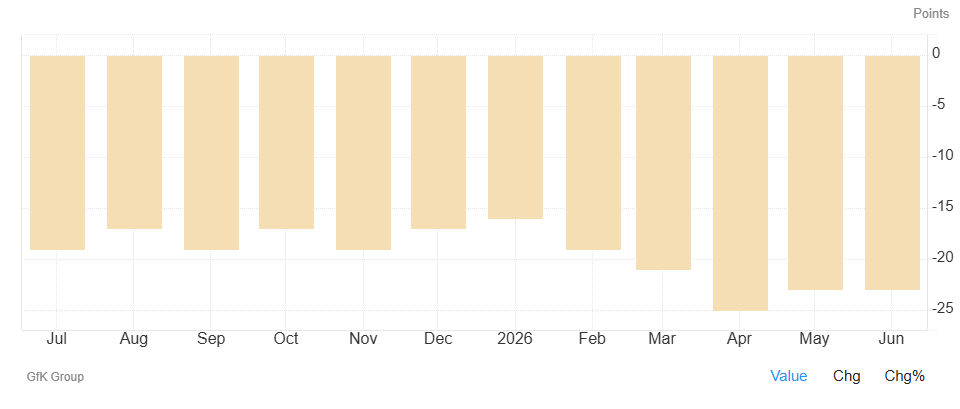
“The backwards-looking measures of personal finances and the economy are both slightly down, reflecting the sense that things have been extremely tough over the last year for so many,” Neil Bellamy, Consumer Insights Director at GfK, an NIQ Company, said on Friday. “Confidence remains subdued and vulnerable to further economic or political uncertainty.”
Maryam Baluch, Economist at S&P Global Market Intelligence, said today that “uncertainty remains stark across households, as indicated by wavering confidence around the labor market.”
Fiscal Policy Main Focus
Markets will monitor the country’s fiscal policy whoever replaces Starmer. Investors will want to know whether Chancellor of the Exchequer Rachel Reeves’s hard-earned discipline holds.
Burnham has signaled he will hold the fiscal line, but who he picks as chancellor will be critical for investor confidence. His challenge is “convincing investors that a more interventionist approach can sit alongside discipline with spending and pro-growth policies,” Wealth Club’s Susannah Streeter said.
“After years of political chop and change, investors are likely to place a premium on stability, credibility, and a clear long-term economic strategy,” she said.
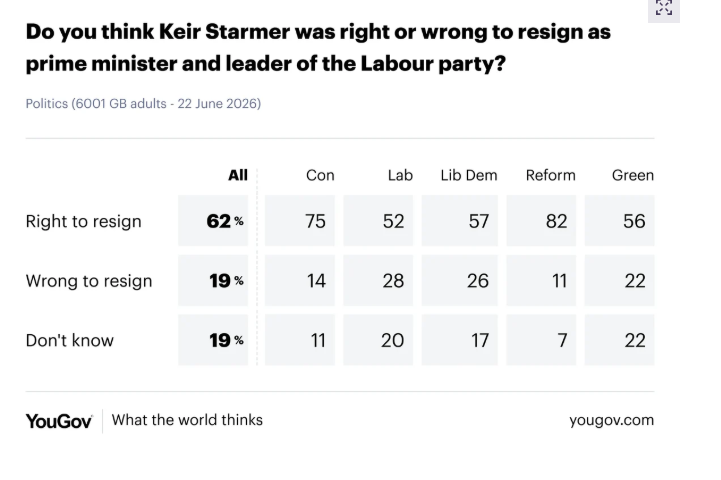
Most Britons thought Starmer was right to resign, with 62% supporting his decision and only 19% believing he was wrong. Among 2024 Labour voters, 52% say he should step aside, while just 28% think he should remain in place.
Starmer’s exit, though, may solve very little.
Changing the “person at the top” will not fix the UK’s “broken political system,” Liberal Democrat leader Ed Davey said. The electorate is “pretty fed up with the merry-go-round of prime ministers,” he said.
Disclaimer: Any opinions expressed in this article are not to be considered investment advice and are solely those of the authors. European Capital Insights is not responsible for any financial decisions made based on the contents of this article. Readers may use this article for information and educational purposes only.
Benzinga Disclaimer: This article is from an unpaid external contributor. It does not represent Benzinga’s reporting and has not been edited for content or accuracy.