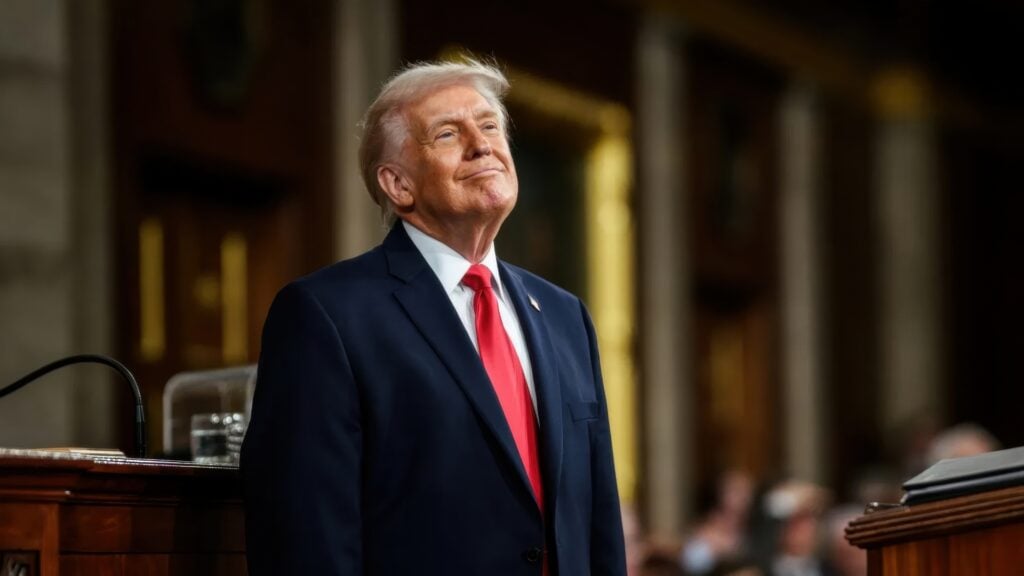
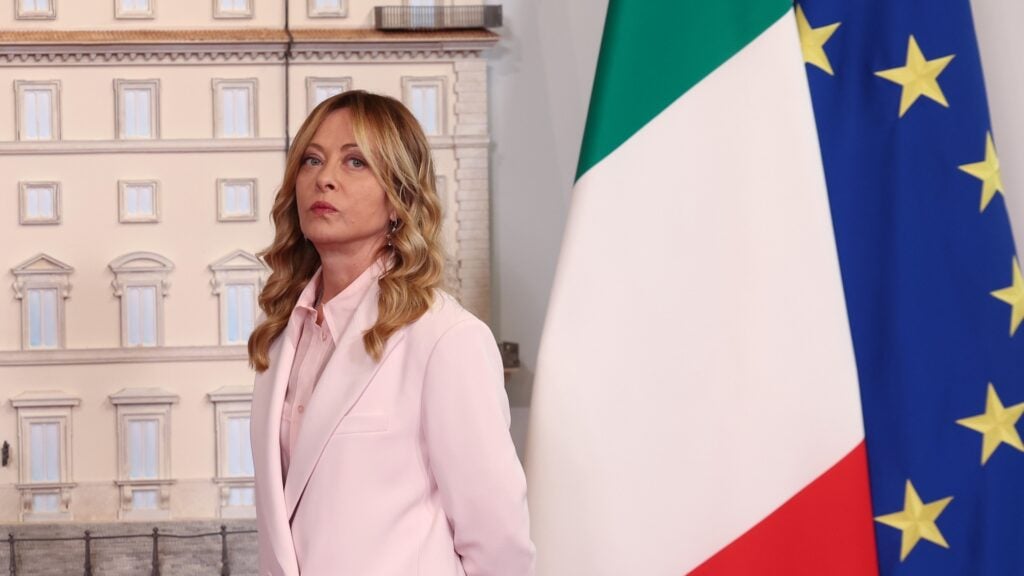
Italian Prime Minister Giorgia Meloni has rejected President Donald Trump’s statement that she “begged” him for a photo at the recent G7 summit.
Meloni Rejects Trump’s Claim As False
Meloni said in a video statement that Trump’s remarks were “completely fabricated” and expressed astonishment at what she described as misleading comments about an allied leader, CNBC translated the video on Friday.
“Italy and I do not beg,” she said, directly addressing the accusation.
The controversy stems from a Trump interview aired on Italy’s La7 network, in which he was asked about Ukraine but instead discussed his interaction with Meloni at the G7 summit in Evian-les-Bains, France.
According to the broadcast, Trump suggested Meloni had insisted on a photo opportunity, a statement Italian officials say is inaccurate.
Italy Responds With Diplomatic Backlash
Italy’s government moved quickly to defend Meloni.
Foreign Minister Antonio Tajani canceled a planned trip to the U.S., calling Trump’s remarks “serious and offensive” toward both the prime minister and Italy.
President Sergio Mattarella also expressed solidarity, as officials across the political spectrum rallied behind Meloni.
“Whoever attacks @GiorgiaMeloni attacks all of us,” wrote Transport Minister Matteo Salvini on X.
Defense Minister Guido Crosetto said he did not believe Meloni would ever “beg someone for a photo, not even under threat.”
Strained US–Italy Relations Surface
The dispute comes amid already cooling relations between Trump and Meloni, once seen as close political allies.
Differences have emerged over Ukraine, tariffs and Middle East policy, despite earlier efforts by Meloni to position herself as a bridge between the U.S. and Europe.
Meloni said she was responding publicly because “certain things deserve an immediate response,” adding that she was “frankly stunned” by Trump’s statements.
The White House did not immediately respond to Benzinga’s request for comments.
Photo courtesy: Shutterstock
Disclaimer: This content was partially produced with the help of AI tools and was reviewed and published by Benzinga editors.