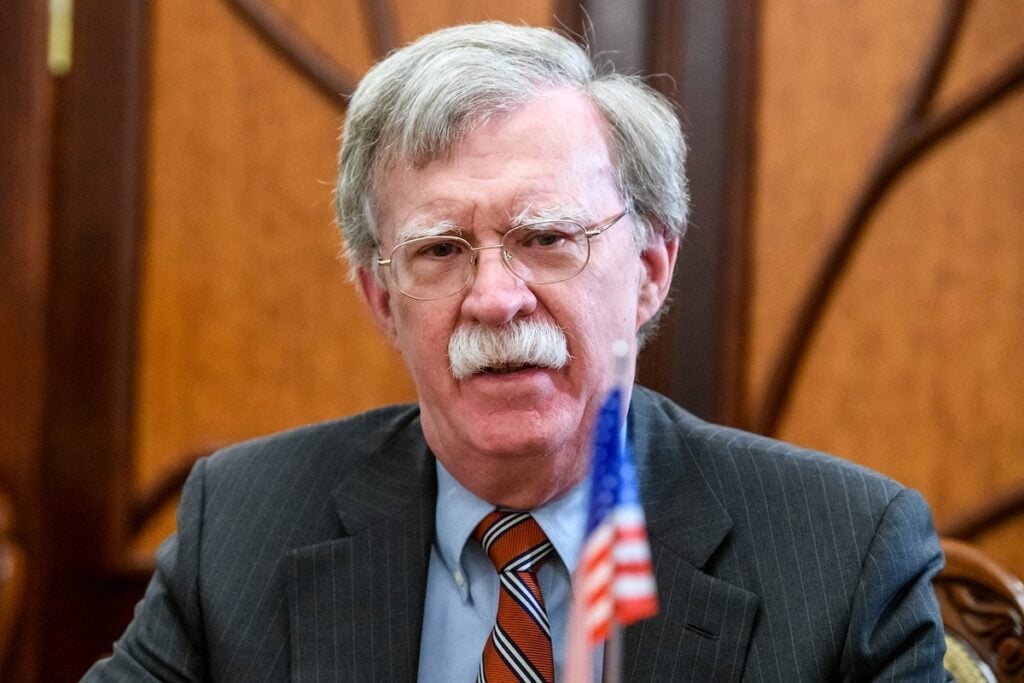
Former National Security Adviser John Bolton believes President Donald Trump’s public focus on gasoline prices risks weakening the U.S. position in talks with Iran, warning that Tehran can exploit the president’s urgency to reopen the Gulf oil route and lower pump prices.
Bolton Says Gas Focus Weakens Negotiating Hand
“For several weeks, Trump’s focus has been not the strategic issues at hand in the Gulf, but the price of gasoline at the pump,” Bolton wrote in an X post on Monday. “It’s a legitimate political concern, but it also opens him up to vulnerabilities when negotiating with the Iranians,” he added.
Speaking to Global News in an interview on Monday, Bolton said Trump’s main goal has been to get the Strait of Hormuz reopened, move oil back into global markets and bring U.S. gasoline prices down. He argued that goal is “so evident, so transparent” that Iran has been “doubling down” in negotiations.
He also said Trump is “in a trap of his own making,” caught between wanting to declare “the best deal ever negotiated in history” and making concessions that could damage him politically at home.
Pump Prices Remain Well Above Prewar Levels
According to AAA, regular gas averaged $2.98 a gallon just before the U.S. and Israel attacked Iran at the end of February. As of Monday, the AAA national average gas price stands at $4.065 per gallon for regular unleaded gasoline.
Market analysts have said a successful Iran agreement could ease some of the geopolitical risk premium built into crude oil prices since the conflict escalated. Goldman Sachs analysts estimated in May that a sustained disruption to flows through the Strait of Hormuz could push Brent crude well above $100 per barrel, while a normalization of exports and shipping traffic would likely have the opposite effect by increasing global supply and reducing uncertainty.
However, experts caution that any relief at the pump is unlikely to be immediate. The U.S. Energy Information Administration notes that crude oil accounts for more than half of the retail price of gasoline, but refining, distribution and taxes also play significant roles.
Analysts Warn Pump Relief May Take Longer
Even if an Iran deal restores confidence in energy markets and helps bring oil prices lower, consumers could continue to face elevated gasoline costs through the summer driving season as supply chains and inventories gradually adjust to changing market conditions.
GasBuddy forecast that summer gasoline could average $4.80 if disruptions persist and said only 56% of Americans planned a two-hour-plus summer drive, down from 69% last year. Analyst Patrick De Haan told CBS News in early June that normalization could take “multi-month to multi-year” work, with prewar prices unlikely before mid-to-late 2027.
In a social media thread on Sunday, De Haan said that, following a deal with Iran, the national average gas price could fall below $3.75/gallon by the Fourth of July. However, he also added that the estimates were made for an “optimistic timeline” and that the “hurricane season could be a major wildcard for the rest of summer.”
Photo Courtesy: paparazzza on Shutterstock.com