

Applovin Corp (NASDAQ:APP) is trading lower by about 8% on Tuesday as high-multiple software and ad-tech names get hit in a Nasdaq-led risk-off tape. The Nasdaq-100 is down 1.66% while the S&P 500 has shed 0.59%. Here’s what investors need to know.
- AppLovin stock is among today’s weakest performers. Why is APP stock falling?
Macro Pressures And Geopolitical Fears
Anxiety is mounting ahead of Wednesday’s May CPI report. Following April’s hot 3.8% year-over-year print, another elevated reading could further delay Federal Reserve rate cuts. This environment historically batters high-beta software and ad-tech stocks by keeping borrowing costs higher for longer.
Compounding these inflation fears is a fresh geopolitical flashpoint. After a U.S. helicopter was shot down over the Strait of Hormuz, President Trump’s threats of retaliation stoked fears of a major oil supply disruption. A resulting spike in energy prices would feed directly back into sticky inflation and severely complicate the Fed’s path forward.
Rotation Away From Growth
Today’s pressure on AppLovin is macro-driven rather than company-specific. As volatility picks up and the tech-heavy Nasdaq underperforms, investors are aggressively taking profits and rotating out of premium-valued growth stocks.
Despite the heavy pressure on tech, broader market breadth remains highly constructive. With nine sectors advancing and a 4.5 advance/decline ratio, AppLovin’s steep drop stands out as a targeted pocket of growth weakness rather than a symptom of a market-wide selloff.
Critical Price Levels To Watch For APP
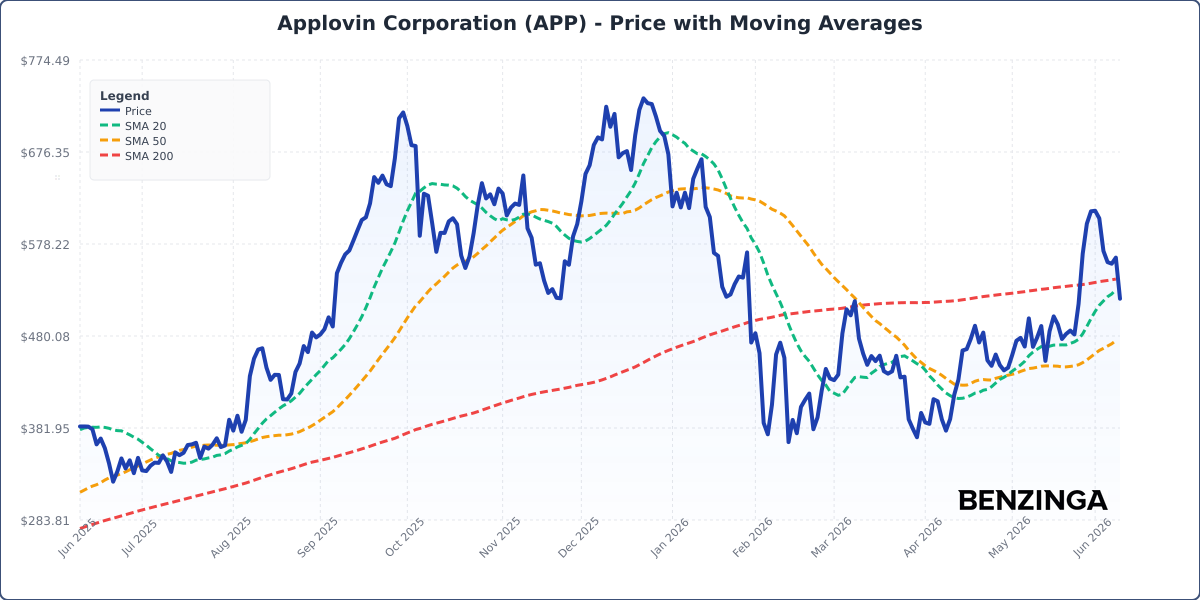
From a trend perspective, APP is still up 35.52% over the past 12 months, but Tuesday’s pullback keeps the stock in a choppy zone between key longer-term references. It’s trading 9.4% above the 50-day SMA ($475.22) and 10.6% above the 100-day SMA ($470.00), but 1.9% below the 20-day SMA ($529.65) and 3.9% below the 200-day SMA ($540.81).
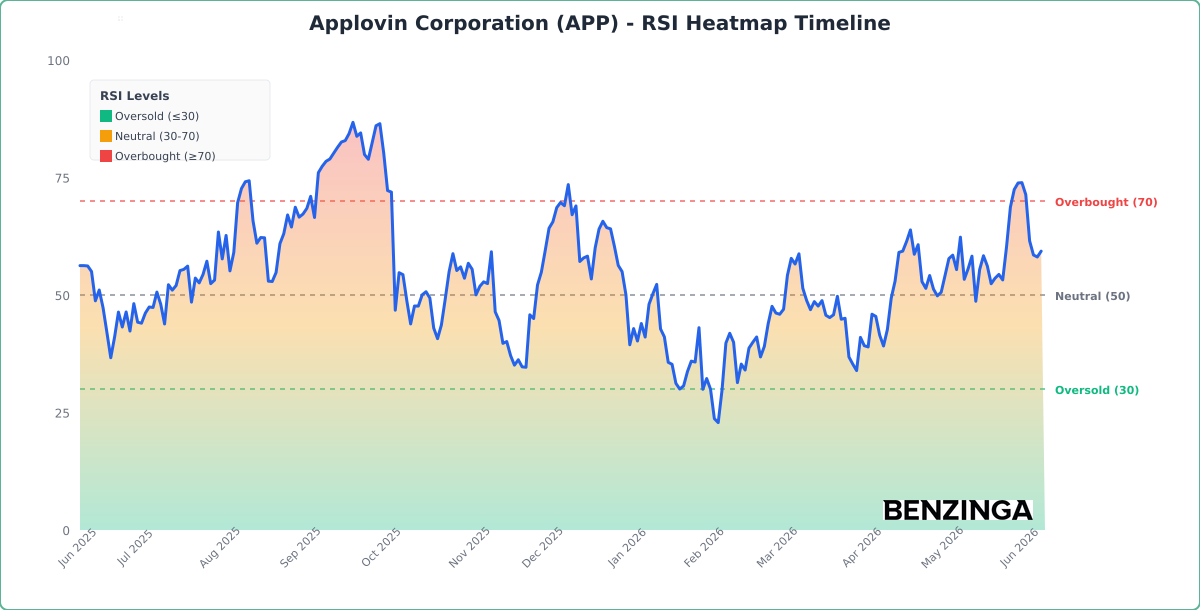
Momentum is best framed through MACD right now: MACD is above its signal line and the histogram is positive, which suggests downside pressure is easing versus the prior downswing even if price hasn’t fully reclaimed longer-term resistance. In plain English, when MACD is above its signal line, it often signals that selling momentum is fading and buyers are starting to push back.
The moving-average structure is mixed: the 20-day SMA is above the 50-day SMA (a near-term bullish alignment), but the 50-day SMA remains below the 200-day SMA after the death cross in March, which can keep rallies “sold into” until the stock can hold above the 200-day. The recent swing low in April and swing high in June also frame this as a range-to-uptrend attempt that’s still vulnerable to sharp pullbacks.
- Key Resistance: $622.00 — a round-number/pivot area where rebounds can stall after the recent volatility
- Key Support: $430.50 — a prior demand zone that sits well below current price and marks a level buyers previously defended
Applovin’s Benzinga Edge Rankings Explained
Below is the Benzinga Edge scorecard for Applovin, highlighting its strengths and weaknesses compared to the broader market:
- Momentum: Neutral (Score: 64.37) — The stock’s trend is still constructive, but it’s not acting like a pure momentum leader during today’s Nasdaq-driven selloff.
- Value: Weak (Score: 0.47) — The market is pricing APP at a steep premium, which can amplify drawdowns when growth sentiment cools.
- Growth: Bullish (Score: 99.73) — The company screens as a top-tier growth name, which is a key part of the longer-term bull case if execution stays on track.
The Verdict: Applovin’s Benzinga Edge signal reveals a growth-heavy profile with only moderate momentum and extremely weak value support. That combination can work well in risk-on markets, but it also means pullbacks can be sharp when the Nasdaq is leading to the downside.
APP Stock Price Activity Today
APP Stock Price Activity: AppLovin shares were down 7.65% at $520.58 at the time of publication on Tuesday, according to Benzinga Pro data.
Image: Shutterstock